
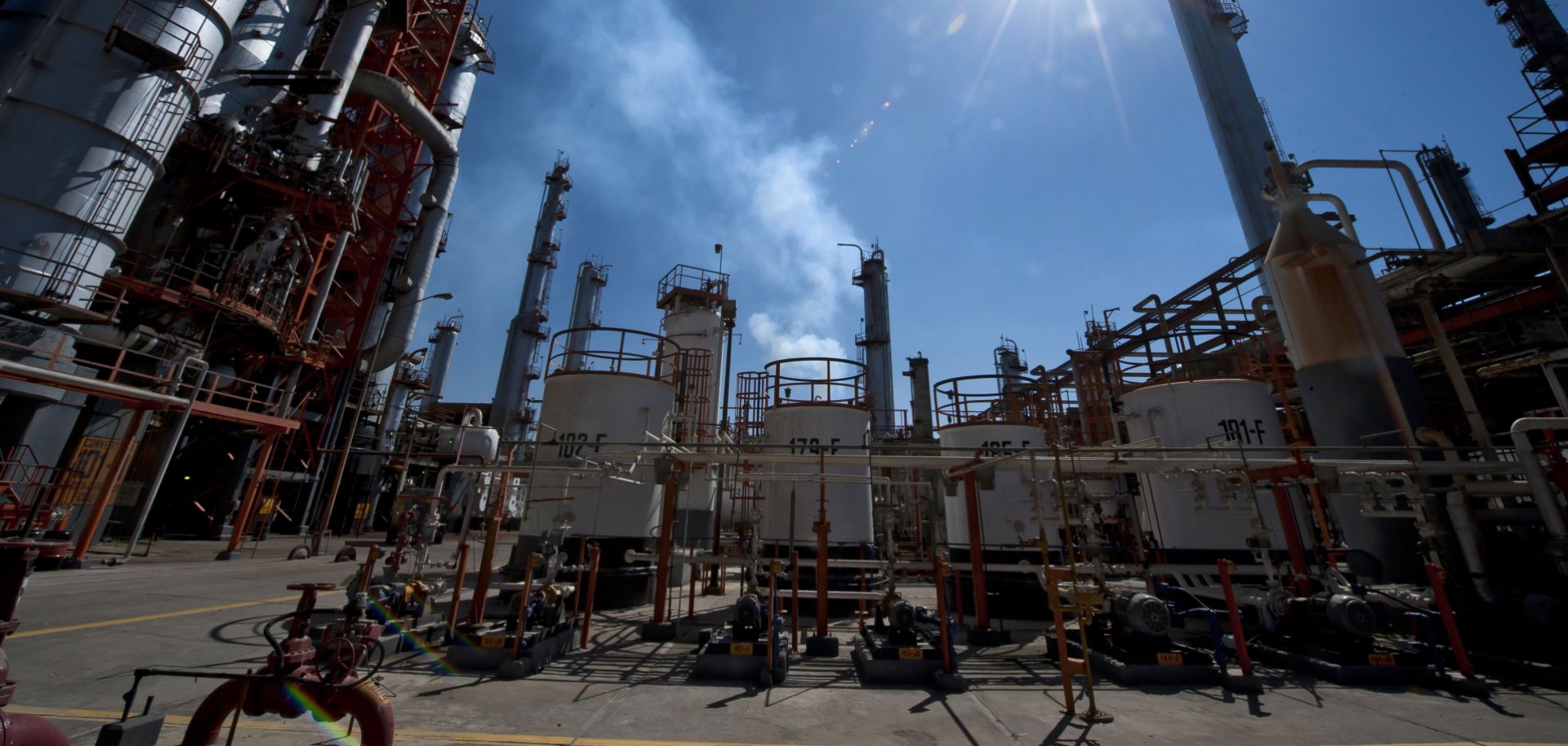
Structures used to precess oil are seen at a Pemex refinery in Tula, Hidalgo state, Mexico, on March 8, 2011.
Despite his populist rhetoric, the next president of Mexico will largely play by the rules when it comes to the country's energy reforms. President-elect Andres Manuel Lopez Obrador takes office on Dec. 1, and he and his party may have the votes in Congress to challenge the 2013 constitutional changes that opened most of Mexico's energy sector to private investors. But any such move would meet strong resistance at home and from abroad, and it could also damage the country's economy. What the next administration will do is target the parts of the reform that it deems harmful to the people of Mexico, and some of those changes could complicate foreign investment. Campaign Promises and Reality Politics On July 1, Lopez Obrador won the presidency, and his party, the National Regeneration Movement, won commanding majorities in both houses of Congress.
