
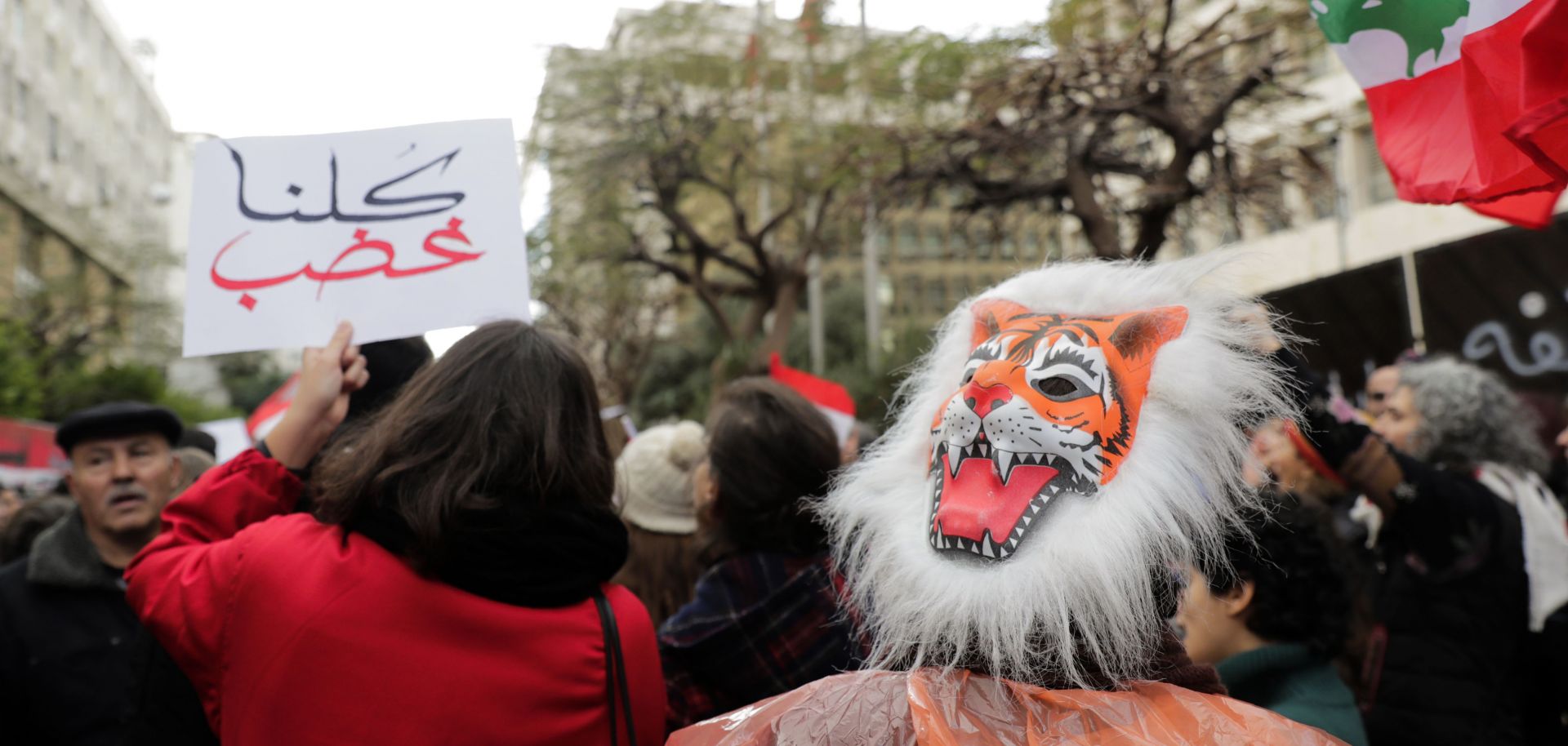
Lebanon's prime minister-designate, Hassan Diab, will unlikely be able to solve the government dysfunction and enact needed economic reform. This means that the pan-sectarian protest movement that has staged demonstrations across the country will likely continue to march.
Lebanon's new candidate for prime minister, Hassan Diab, stands little chance of breaking Lebanon's political deadlock. And he will face even greater challenges than political paralysis, such as a worsening economic crisis and security crises as Hezbollah turns to stronger tactics to maintain its influence and as the chances grow of a U.S.-Iran regional conflict that could draw in Lebanon. Daunting Prospects for Domestic or Foreign Support Diab, who is set to succeed longtime Prime Minister Saad al-Hariri as prime minister, will face substantial hurdles. These include winning the support of a protest movement that will not accept a prime minister with ties to the establishment, which they blame for Lebanon's economic crisis and long-standing corruption. They also include simultaneously winning the support of either the country's March 8 alliance, to which Hezbollah belongs, or the March 14 alliance, to which al-Hariri's Future Movement belongs.
