
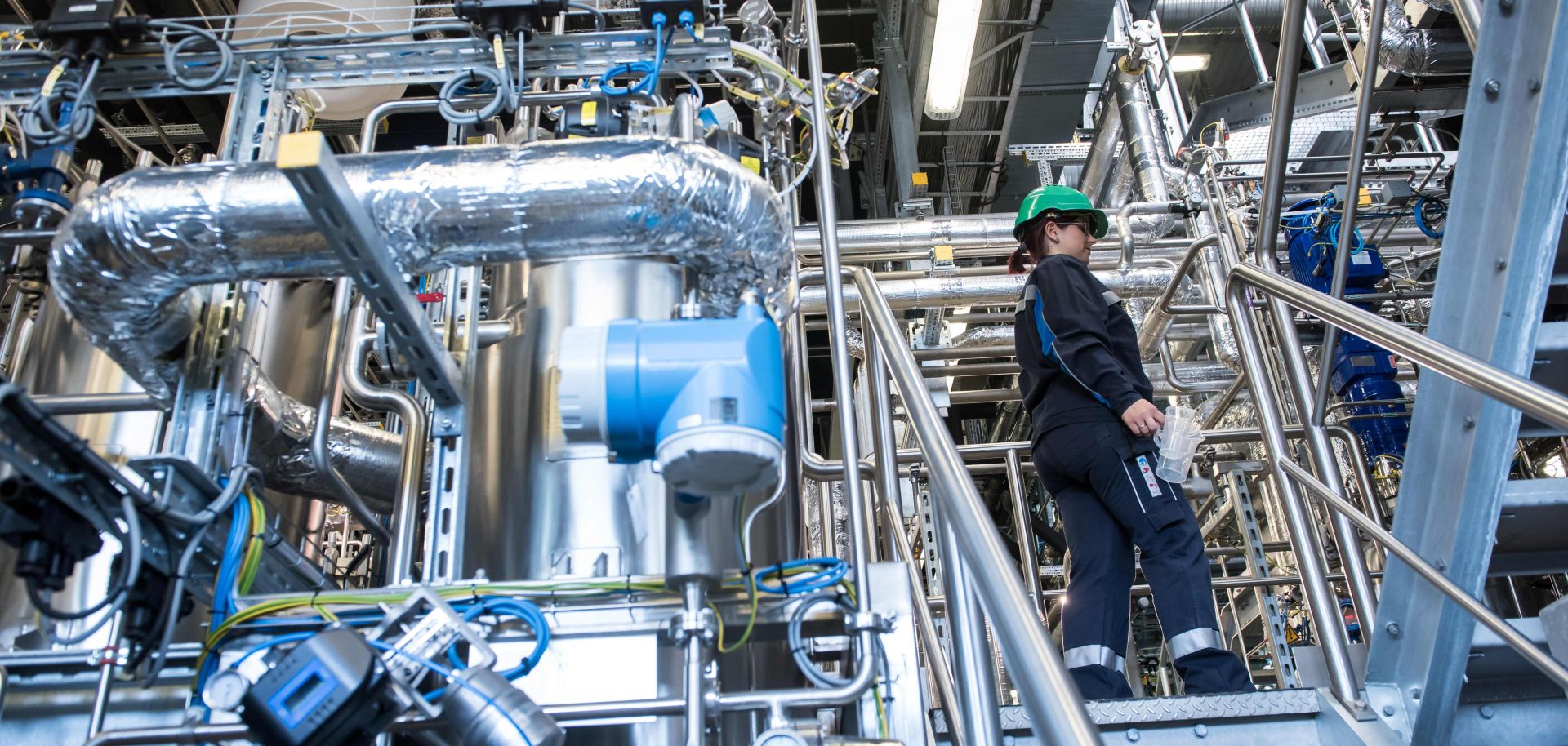
Biotechnology engineer Jenny Pietzsch walks through a demo plant of the French company Global Bioenergies during its inauguration ceremony in Leuna, Germany, on May 11, 2017. Global Bioenergies is producing isobutylene, a hydrocarbon gas made from organic resources, sugar and genetically modified bacteria.
Emerging gene-editing technology is raising questions around the world about the ethics of altering the structure of life: DNA. From Europe to the United States to China, cultural and societal influences shape how each country sees this biotechnology and how it should be regulated. These differences hinder international consensus, as well as the enforcement of any restrictions, especially when the long-term implications of a rapidly advancing technology are unclear. Gene-editing techniques, especially CRISPR , have improved immensely in a relatively short time, and CRISPR's ease of use and relatively low cost make its application to agriculture and medicine inevitable. In the end, the debate about its use may be shaped as much by economics as by ethics. Drawing the Line Down on the Farm Even before the advent of new gene-editing techniques, the use of genetic modifications had divided the global agricultural community for several decades.
