
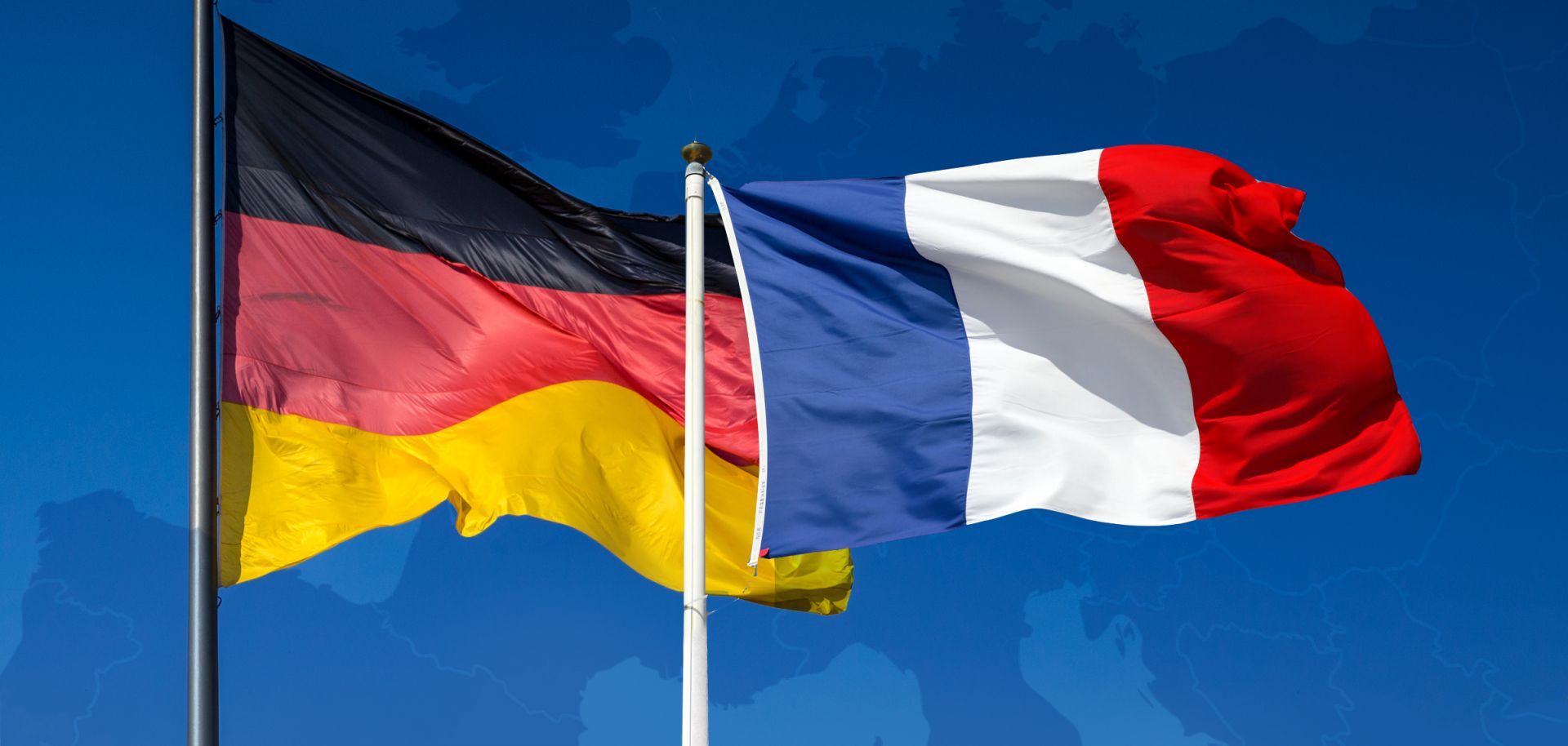
Ten years after the financial crisis began, France has come to terms with Germany's higher profile in European affairs. But accepting a position as Europe's co-leader is not the same thing as accepting the role of second in command.
From its very inception, the European Union has depended on the alliance between France and Germany . The bloc's predecessor, the European Economic Community, formed with the principal goal of binding the two countries together so closely that another war on the Continent would be impossible. And from the 1950s on, a tacit agreement underlay their partnership: France was the main political and military power in the bloc, and Germany was the main financial supporter (paying for, among other things, onerous subsidies for French farmers). After German reunification in 1990, France even pushed for the creation of the euro as another way to strengthen Paris’ links with Berlin. Over the past decade, however, that relationship has shifted.
