
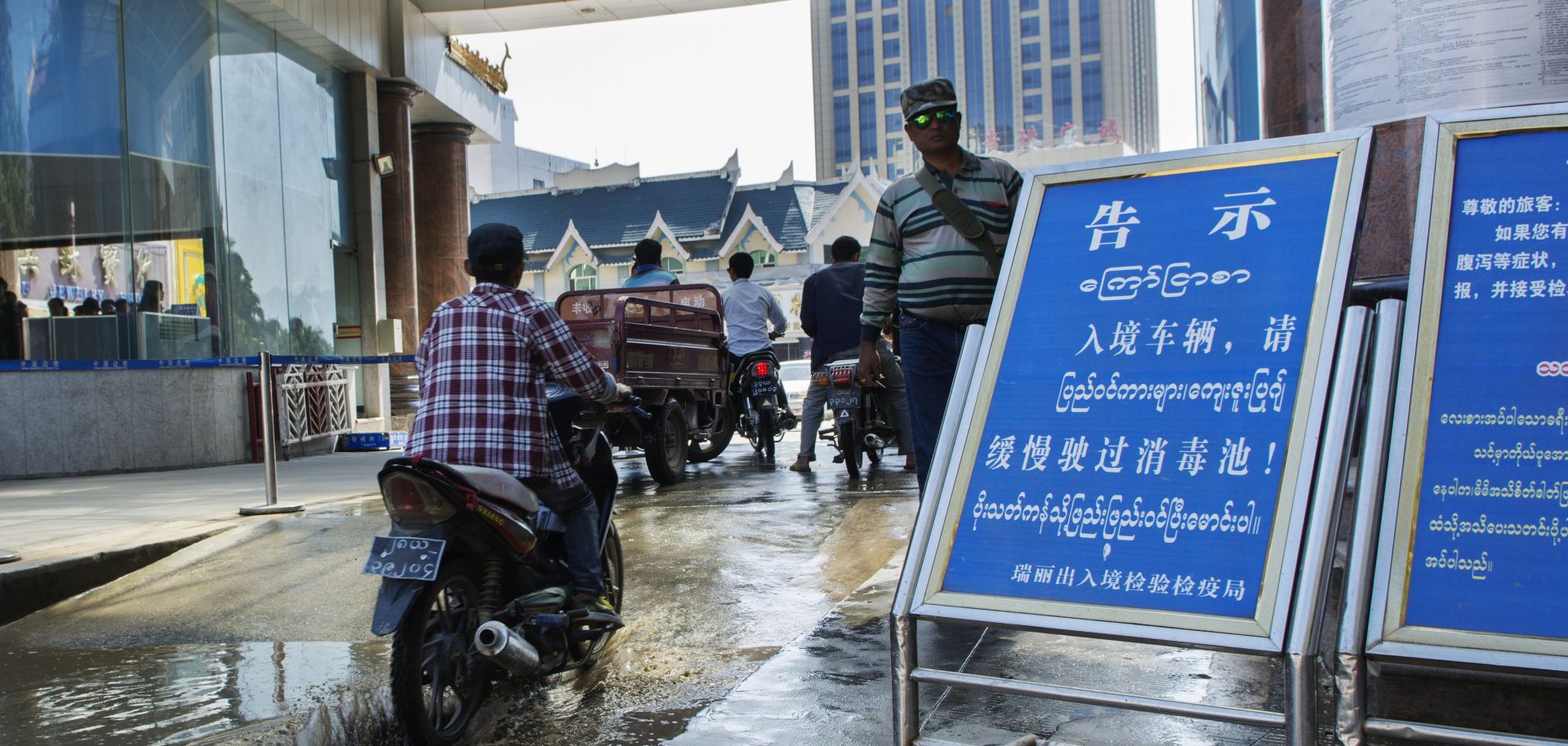
Editor's Note: This is the fourth installment in a four-part series on Myanmar's struggle to become a modern nation-state . With the end of the British colonial period, the political entity now known as Myanmar had clearly defined borders in its north and northeast bordering China for the first time in its history — at least on a map. In reality, an ill-defined border region arced between the Irrawaddy lowlands, at the heart of modern-day Myanmar, and Indochina, China and the Indian subcontinent. The dense jungles and mountainous terrain of this region are home to an array of peoples from diverse ethnolinguistic backgrounds, few of whom are given to acknowledging formal borders. Generations of conflict and their own general isolation have shaped these groups. This border region became a haven for ethnic resistance movements, powerful warlords and drug trafficking armies. Competing interests frequently stirred this volatile mix.
