
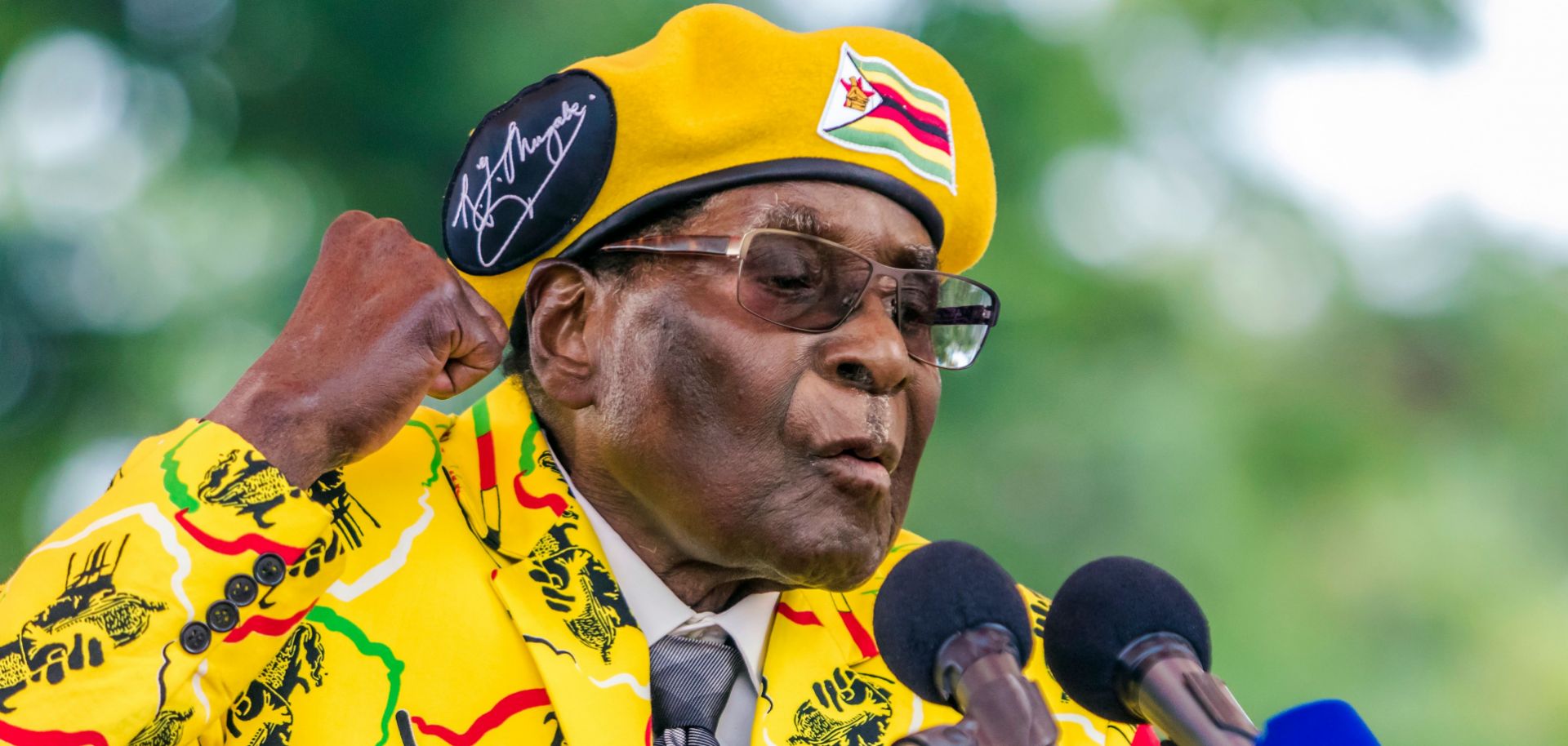
Zimbabwean President Robert Mugabe addresses supporters on Nov. 8, two days after firing his vice president, Emmerson Mnangagwa. Mugabe's decision changes the trajectory of Zimbabwe's political transition.
What Zimbabwe lacks in a functional and sizable economy, it more than makes up for in palace intrigue. The country's potential presidential succession was jolted Nov. 6 when longtime President Robert Mugabe sacked his vice president, Emmerson Mnangagwa, who then fled into exile. Mugabe's decision comes five weeks before the ruling Zimbabwe African National Union-Patriotic Front (ZANU-PF) is scheduled to hold an extraordinary party congress Dec. 12-17 to "harmonize" party divisions. Mnangagwa's exit changes the trajectory of Zimbabwe's political transition as the country moves inexorably beyond the only post-independence president it has known. Machinations in the Line of Succession Mnangagwa was long considered the most likely successor to the 93-year-old Mugabe . A former defense minister and minister of state security, Mnangagwa, 75, reportedly had the backing of various power players inside the country's security establishment — support that is critically important to maintaining the party's stranglehold on the country.
