
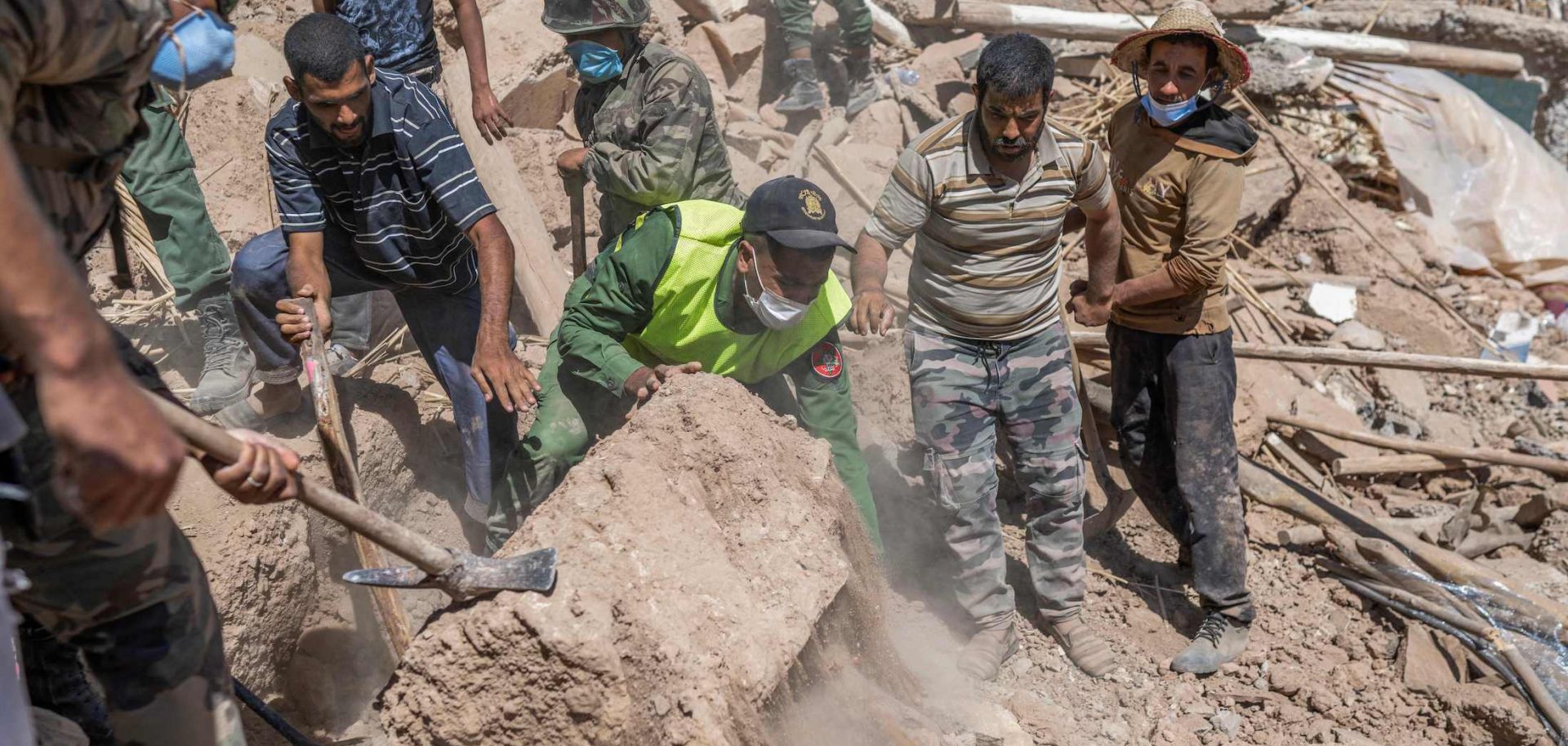
The economic impact of Morocco's earthquakes will harm growth into 2024, potentially forcing the elected government out and slowing the country's fiscal consolidation. On Sept. 8, a magnitude 6.8 earthquake struck Morocco's Marrakesh-Safi province just south of the city of Marrakech. Combined with at least one major aftershock, the disaster left at least 2,500 people dead and thousands more injured and disrupted transportation, tourism and businesses across the region. One of the largest to hit Morocco in decades, the earthquake comes as Morocco is dealing with ongoing drought and economic challenges from the Russian war in Ukraine and the aftermath of the COVID-19 pandemic. While Morocco experienced an economic rebound after the downturn of 2020, it has also experienced higher than average inflation projected at around 4.6% in 2023, according to the International Monetary Fund, against a projected real GDP growth rate of 3%.
