
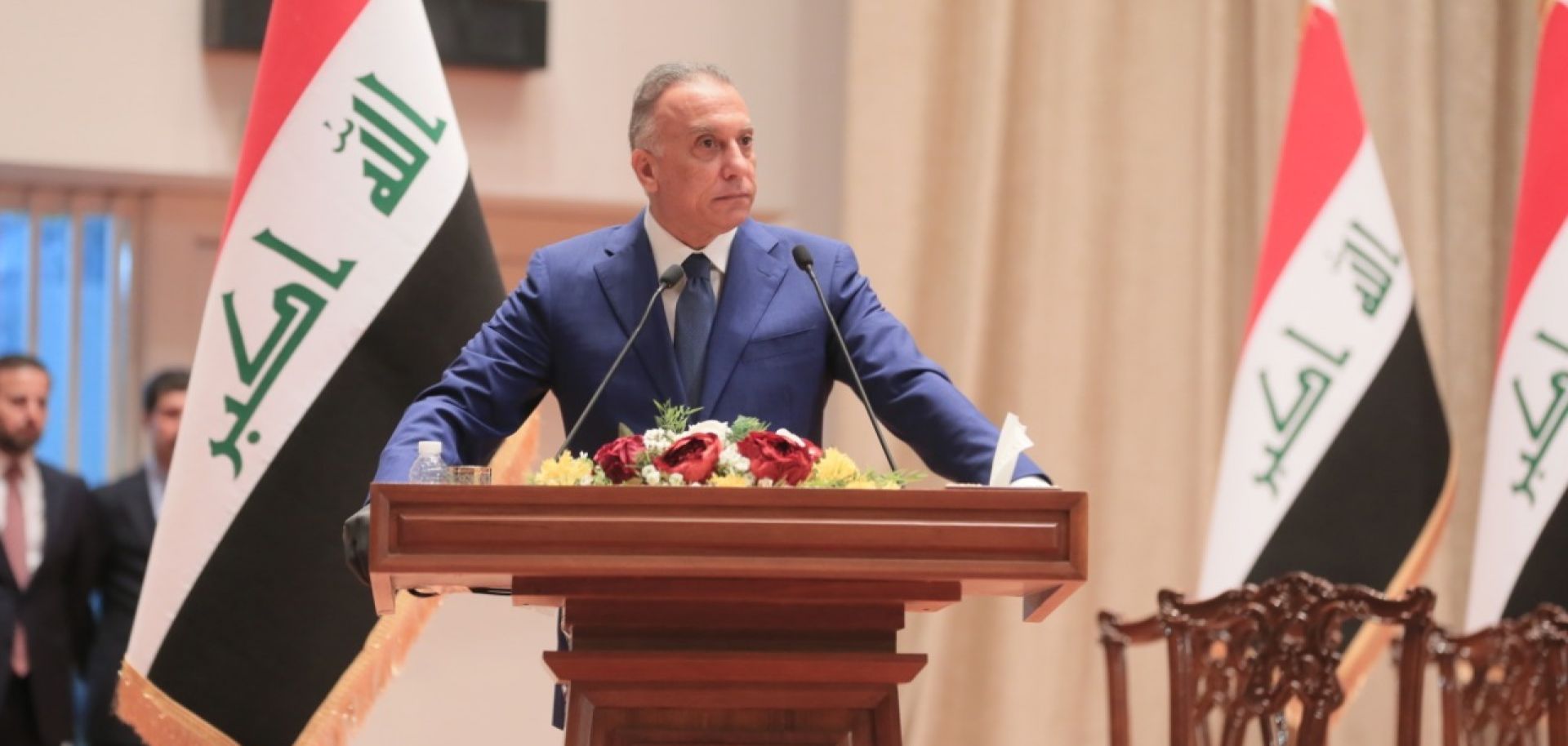
Iraqi Prime Minister Mustafa al-Kadhimi makes a speech in Baghdad on May 6, 2020. The following day, Iraq's parliament granted a vote of confidence to al-Kadhimi’s new government and swore in a majority of his 22 ministers.
On May 7, Iraq swore in its first legitimate government since violent protests led to the collapse of its last government in December. After months of political turmoil , the formation of the new government, led by former intelligence chief Mustafa al-Kadhimi as prime minister, is in itself an achievement. But no matter how coherent al-Kadhimi’s administration proves to be, Iraq’s increasingly dire economic situation — made worse by the COVID-19 crisis and subsequent oil market shocks — will make it difficult to maintain social and political stability, as well as manage domestic and external security. The new government’s primary challenge in 2020 will be keeping Iraq's s already weak economy from completely caving amid the added financial strain from COVID-19. Iraq is highly dependent on oil and gas revenue, with 90 percent of government revenue coming from crude sales.
