
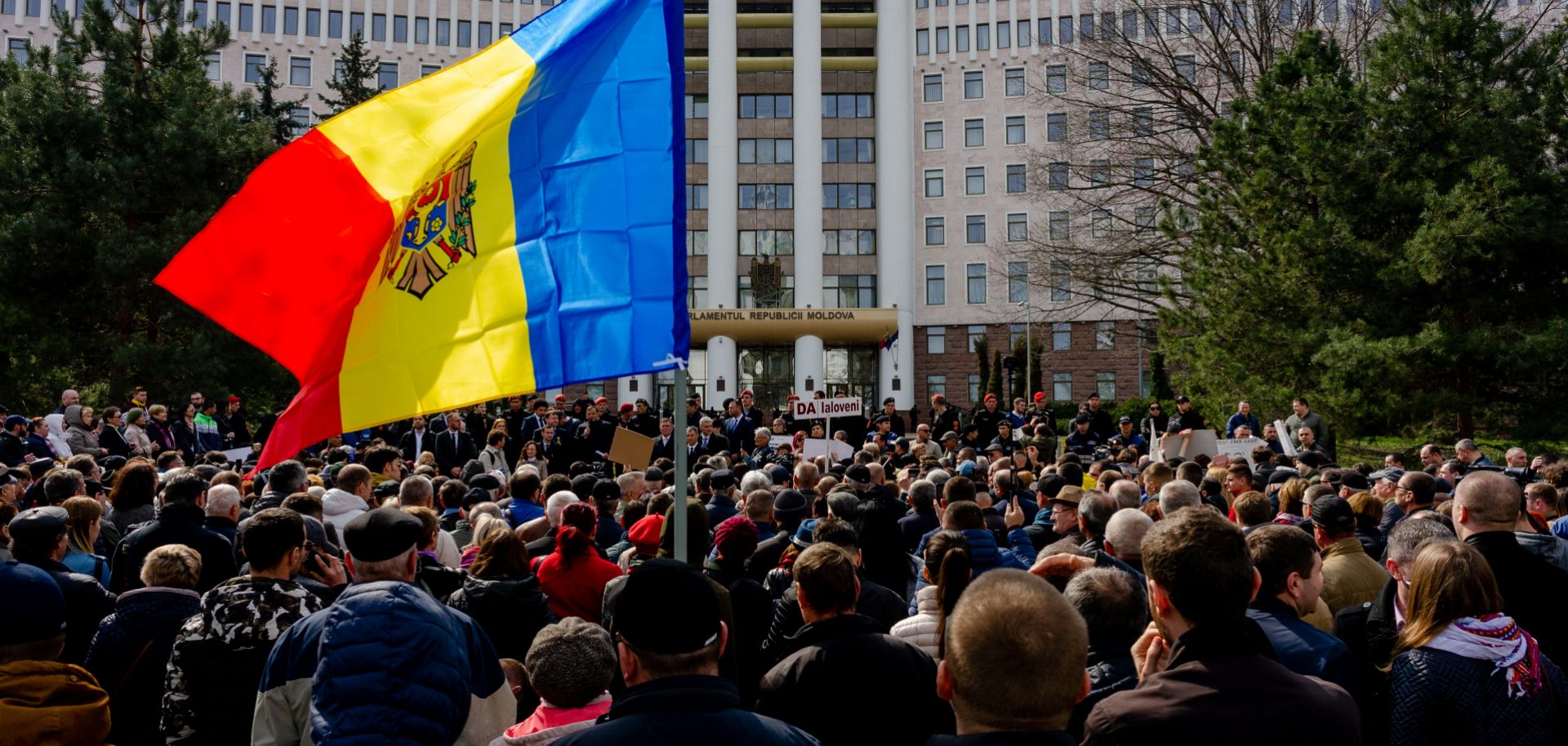
People gather outside the Moldovan parliament during a rally by the pro-European opposition ACUM bloc to protest against parliamentary election results from February. Moldova has found some political stability for now, but for how long?
Moldova — squeezed between Russia and the European Union with a political system divided in orientation between the two blocs — is no stranger to political deadlock. Throughout its post-Soviet history, Moldovan politics have been split between pro-Russian and pro-European parties, resulting in frequent bouts of foreign policy paralysis. This has certainly been the case in recent years in the context of the Russia-West standoff, as Socialist party leader Igor Dodon's ascendancy to the presidency in 2016 posed a direct challenge to the policies and position of a Europe-oriented parliament. For the moment, political expediency has brought together these two extremes, as the pro-Russian Socialists and the pro-Europe ACUM — a bloc composed of the NOW Platform DA and PAS parties — have formed a coalition government. However, their underlying differences of opinion portend a return to political deadlock sooner, rather than later.
