
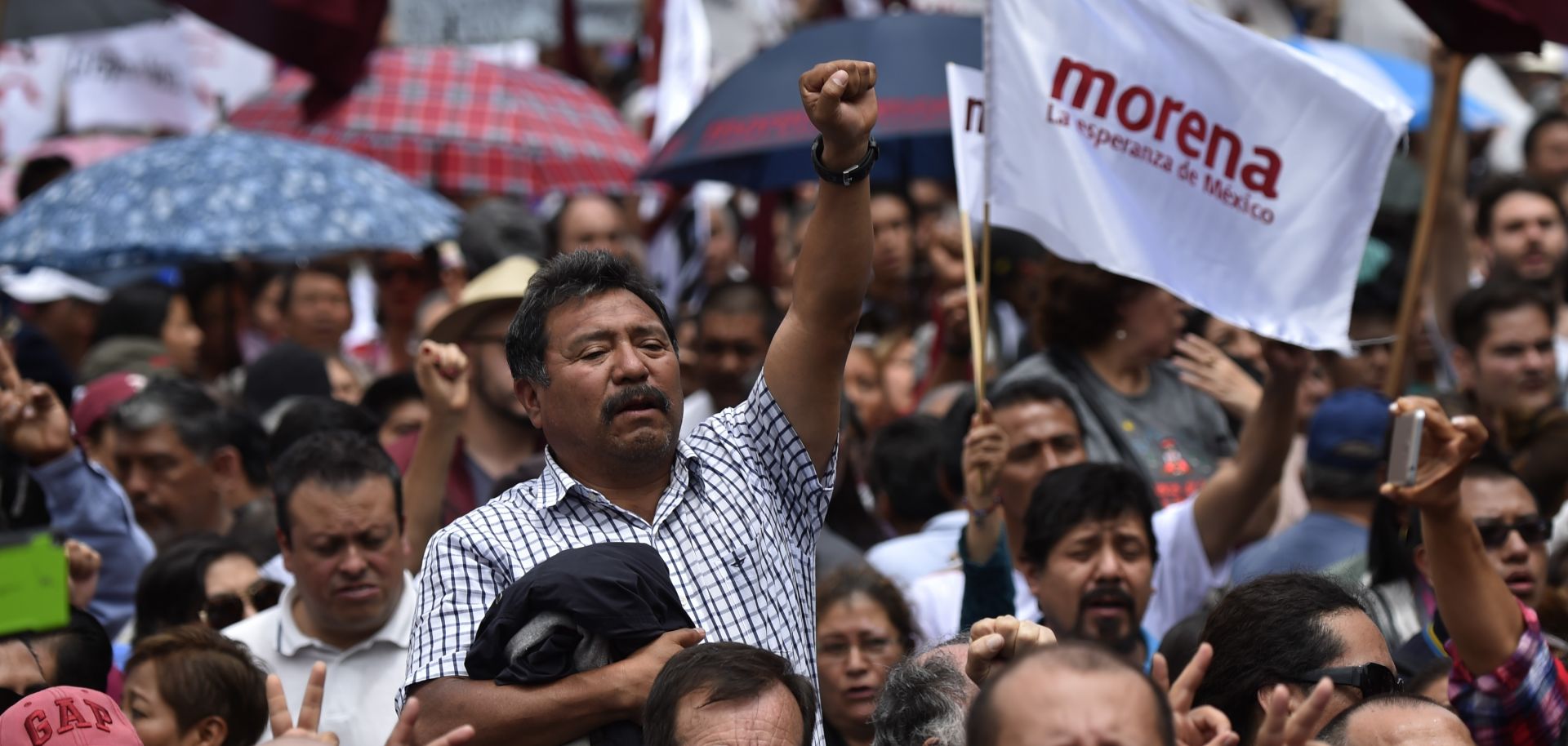
Followers of the National Regeneration Movement (MORENA) attend a speech given by Andres Manuel Lopez Obrador during a rally in Mexico City on Sept. 3, 2017. Persistent poverty, a diverse political system and tough rhetoric from the United States are boosting the populist politician.
Mexico's gradual move toward populism has made headlines for more than a year. The foreign press in particular has reported extensively on the popularity of presidential candidate Andres Manuel Lopez Obrador , creating a narrative of a recent, inexorable leftward shift among Mexican voters. The underlying reality is far more complicated. Lopez Obrador's popular approval is the product of Mexico's enduring, widespread poverty and steadily diversifying political landscape, among other broader, longer-term trends. It's also the result of prevailing, discrete events, such as the Mexican government's perceived complacency when faced with U.S. threats during talks to renegotiate the North American Free Trade Agreement . These dynamics will likely create a competitive presidential election in 2018, in which Lopez Obrador or a challenger from a traditional party such as the National Action Party (PAN) or the ruling Institutional Revolutionary Party (PRI) could narrowly clinch power.
