
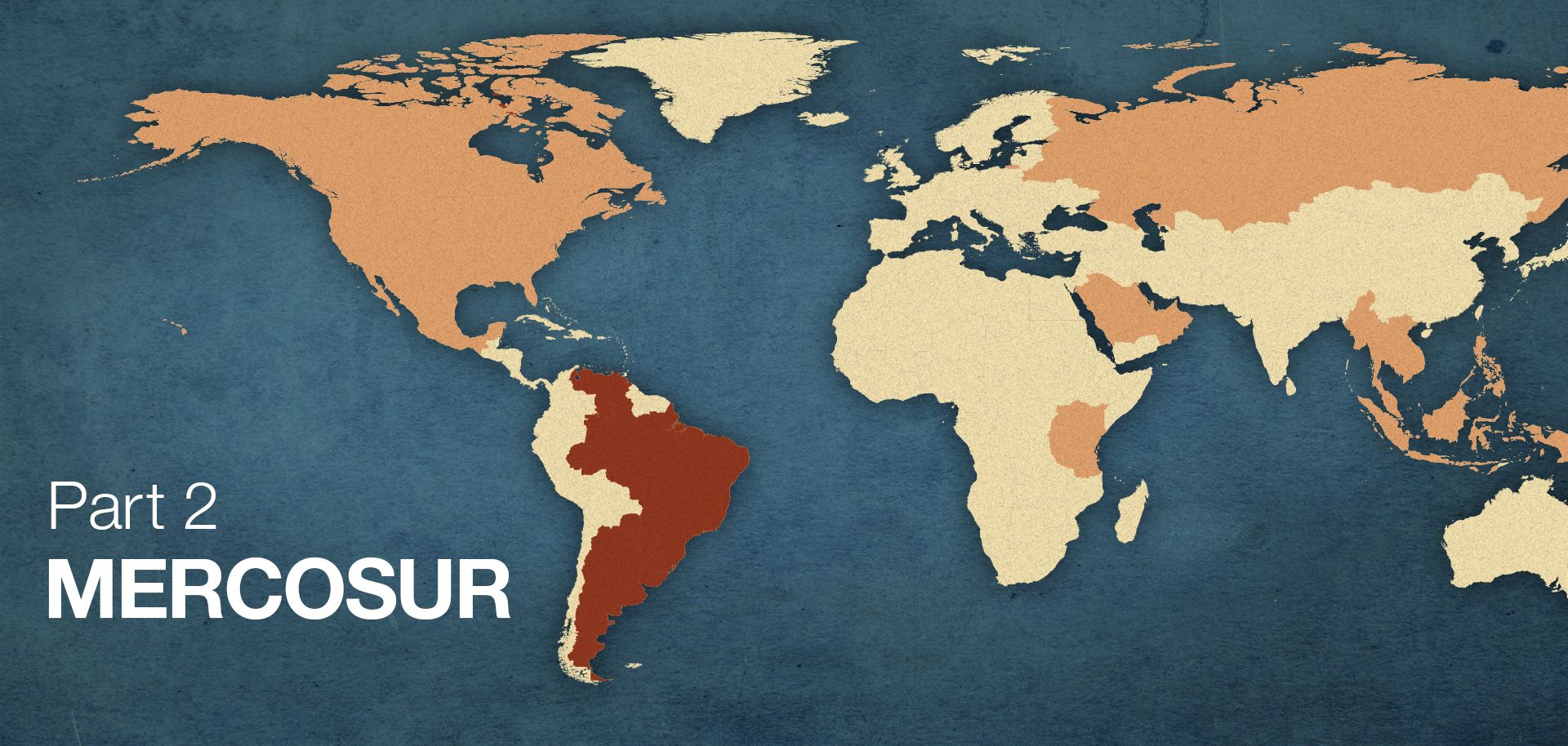
Mercosur owes much of its design to South America's geography and the economic opportunities that arose from it. The sheer size of Brazil, for example, guaranteed it a prominent spot among the continent's economies, while terrain favorable to agriculture enabled Argentina to become an important part of international trade routes. Uruguay, located at the mouth of the Rio de la Plata, similarly used its trade advantages to industrialize rapidly. Yet to the north, landlocked Paraguay developed more slowly, hampered as it was by its landscape and inaccessibility . [sidebar title="Brazil’s Geographic Challenge" imgurl="https://www.stratfor.com/sites/default/files/styles/stratfor_full/public/main/images/brazil-sidebar.jpg?itok=O7TIQVHb"] Isolated from the rest of the continent both geographically and linguistically and lacking internal cohesion, Brazil has traditionally been inward looking. Watch the video … [/sidebar] Geopolitics created the conditions for an economic partnership between Brazil and Argentina, but domestic politics dictated the institutional framework that shaped its formation.
