
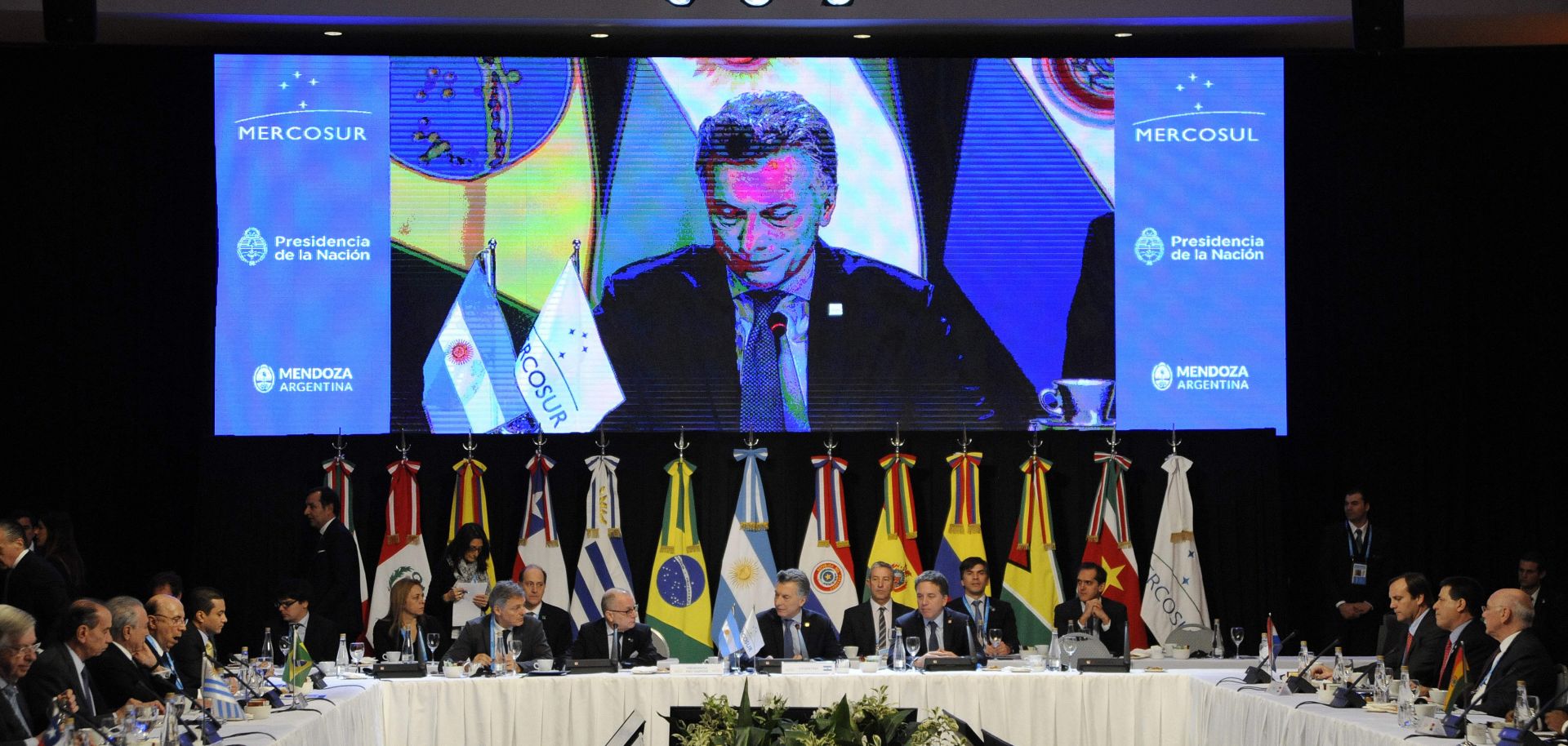
Argentina's President Mauricio Macri(C) opens the plenary session of the Mercosur Summit in Mendoza, 1050 kilometers to the west of Buenos Aires, Argentina on July 21, 2017. / AFP PHOTO / Andres Larrovere
The Common Market of the South, a South American trade bloc, has left its protectionist past behind, setting a different course toward the global market. The bloc's two largest economies, Argentina and Brazil, have gradually shifted their priorities to concluding major trade negotiations with other countries and economic blocs. A reduction in trade over the past four years of over 30 percent within Mercosur, the Spanish acronym by which the bloc is known, as well as political and economic changes in Argentina and Brazil, have provided Mercosur with a powerful incentive to open its markets to trade. The process won't be a quick one, though. If a single member of Mercosur objects to aspects of a prospective trade agreement, it can significantly delay a deal's signing.
