
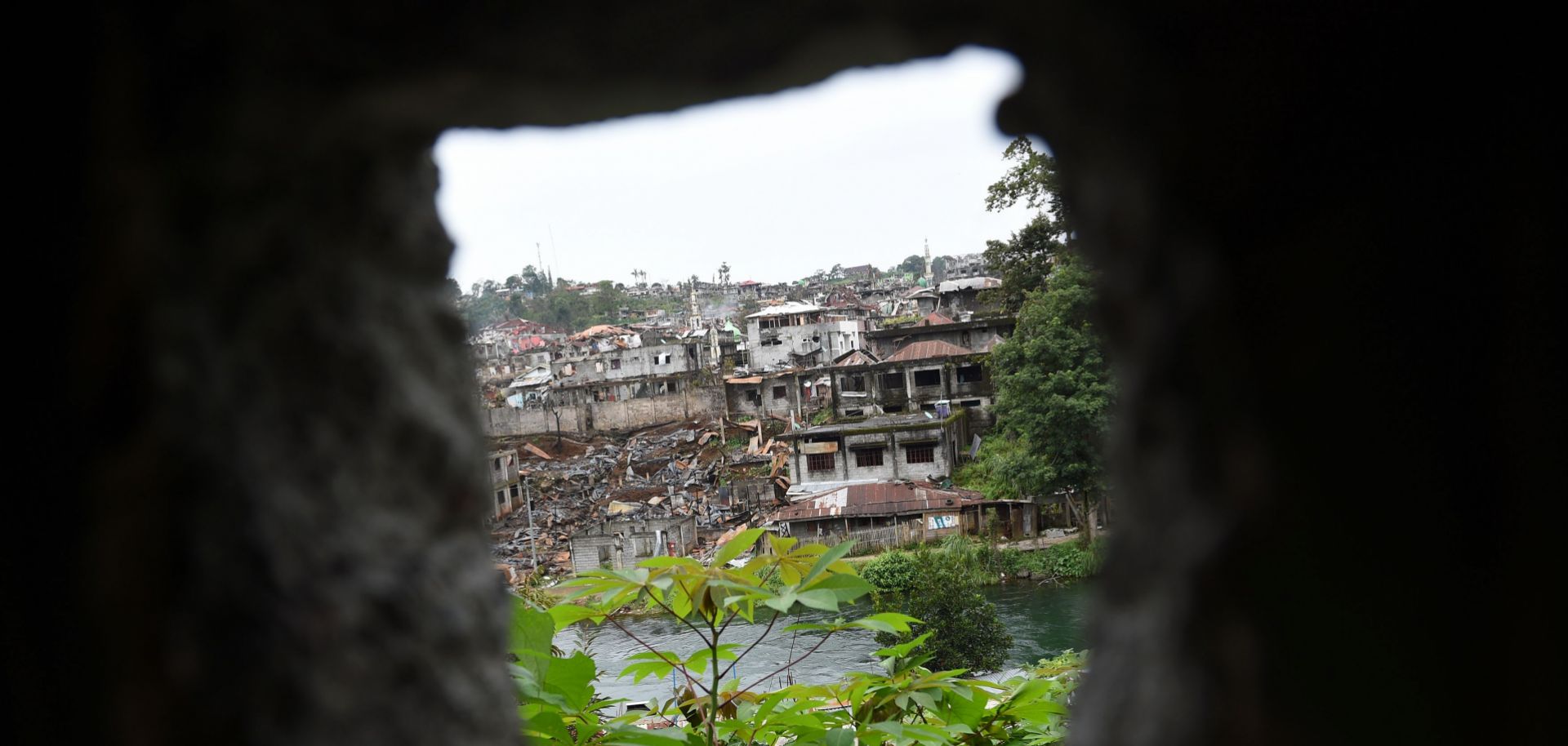
A look at Marawi City shows that Philippine jihadist groups have taken a major gamble on the siege, since the Philippine military has forced them to engage in conventional combat.
In the Philippines, progress toward ending the nearly three-month siege of Marawi City has been slow but steady. The Philippine defense minister has revised his prognosis for the battle after perhaps excessive optimism early on, estimating that it may take the country's security forces another month or two to completely rid the city of jihadists. The events in Marawi City have demonstrated that jihadism is alive and well in Southeast Asia. But local, national and regional limitations will keep militants from the Abu Sayyaf and Maute groups from turning the Philippine city into a lasting base in the Islamic State's global caliphate. Marawi City today is no Mosul in 2014, and though the threat of Islamic extremism will persist in Southeast Asia, the siege of Marawi appears to be the upper limit of success for the region's jihadists.
