
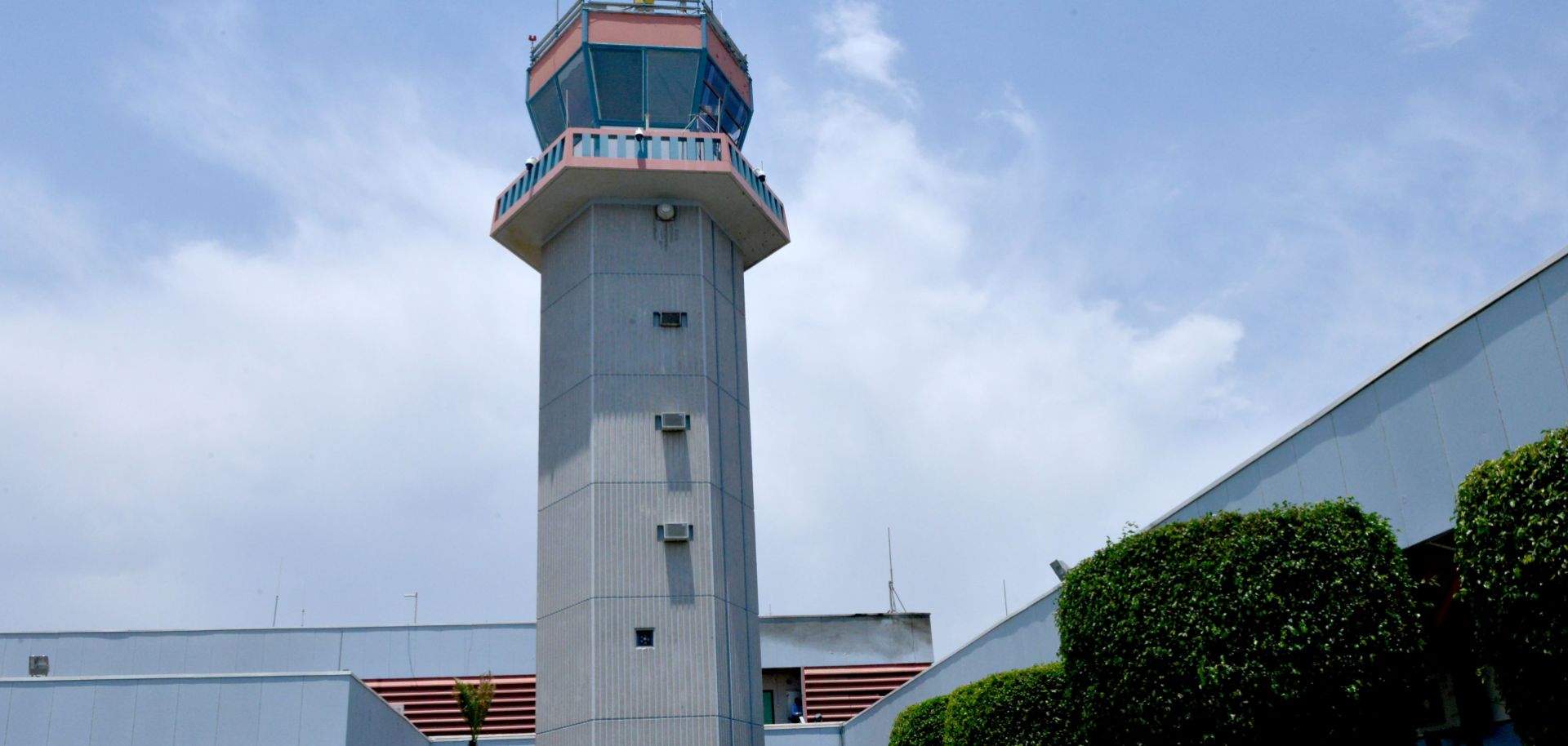
A picture taken during a guided tour with the Saudi military on June 13, 2019, shows the control tower of Abha airport in the popular mountain resort of the same name in the southwest of Saudi Arabia, one day after a Yemeni rebel missile attack on the civil airport wounded 26 civilians. Fully cognizant of the U.S. military's vastly superior conventional military forces, Iran has invested for decades in asymmetric capabilities such as proxy forces, ballistic missiles, naval mines and fast-attack craft to better strike Fully cognizant of the U.S. military's vastly superior conventional military capabilities, Iran has invested for decades in asymmetric capabilities such as proxy forces, ballistic missiles, naval mines and fast-attack craft to better strike U.S. assets, critical energy infrastructure around the Persian Gulf and other key strategic targets. These forces and tactics, however, hardly compensate for Iran's overall relative weakness.
Tehran can hardly be expected to be cavalier about a potential military conflict with Washington , especially given the disproportionate advantage of the United States and the devastation that such a conflict could inflict on Iran's economy, its populace and, potentially, its government. But caution aside, a broader conflict is not beyond the realm of possibility, what with the countries' mutual hostility and mistrust, lack of communication channels to quickly resolve a conflict, and the organizational structure of Iran's forces — units of which have a major incentive to strike while the iron is hot. Fully cognizant of the U.S. military's vastly superior conventional military capabilities, Iran has invested for decades in asymmetric capabilities such as proxy forces, ballistic missiles, naval mines and fast-attack craft to better strike U.S. assets, critical energy infrastructure around the Persian Gulf and other key strategic targets.
