
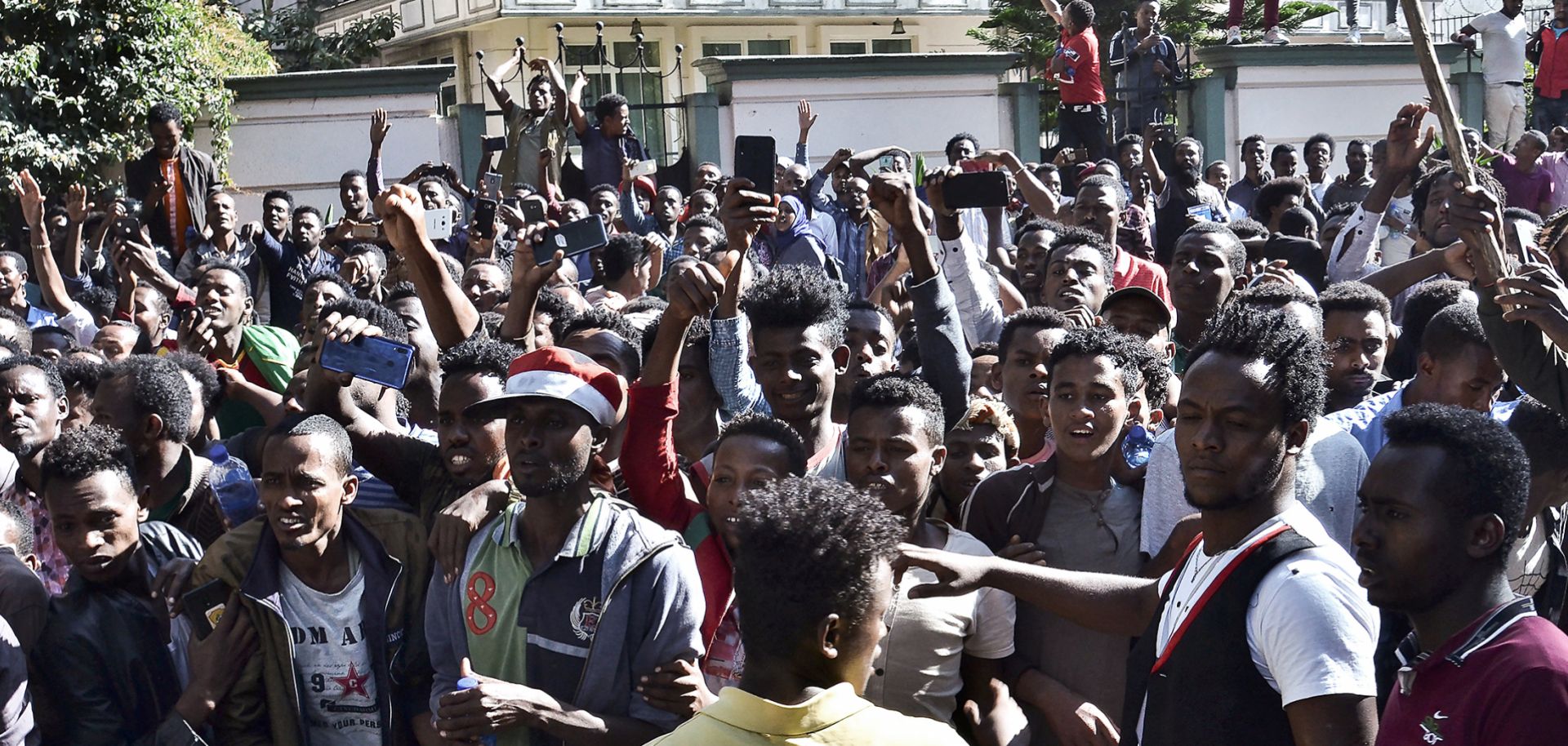
Opposition protesters gather outside Ethiopian Prime Minister Abiy Ahmed's home in Addis Ababa on Oct. 24. Roughly 78 people were killed when protests against the government's alleged mistreatment of a prominent opposition activist turned violent last month.
Since rising to power in April 2018, Ethiopian Prime Minister Abiy Ahmed has already overseen several impressive victories — the opening of Ethiopia's media and political environments being hailed as one of his biggest. His efforts to "achieve peace and international cooperation," including opening Ethiopia's relations with long-time enemy Eritrea , even earned him the Nobel Peace Prize in recent weeks. But unfortunately for Ethiopia's new leader, no amount of accolades will protect him from the bitter campaign his regional rivals are gearing up for ahead of elections slated for May 2020. The Violent Price of Progress On a continent where authoritarian leaders still abound, Abiy has given rise to hopes that Ethiopia might soon become Africa's next big success story. As part of this push, the prime minister confirmed in October that the country will, as promised, hold free and fair elections in May 2020.
