
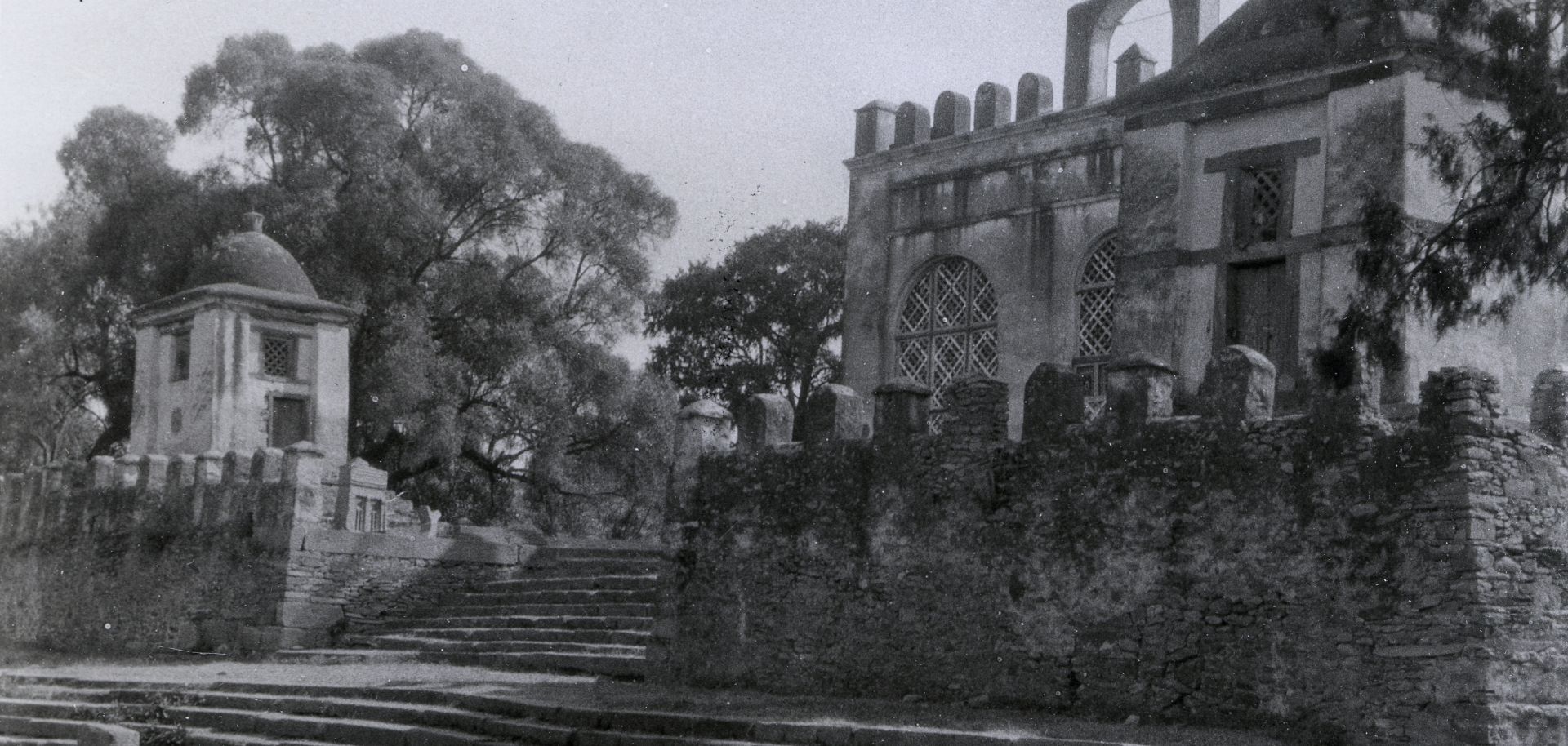
Church of Our Lady Mary of Zion, Axum, Ethiopia, photograph by Ugo Monneret de Villard, 1937. Unlike other African empires of old, which in their pre-colonial histories enjoyed similar prominence in trade with Europe but were unable to expand their activities much beyond generating wealth through that trade, the Kingdom of Aksum in Ethiopia parlayed its economic success into political power.
Ethiopia rose to prominence as a regional empire known as the Kingdom of Aksum in the first century A.D. The kingdom had existed for centuries prior, but it began to flourish thanks to trade between the Roman Empire and ancient India. But its growing wealth and influence wasn't solely a function of its position along vital coastal trade routes. Rather, the core of present-day Ethiopia, and its historic predecessors, has always been the Ethiopian Highlands. The large protected area of fertile lands and major rivers became the seat of a power that would hold sway in its nearby region and beyond the continent. Unlike other African empires of old, which in their pre-colonial histories enjoyed similar prominence in trade with Europe but were unable to expand their activities much beyond generating wealth through that trade, the Kingdom of Aksum parlayed its economic success into political power.
