
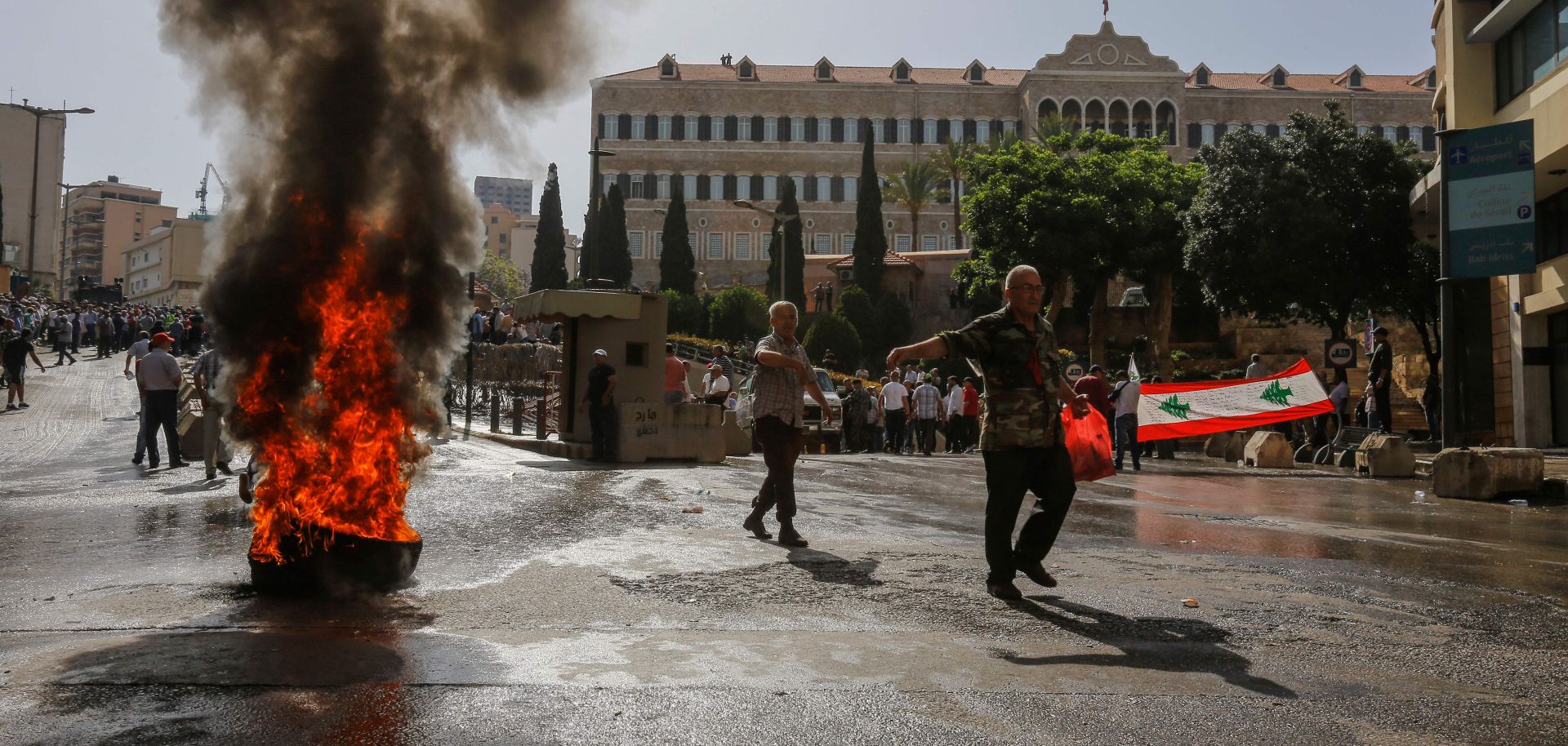
A protester passes a burning tire during a demonstration over feared pension cuts May 20, 2019, near the government's headquarters in Beirut.
Since Lebanon's elections in May 2018 , the country's big political factions — the largely Sunni Future Movement of Prime Minister Saad al-Hariri , the Free Patriotic Movement of Foreign Minister Gebran Bassil, of which President Michel Aoun is part, the generally Christian-dominated Lebanese Forces, and the Shiite bloc of Amal and Hezbollah — have agreed on one thing: the country's finances are unsustainable. With a debt-to-GDP ratio of 152 percent and a banking sector filled with depositors who readily withdraw their cash come any crisis, Beirut's politicians know that reform and austerity are a must if Lebanon is to maintain its budget and wider economy. Beyond that, though, they don't agree on much. Lebanon lacks a unified national social contract.
