
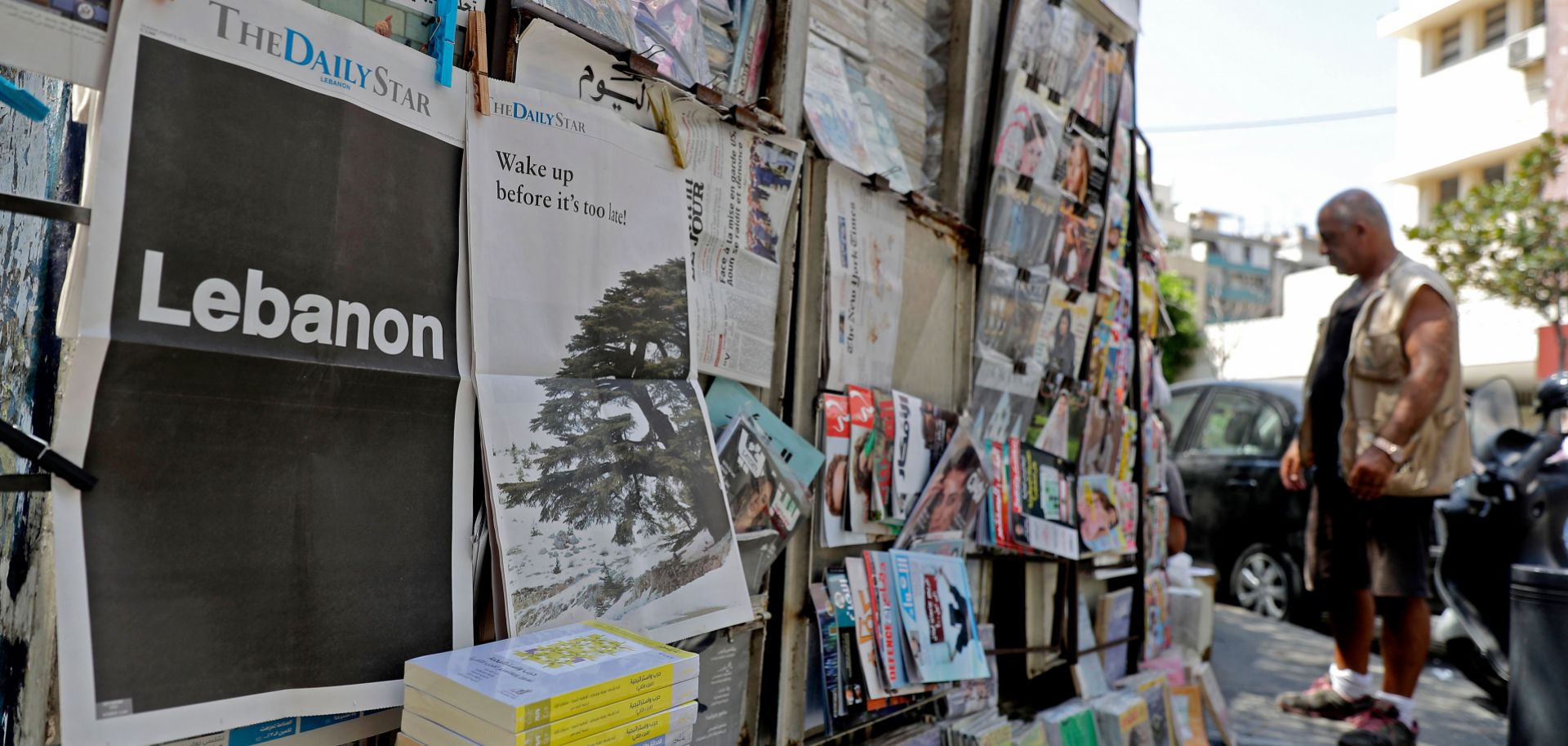
A picture taken on Aug. 8, 2019, in Beirut shows the front pages of the Lebanese English-language Daily Star, which refrained from printing any news in protest against the country's "deteriorating situation." Lebanon's economy is close to collapse.
Lebanon is facing a herculean task to escape its economic malaise. For decades, it has maintained a hefty current account deficit to finance substantial government spending, much of which pays for a social safety net that keeps the socio-politically diverse country from falling apart. But plummeting consumer sentiment, slowing capital inflows and the threat of more Iran-linked sanctions are deepening economic fragility and driving home the unsustainability of that kind of government spending. In its recently passed 2019 budget and under-discussion 2020 budget, the government has agreed that austerity measures are the solution to trim government spending. But forcing austerity measures upon Lebanon will fundamentally disrupt the country's social safety net, thus damaging the political ties between citizens and their political patrons . As Lebanon moves forward with austerity, popular unrest and a weakened government are all but guaranteed.
