
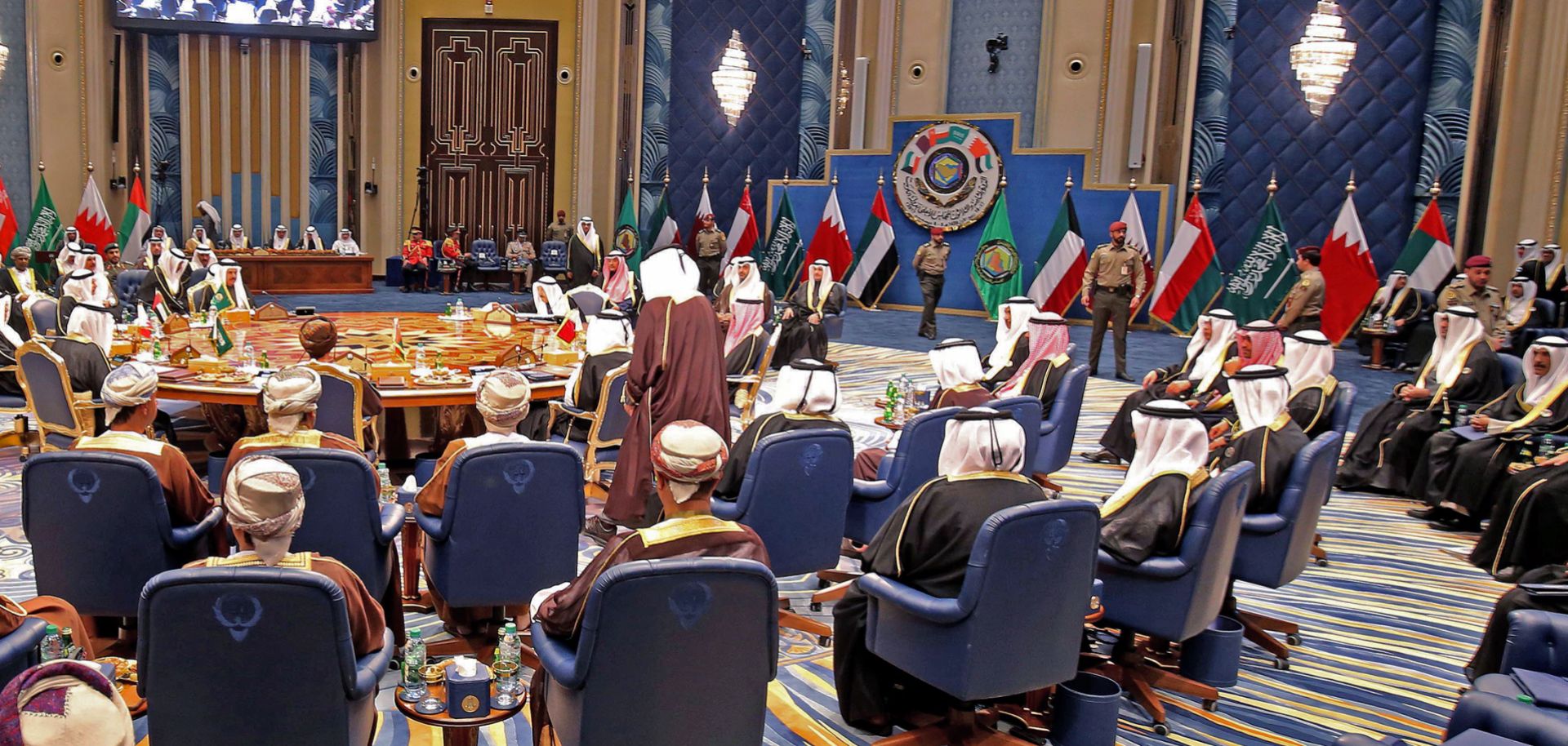
Gulf Cooperation Council leaders meet in Kuwait City on Dec. 5, 2017. Like other GCC member states, Kuwait is confronting, and grappling with, the need to diversify its oil-based economy.
It's a common conundrum for all petrostates worried about the rapid approach of peak oil demand : How does one end such a profound dependence on hydrocarbons? Kuwait, for one, has followed a well-trodden path in its attempts to do so by implementing taxes, introducing new fees and trying to kick-start the private sector. Naturally, most of the plans are bankrolled by the coastal emirate's abundant wealth, which gives it significant margins to play with as it attempts economic reforms on its road to diversification. But Kuwait's economy suffers from a high deficit, inefficient workforce and overreliance on public, rather than private, spending for growth. One of the country's biggest problems is the amount it spends on Kuwaitis, a relic from when the comparatively weak royal family sought to buy the acquiescence of its citizens, particularly the area's powerful merchants and political stakeholders, during the transition to an oil-based economy.
