
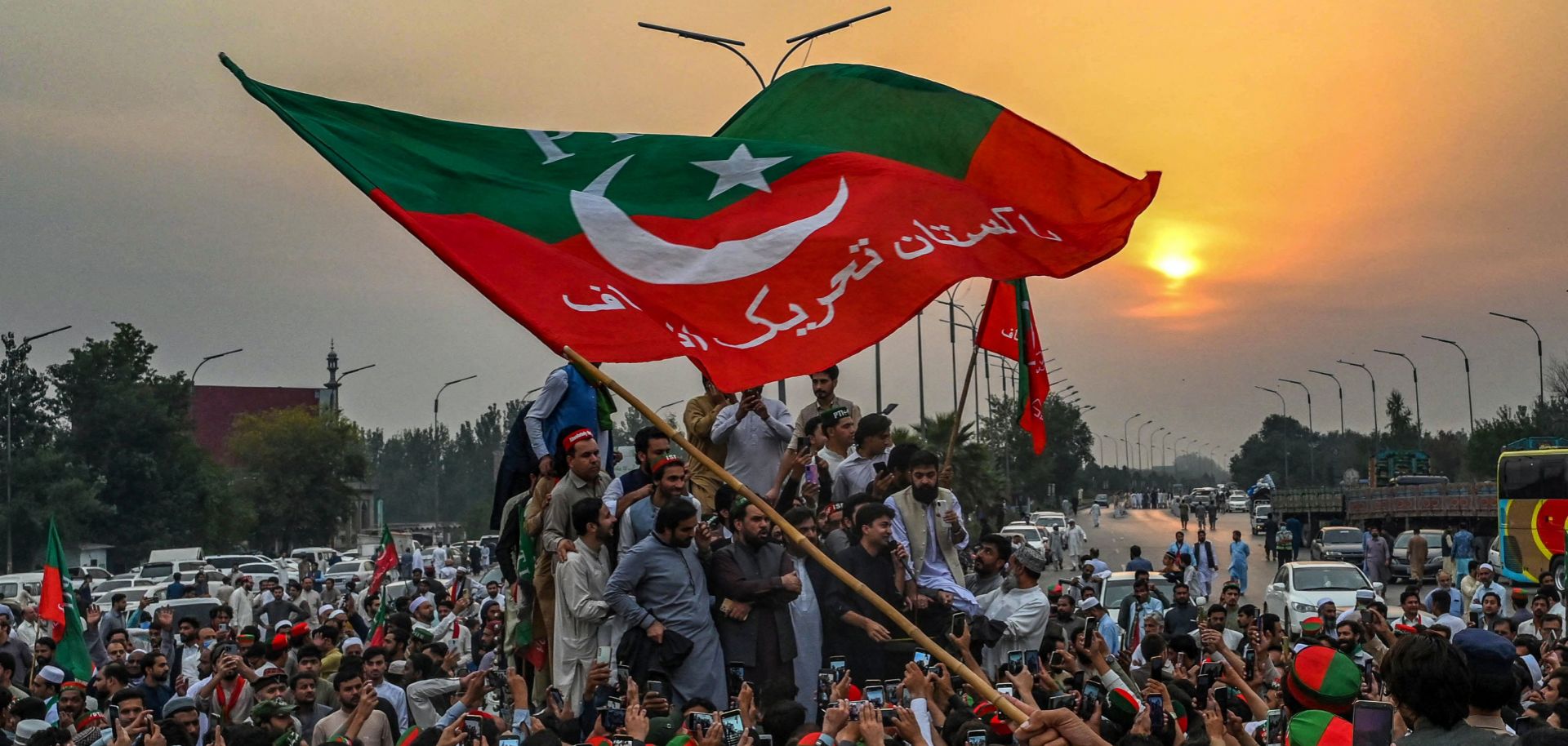
Supporters of former Pakistani Prime Minister Imran Khan take part in a protest as they block the main road in Peshawar, Pakistan, a day after the assassination attempt on Khan on Nov. 4, 2022.
A former prime minister's showdown with Pakistan's powerful military is testing the very foundation of the country's system of governance, opening the door to continued political, economic and security turbulence. Seven months after being forced to step down, former Pakistani Prime Minister Imran Khan continues to accuse the country's military and political establishment, as well as the U.S. government (although toned down), of conspiring against him. And his accusations appear to be resonating among supporters, as evidenced by his Pakistan Tehreek-e-Insaf party's strong performance in recent elections and the large turnouts seen at his continued demonstrations across the country. Khan, a former cricket player, became Pakistan's prime minister in 2018. In April 2022, he was forced to resign after losing a no-confidence motion in parliament triggered by the opposition. Since then, he has insisted on a conspiracy against him and has demanded early elections.
