
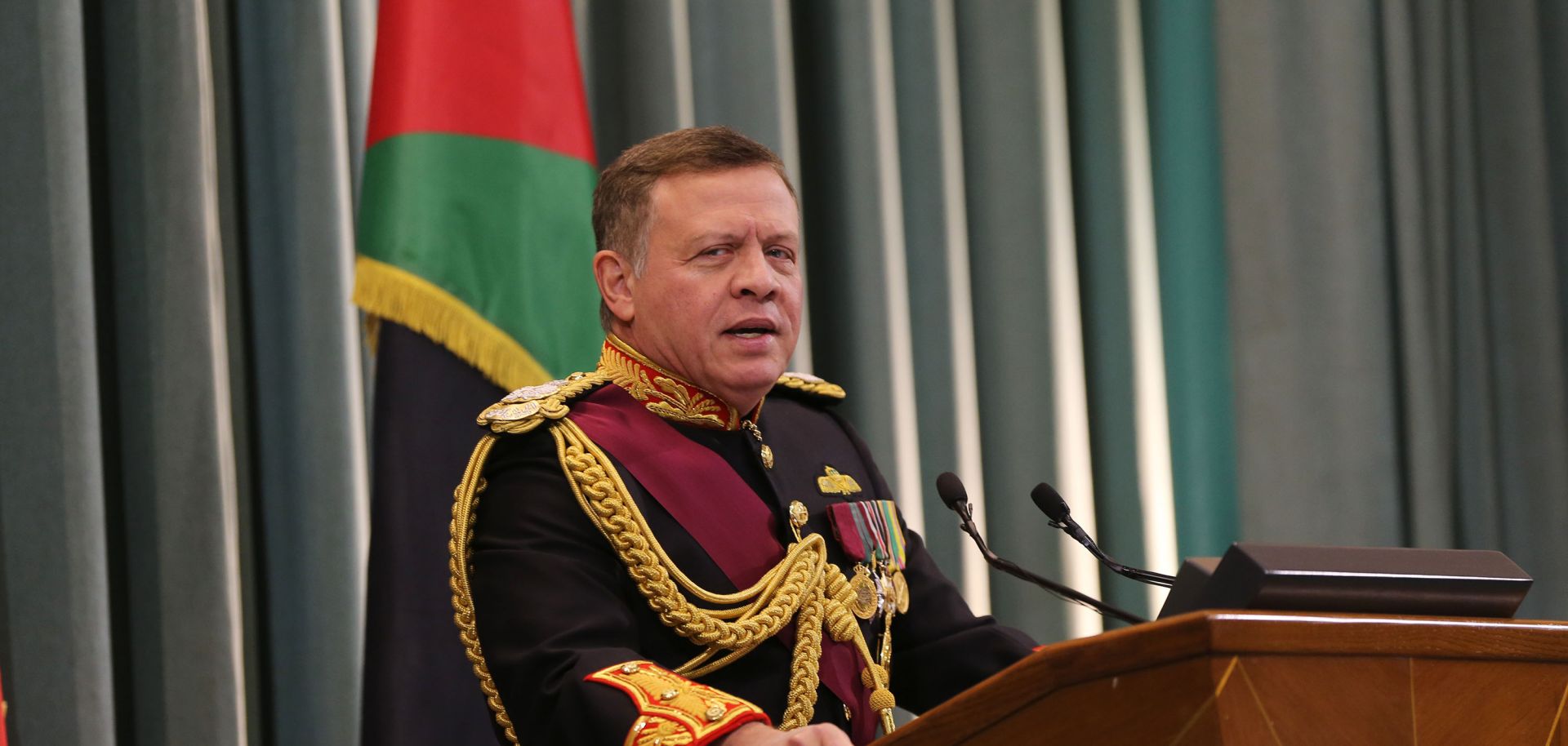
Jordan's King Abdullah II attends the opening of the country's parliament in 2016 in Amman, Jordan.
A rising tide of protests in Jordan has proved itself capable of exerting power over government policy. Jordan's social contract has long been held together by a combination of the monarchy's opaque placations and substantial foreign aid. But as its economy founders, the country is facing the increasing influence of various protesters. On one hand are the nationalists, who are ideologically opposed to King Abdullah II adopting policies that they believe are in the interest of key donors but not of Jordan itself. On the other hand are economically aggrieved protesters who are increasingly struggling to survive as Jordan implements economic structural reforms, especially those related to new taxes. Meanwhile, Jordan continues to rely on its foreign aid, meaning its key donors — The United States, Europe and the Arab Gulf states — have substantial sway over the monarchy's decisions.
