
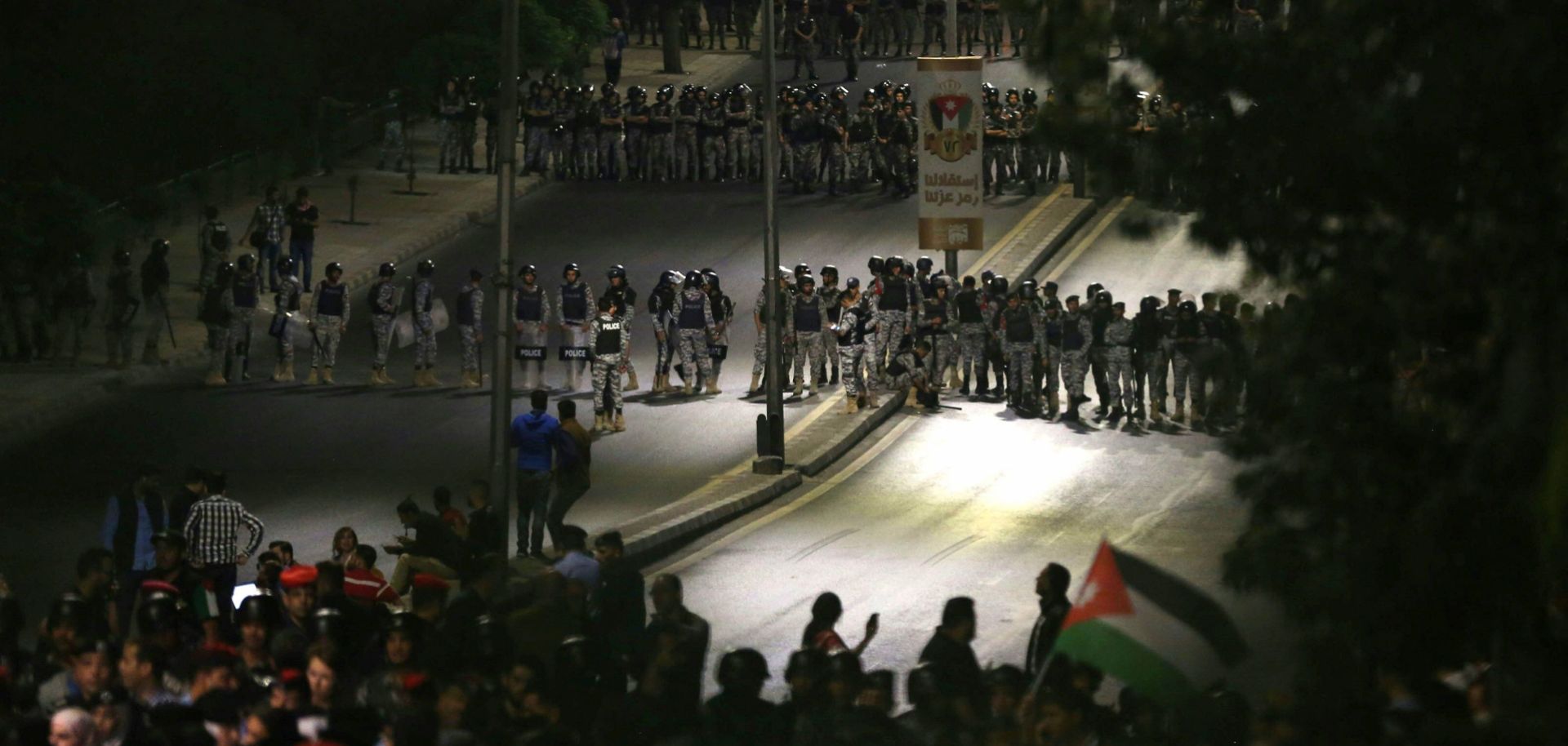
Security forces face off with protesters in front of the prime minister's offices on June 4, 2018, in Amman. The prospect of having to pay income tax, a levy that very few Jordanians have ever had to consider, has stirred protest in the kingdom, which is pursuing reforms to try to restructure its economy.
Days of labor strikes and protests by citizens from all walks of life against an income tax proposal have shaken up Jordan. The unusual display of public discontent in the normally placid kingdom drew promises from King Abdullah II and the rest of the government to reconsider plans for additional levies. The king himself even promised a temporary freeze on additional increases in fuel and electricity prices. Amid the hullabaloo, Prime Minister Hani Mulki stepped down and was replaced by the newly appointed Omar Razzaz. The ouster of Hani and his Cabinet will give the incoming government a bit of a reprieve as it pursues necessary but unpopular economic reforms required under the terms of an International Monetary Fund (IMF) loan and implemented under the advice of the World Bank. But the break will be short.
