
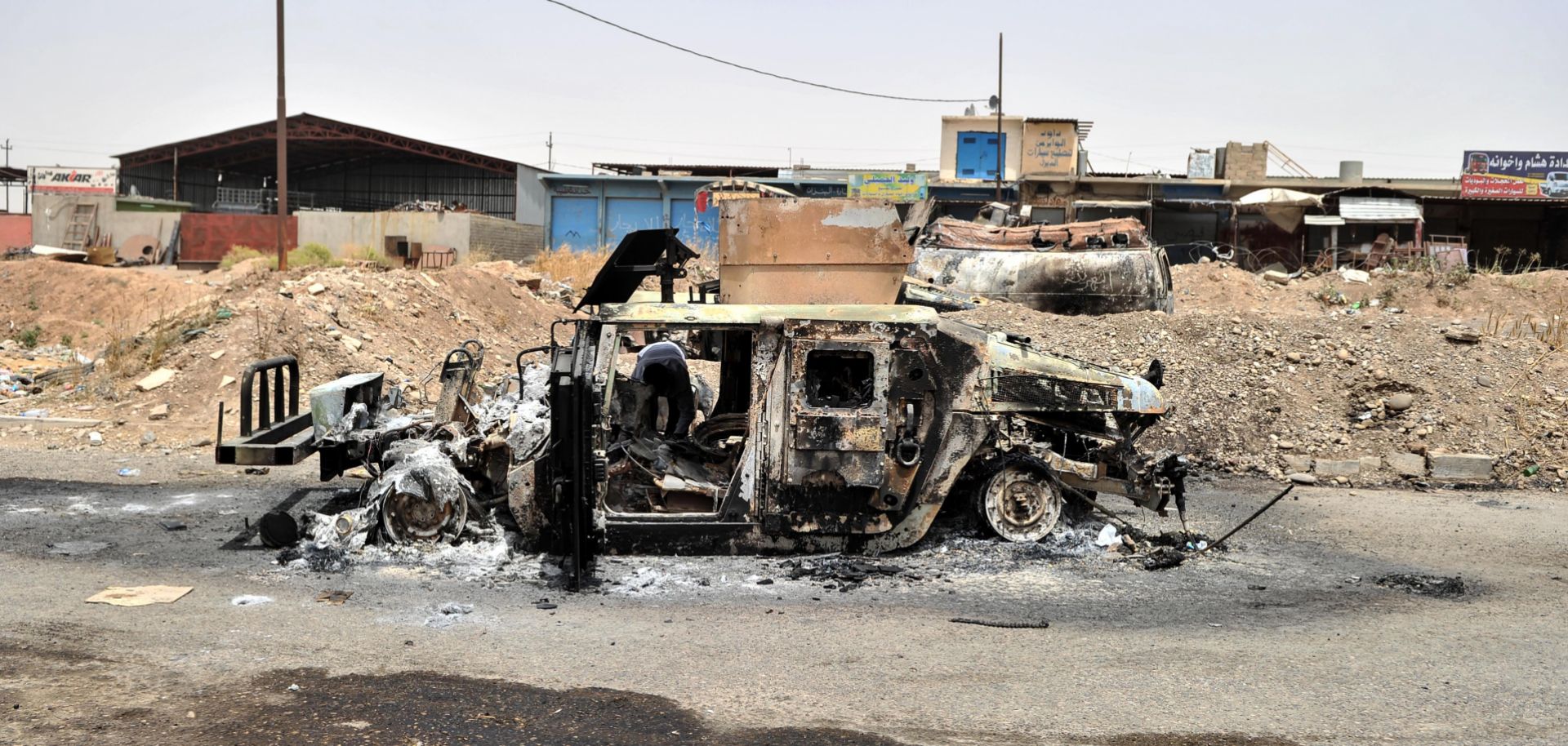
(ONUR COBAN/Anadolu Agency/Getty Images)
A burnt-out Iraqi army vehicle sits on the outskirts of Mosul on June 12, 2014, after the Islamic State invaded the area.
In recent weeks, I have found myself spending a lot of time thinking about the jihadist strategy of al Qaeda and how it compares to that of the Islamic State. Earlier this month, I wrote about the possibility that the al Qaeda brand of jihadism could outlast that of the Islamic State . Last week, I wrote about how ideologies are harder to kill than individuals, focusing on the effect that the death of al Qaeda in the Arabian Peninsula leader Nasir al-Wahayshi will have on the group and the wider global jihadist movement. But beyond the impact of leaders like al-Wahayshi, there are other facets of strategy that will influence the war for the soul of jihadism. Specifically, I am talking about time and place.
