
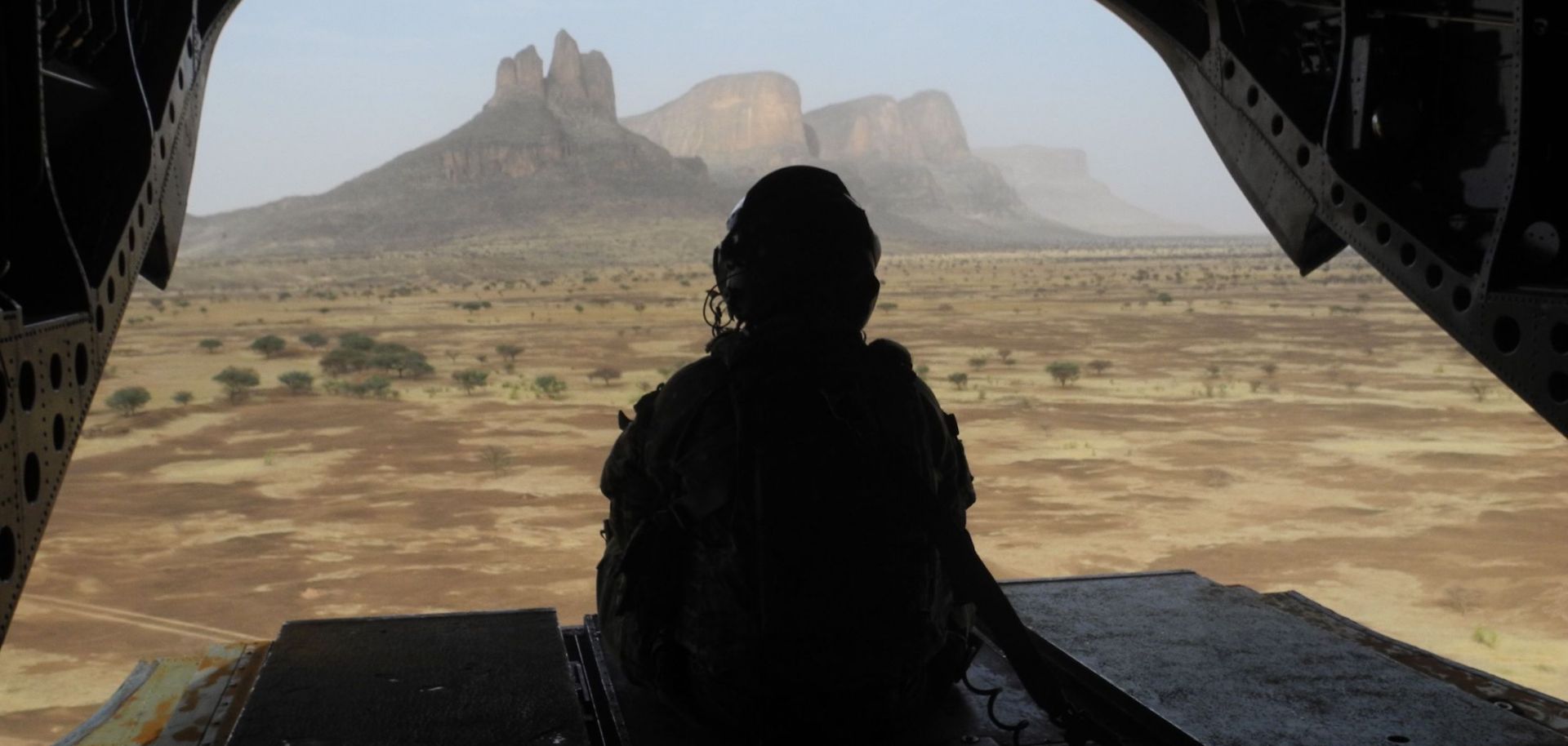
A British soldier leaves the Hombori area aboard a Chinook helicopter on March 28, 2019, during the start of the French Barkhane Force operation in Mali's Gourma region.
By Charles Thorson Coming so close to the 20th anniversary of the 9/11 attacks on the United States, the Taliban takeover of Afghanistan raises important questions regarding the future of jihadist terrorism. The current global jihadist landscape is largely bifurcated, with al Qaeda affiliated groups competing with and in some instances outright fighting Islamic State affiliates. And aside from these two primary competitors for global jihadist leadership, a range of smaller, more locally focused groups remains a persistent threat, particularly as both al Qaeda and the Islamic State seek to co-opt them to join their global networks. In the short term, the Taliban victory will provide a significant propaganda victory for global jihadist groups, with al Qaeda and its affiliates having an advantage given their historic and ongoing links to the Taliban.
