
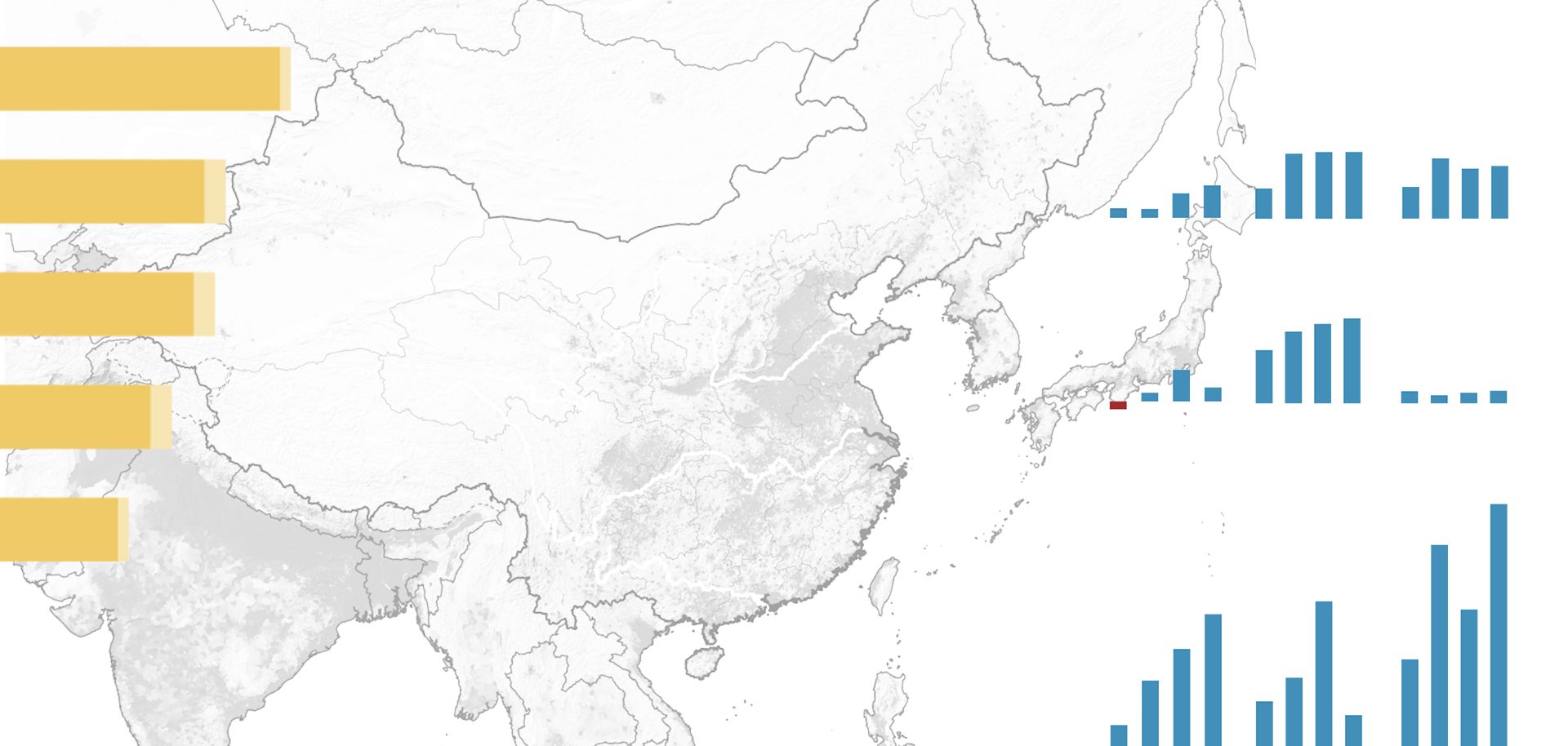
Japan has a long-standing and pragmatic interest in the South China Sea linked to its immediate geographic concerns: securing access to trade routes and to resources the archipelago lacks. It has been active in the South China Sea since industrialization prompted Japan to secure trade routes and seek resources. This ran parallel to Japan's militarization and expansion in its periphery. Japan began mining in the Spratley Islands as early as 1918 and occupied the Spratleys and the Paracel Islands in the South China Sea during World War II as part of its deployment in Asia-Pacific. After the war, Japan's policy toward Southeast Asia was to become an economic leader, largely through aid and investment, and to build trust among the region's nations with a limited military doctrine. From 1977 to 1992, Japan's development aid to Southeast Asian countries increased from $1.42 billion to $50 billion.
