
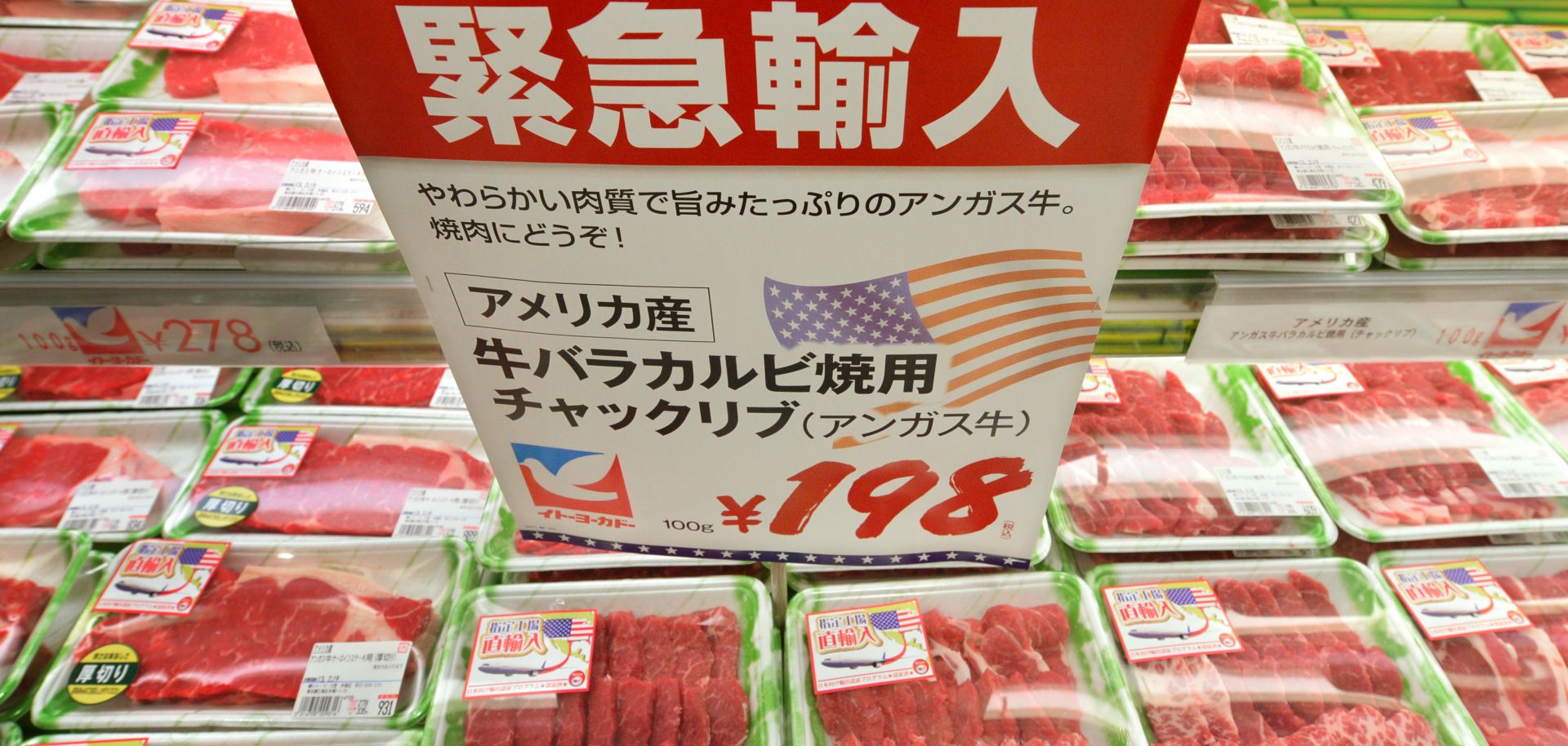
A Tokyo supermarket sells beef imported from the United States in February 2013. Japan's trade partners are eager to crack open the country's famously protectionist agricultural sector.
As an island nation with limited arable land, Japan has long feared food shortages. For this reason, the country has had little choice but to defend its agricultural sector rigorously by attempting to insulate its farmers from economic headwinds and striving for self-sufficiency in food wherever possible. This focus on shoring up agriculture, however, has generated a farming population that has enjoyed outsized political clout in successive administrations. In fact, Japan's agricultural lobby , JA-Zenchu, has served as a reliable vote bank for decades for the ruling Liberal Democratic Party (LDP), which, in turn, has sheltered farmers and guaranteed itself continued support. But Japan's rapidly shrinking and aging population portends shifts in domestic food consumption, as well as a decline in the number of workers to till the land. To sustain the sector, the Japanese government is trying to make it more efficient, competitive and integrated with international markets.
