
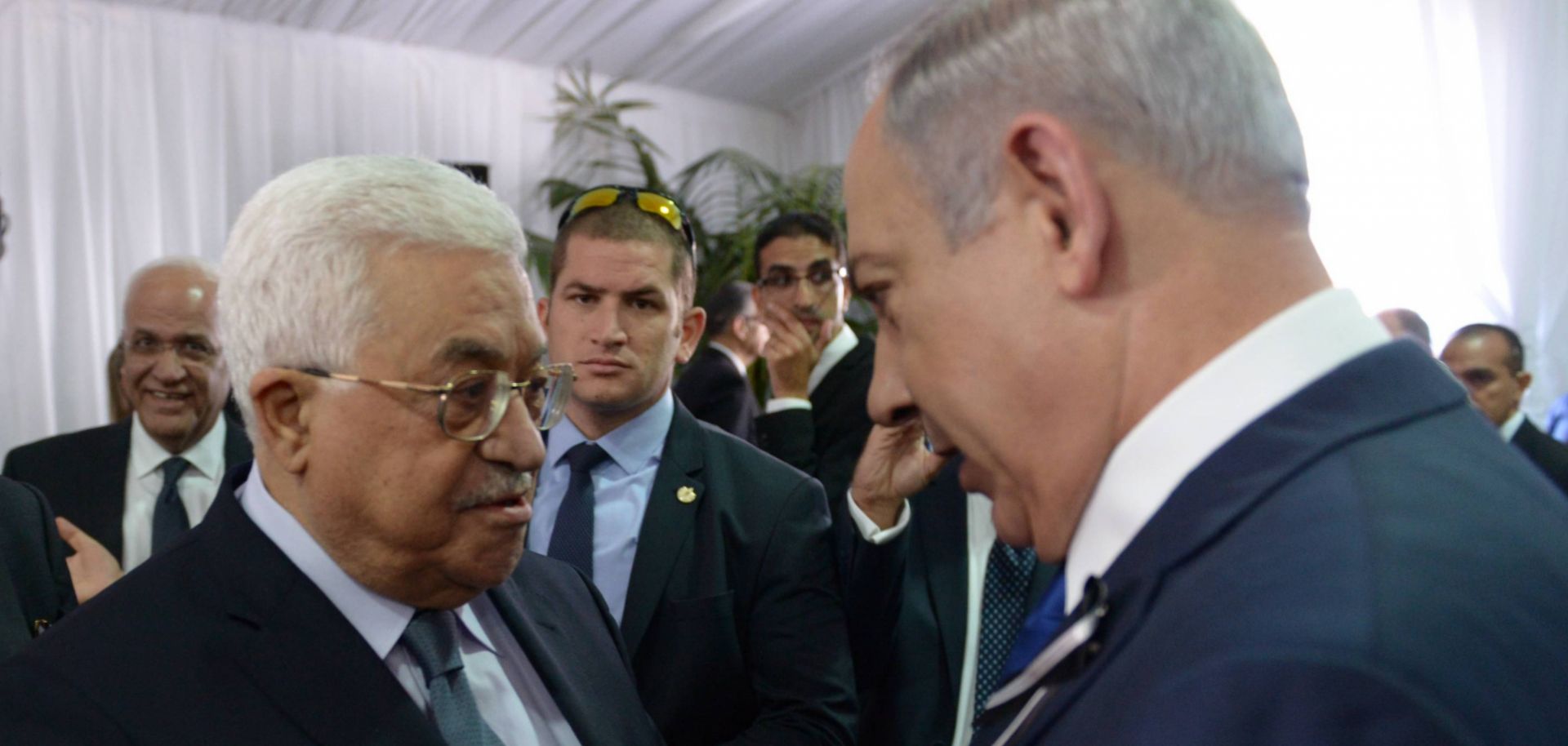
Israeli Prime Minister Benjamin Netanyahu shakes hands with Palestinian Authority President Mahmoud Abbas during the funeral of former Israeli leader Shimon Peres on September 30, 2016 in Jerusalem, Israel. World leaders and dignitaries from 70 countries attended the state funeral of Israel's ninth president, Shimon Peres, in Jerusalem on Friday, after thousands of Israelis paid their last respects to the elder statesman who died on Wednesday.
The Israeli government and the Palestinian National Authority (PNA) have agreed to engage in direct peace talks Sept. 2 in Washington. Neither side has expressed any enthusiasm about the talks. In part, this comes from the fact that entering any negotiations with enthusiasm weakens your bargaining position. But the deeper reason is simply that there have been so many peace talks between the two sides and so many failures that it is difficult for a rational person to see much hope in them. Moreover, the failures have not occurred for trivial reasons. They have occurred because of profound divergences in the interests and outlooks of each side. These particular talks are further flawed because of their origin. Neither side was eager for the talks. They are taking place because the United States wanted them.
