
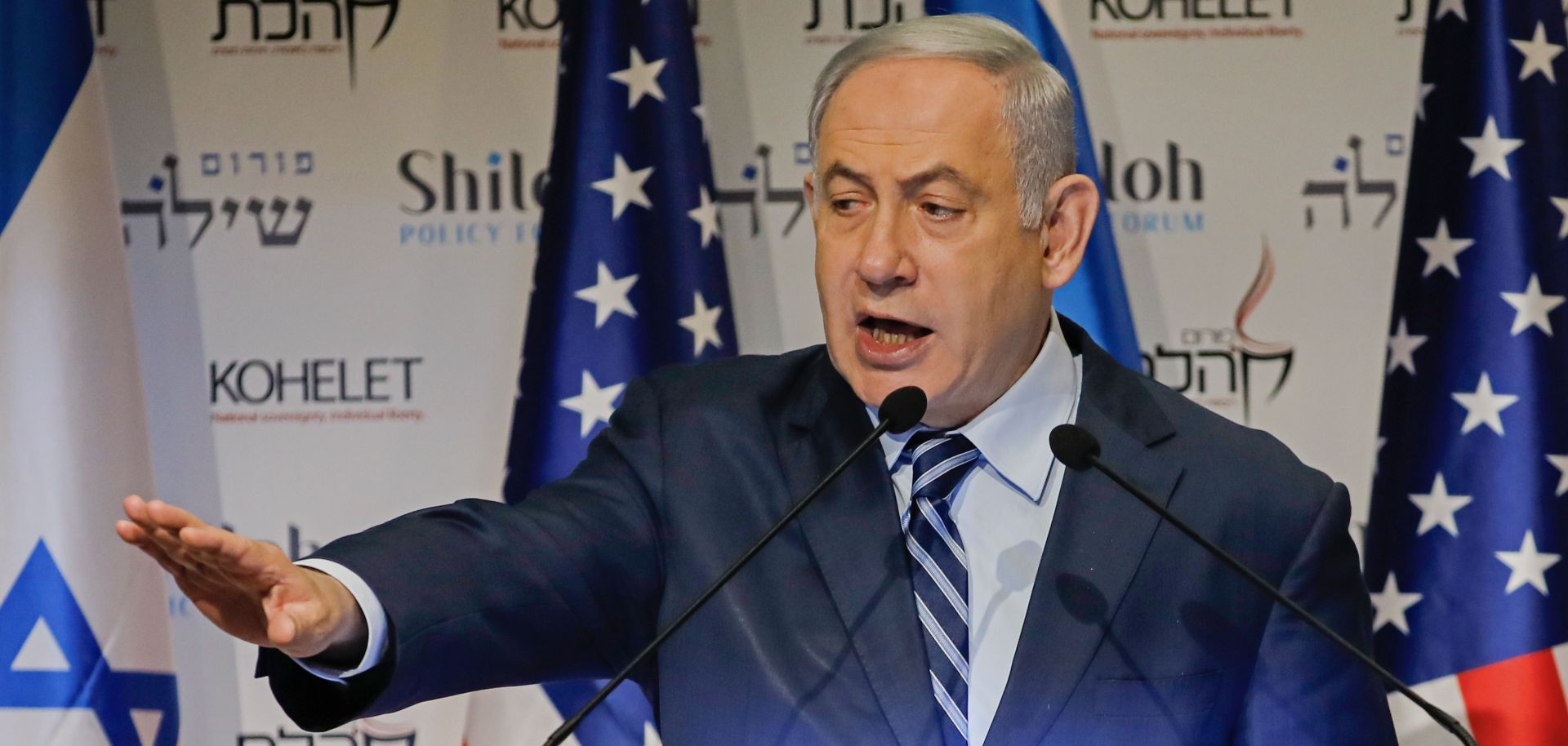
Israeli Prime Minister Benjamin Netanyahu speaks at a Jan. 8 policy conference in Jerusalem. Netanyahu said Israel would retaliate with a "resounding blow" if attacked by Iran over the U.S. killing of Qassem Soleimani.
A more aggressive U.S. strategy is letting Israel dial back its own threats against Iran. Typically willing to tie U.S. and Israeli regional efforts together, Prime Minister Benjamin Netanyahu has attempted to distance his country from the recent U.S. assassination of the Iranian Quds Force commander Qassem Soleimani, reportedly saying that Israel was "not involved" in the event and "should not be dragged into it." And in response to Tehran's declaration that it would no longer adhere to the stipulations on uranium enrichment in the Joint Comprehensive Plan of Action (JCPOA) nuclear deal, Israel's energy minister said it was still "too early to say" if the move meant Iran was actually chasing a weapon, marking a notable break from Israel's often alarmist rhetoric on Tehran's nuclear program. For Israel, this unusually subdued response represents a temporary tactical shift: For now, it will allow current U.S.
