
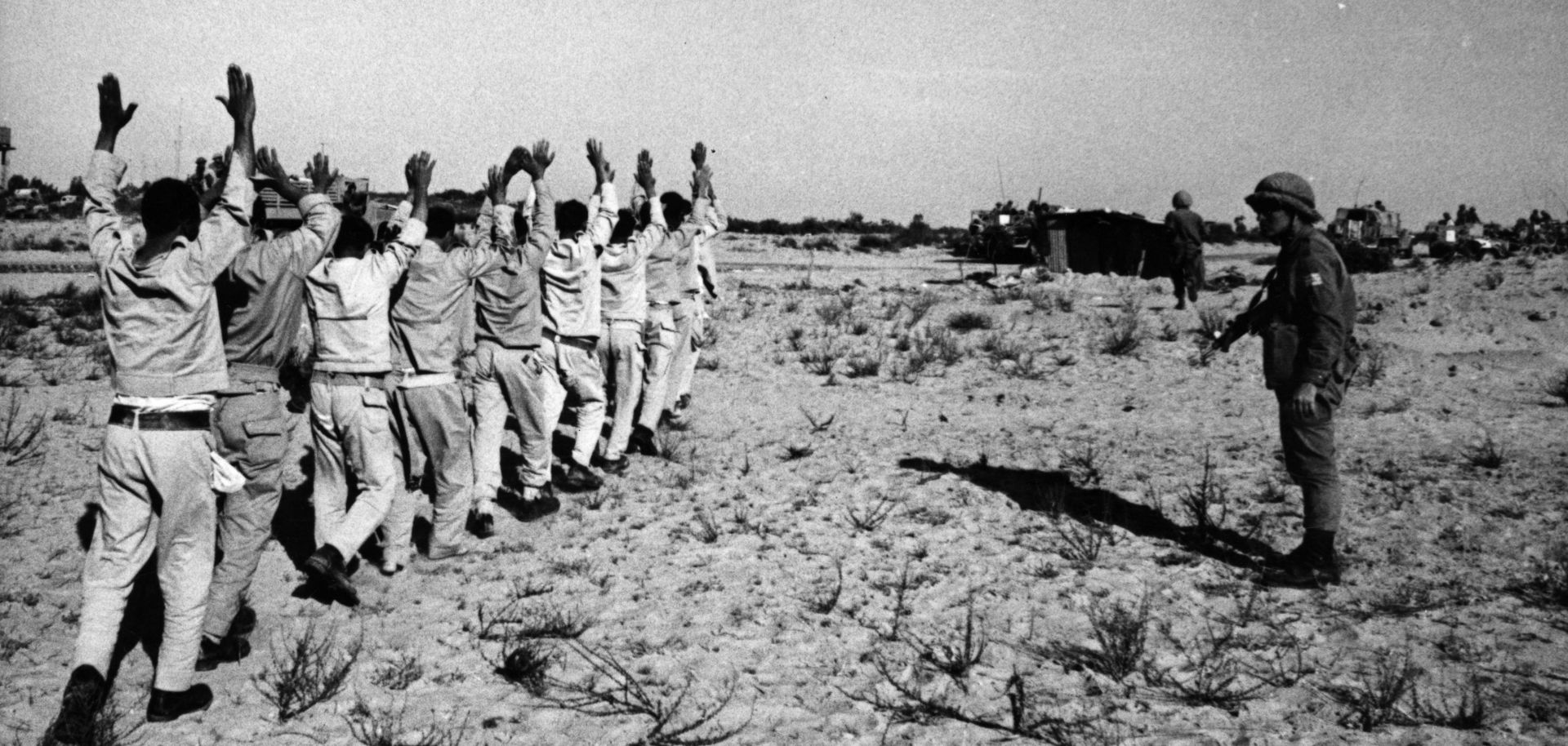
Egyptian prisoners of war hold their hands aloft after being rounded up by Israeli forces in the Sinai Desert following the Six-Day War in 1967. Israel is currently pursuing a transactional approach to diplomacy, but that will only work as long as it has something worth offering to other countries in the region.
New times call for new ideas: Where once Israel traded land for peace, it's now hoping to peddle regional cooperation for peace, all in a bid to finally gain (more) acceptance in the neighborhood. On Oct. 6, Intelligence Minister Israel Katz touted a potential nonaggression pact with the Gulf Arab states; not long before that, Prime Minister Benjamin Netanyahu promised to annex the Jordan River Valley in the West Bank to help win reelection in the country's Sept. 17 polls. On the surface, the announcements might seem contradictory, but both are linked: On one hand, Katz was signaling Israel's optimism that it might soon gain public acceptance from key Gulf Arab states , while on the other, Netanyahu was making it clear that Israel's survival strategy depends less and less on the country's old land-for-peace strategy.
