
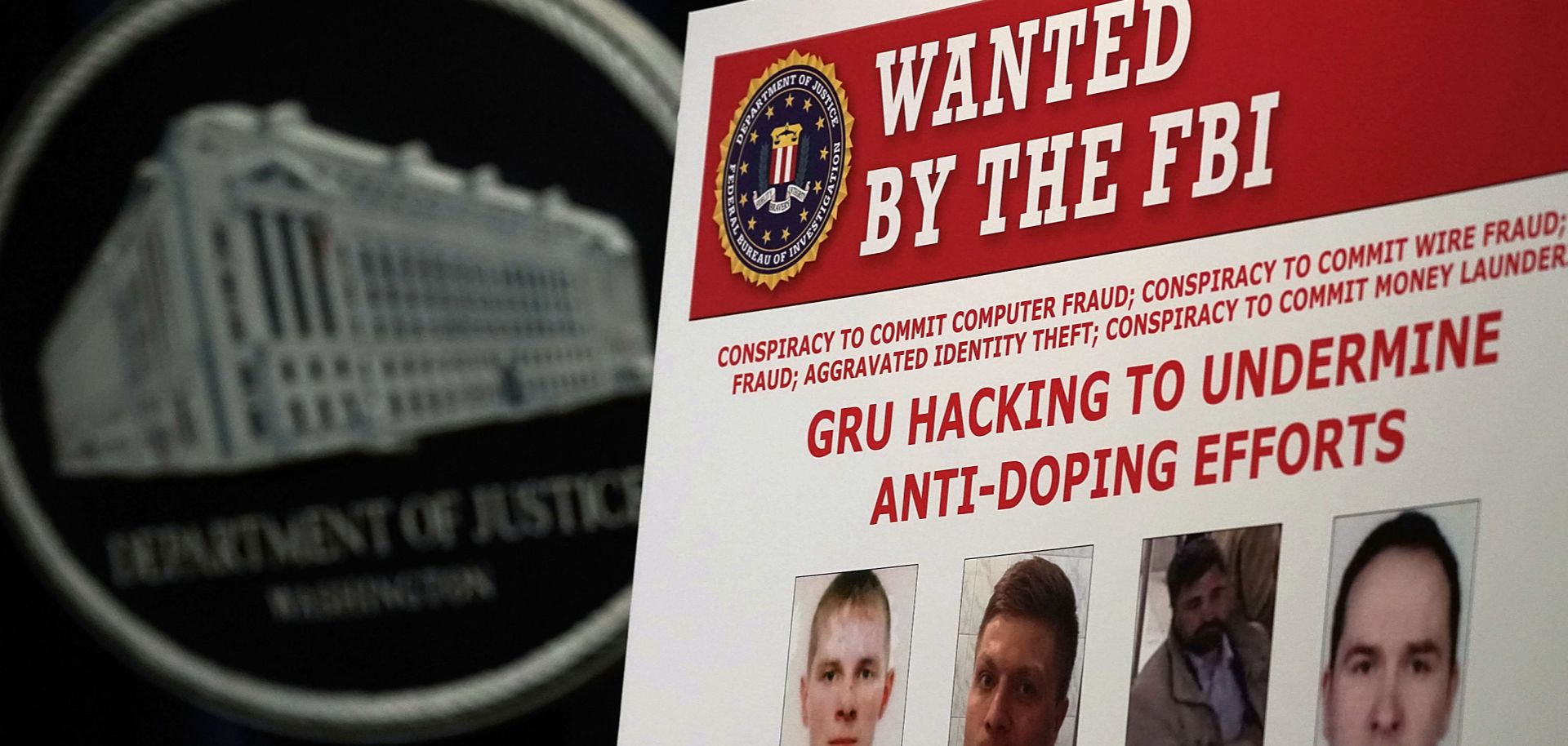
A 'WANTED' poster of Russian individuals is seen during a news conference to announce criminal charges October 4, 2018, in Washington, D.C.. Seven Russian GRU intelligence officers have been indicted for their alleged roles in hacking and related influence and disinformation operations targeting international anti-doping agencies, sporting federations and anti-doping officials.
Last week was a rough one for Russia's military intelligence service. On Oct. 4, the U.S. Department of Justice announced the indictment of seven officers of the Main Intelligence Directorate (known as the GRU by its Russian acronym) in connection with hacking operations. At the same time, Dutch intelligence services released a report on the April arrest of four of the men that included their passport information and photos of their hacking equipment. Then independent investigators, using the internet and social media, dug up additional information on the GRU's cyberwarfare unit, confirming the identity of one of the suspects in a nerve agent poisoning in the United Kingdom and identifying the second suspect for the first time. These developments emphasize how social media and open-source information on the internet — though inherently neutral — can be used for either good or ill.
