
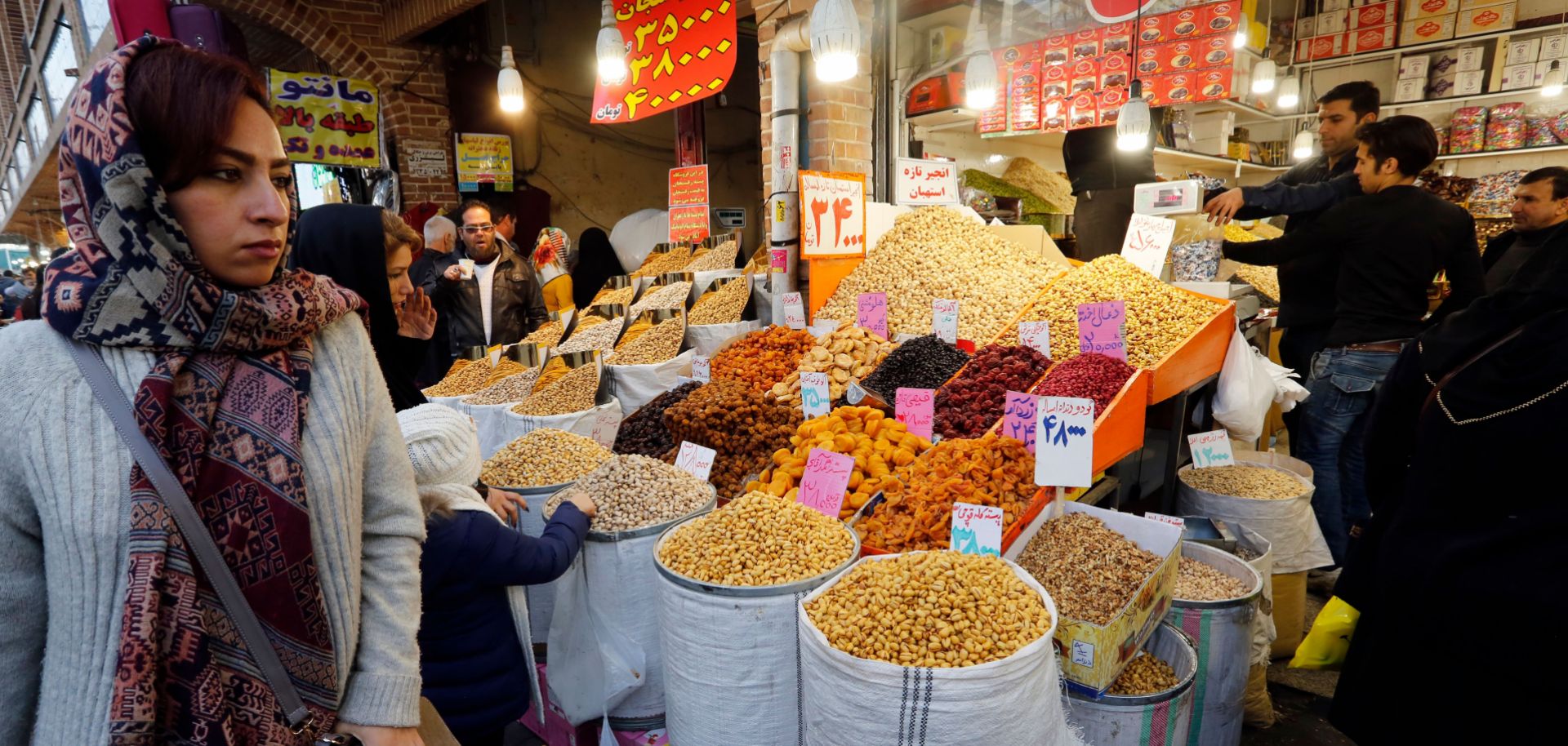
Iranians shop at Tehran's ancient Grand Bazaar. Historically, food prices and unemployment -- especially in rural areas -- have been the major factors prompting protest and unrest in the country.
Iran is preparing for major economic and financial challenges now that the United States is ready to implement tough oil-specific sanctions in November . The government in Tehran is unwilling to heed Washington's demands , which include halting its missile program and ending its support for regional militias, because it considers these basic components of the country's defense strategy. So Iran is managing its economy for the long haul, hoping it can insulate itself against the effects of sanctions long enough to outlast the current U.S. administration. Iran's government will try to manage its finances in a way that protects its population from the most tangible effects of sanctions, employing what it calls a "resistance economy." But even with members of the Iranian government relatively united in their efforts to prevent economic disaster, the U.S. sanctions are powerful enough that Iran's economy is all but guaranteed to go into recession.
