
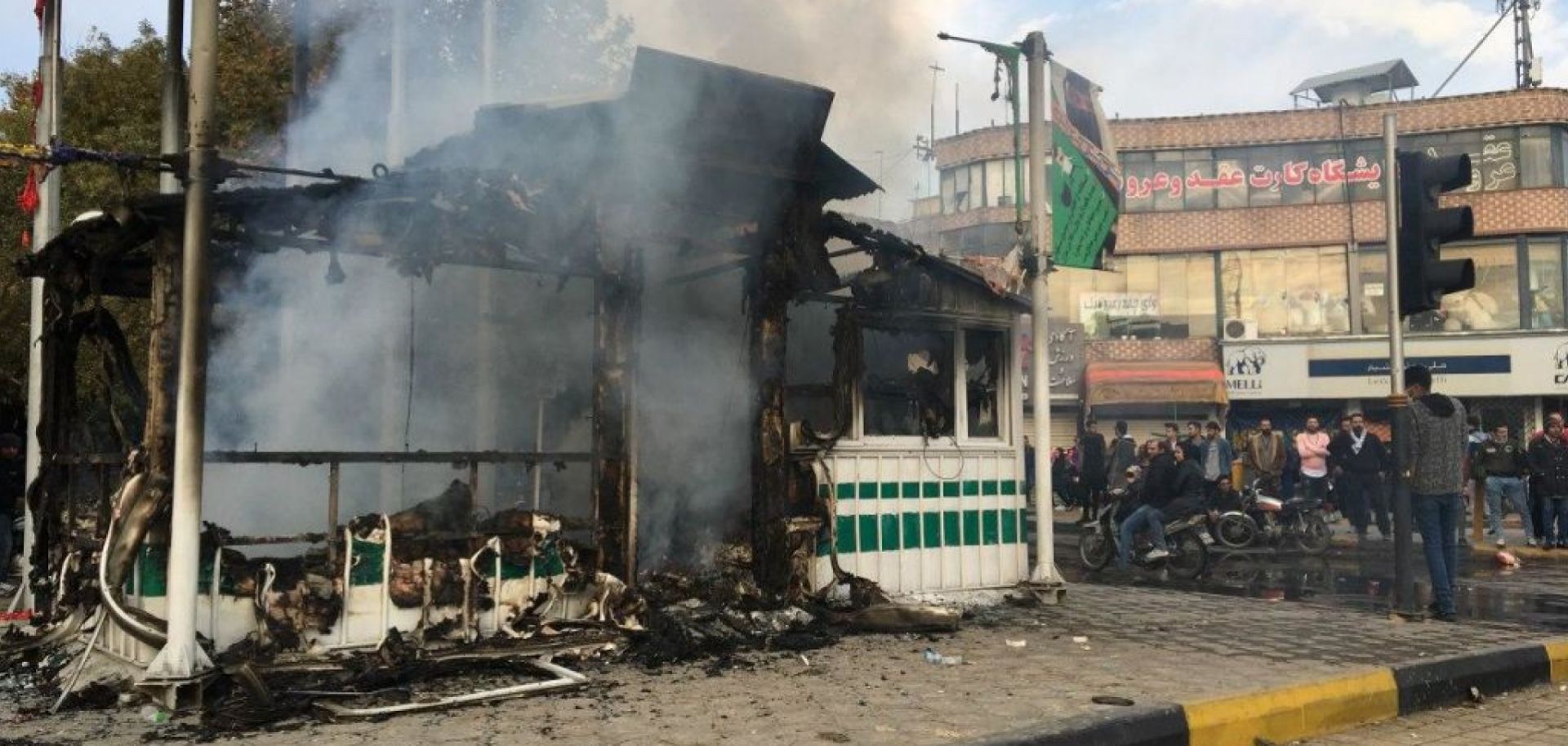
A crowd gathers in Isfahan, Iran, around the smoldering remains of a police station set ablaze by protesters during a demonstration against a fuel price rise on Nov. 17, 2019.
Widespread protests gripped Iran for a third straight day following a government-mandated fuel price increase of 50 percent and fuel rationing program introduced Nov. 15. Demonstrators protesting the price hikes have burned and looted more than 100 banks and shops across the country, barricaded highways and massed in the Grand Bazaar, a major cultural center in Tehran. Thus far, the government has responded by shutting down the country's internet and instituting violent crackdowns. Despite these protests, the largest and most widespread since the United States pulled out of the nuclear deal with Iran and instituted a campaign of economic sanctions against the country, it's unlikely that the current round of demonstrations will threaten the continuity of the Iranian government. But the eventual fallout from the protests and the government's response could prove a seminal moment for Iran's post-sanctions strategy .
