
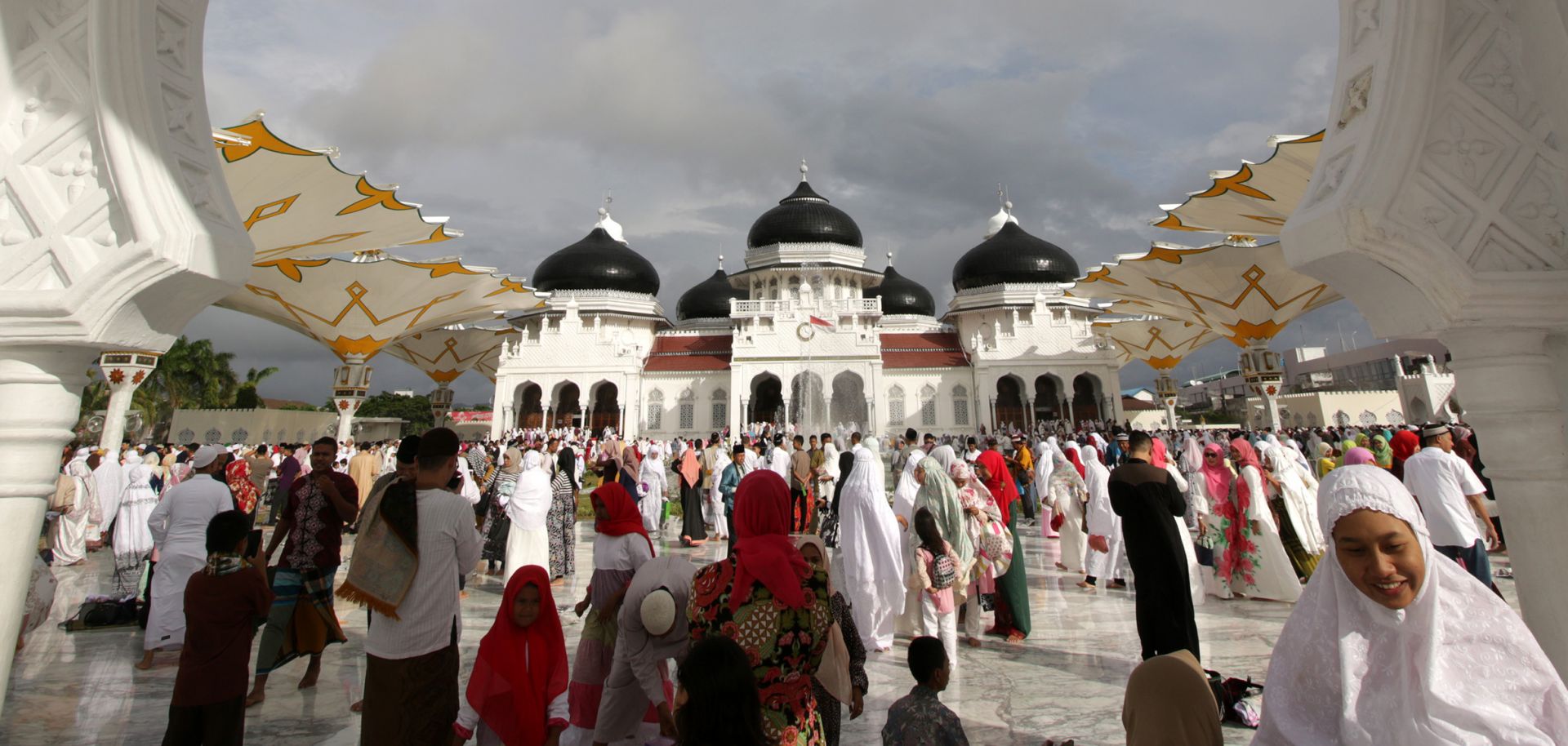
Indonesian Muslims offer Eid al-Fitr prayers at a mosque in Banda Aceh. Over the next two years, President Joko "Jokowi" Widodo will need political acumen to counter the opposition's appeal to Islamist sentiment and keep his ruling coalition together.
Indonesia is often presented as a counterpoint to Islam's sway in governance and political ideology across the Middle East and parts of South Asia. The country is home to the world's largest Muslim population — 242 million people — yet its government is based on a set of secular, pluralist principles rooted in the geographic fragmentation that defines its geopolitics. While Muslims make up about 87 percent of the country's population, significant Christian, Hindu and Buddhist minorities also live in Indonesia, particularly in its urban economic centers. Effectively governing the nation, a collection of 17,000 islands scattered over 1.9 million square kilometers (742,000 square miles), requires a political order that can appeal to each of these groups — or else risk spawning separatist movements. The past eight months, however, have brought political Islam to the fore in Indonesia.
