
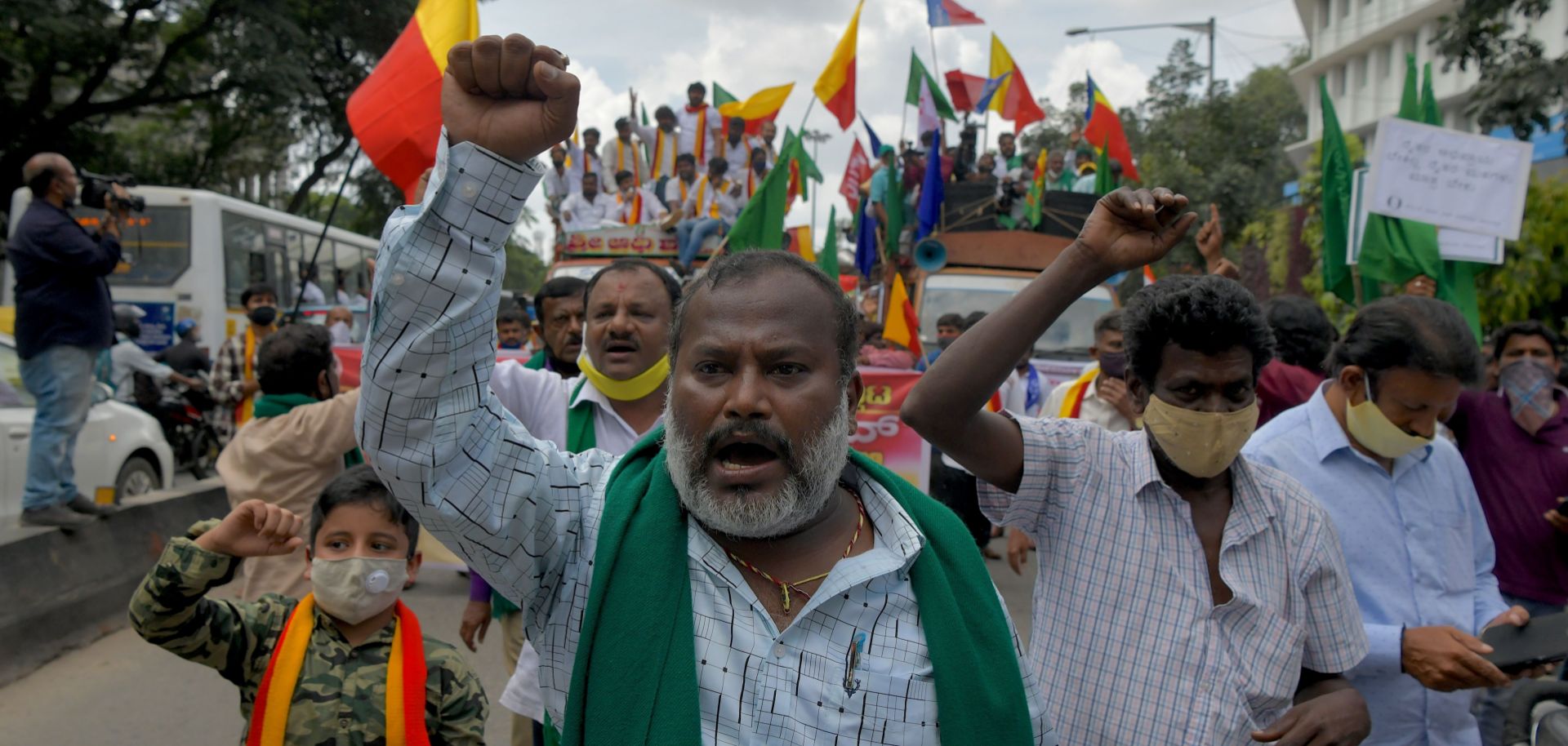
Farmers in Bangalore, India, stage an anti-government demonstration to protest against the recent passing of new agricultural reforms on Sept. 28, 2020.
Indian Prime Minister Narendra Modi and his ruling Bharatiya Janata Party (BJP)’s new agricultural and labor reforms may help accelerate the country’s economic recovery from COVID-19, but the likely near-term financial losses for Indian farmers and unionized workers will risk fueling backlash from both protesters and state legislatures. The Indian parliament passed the reforms in an abbreviated monsoon session that ended Sept. 25. By usurping procedural legislative practices to close debate or refine the proposed agricultural reforms, the BJP was ultimately able to quickly push through its proposed legislation through a less precise voice vote in parliament instead of a typical ballot vote. Key aspects of the new reforms include: The removal of virtually all barriers to intra-state trade of agricultural products, which will allow farmers to sell their products anywhere in the country by ending the practice of state-run regional markets with significant fees.
