
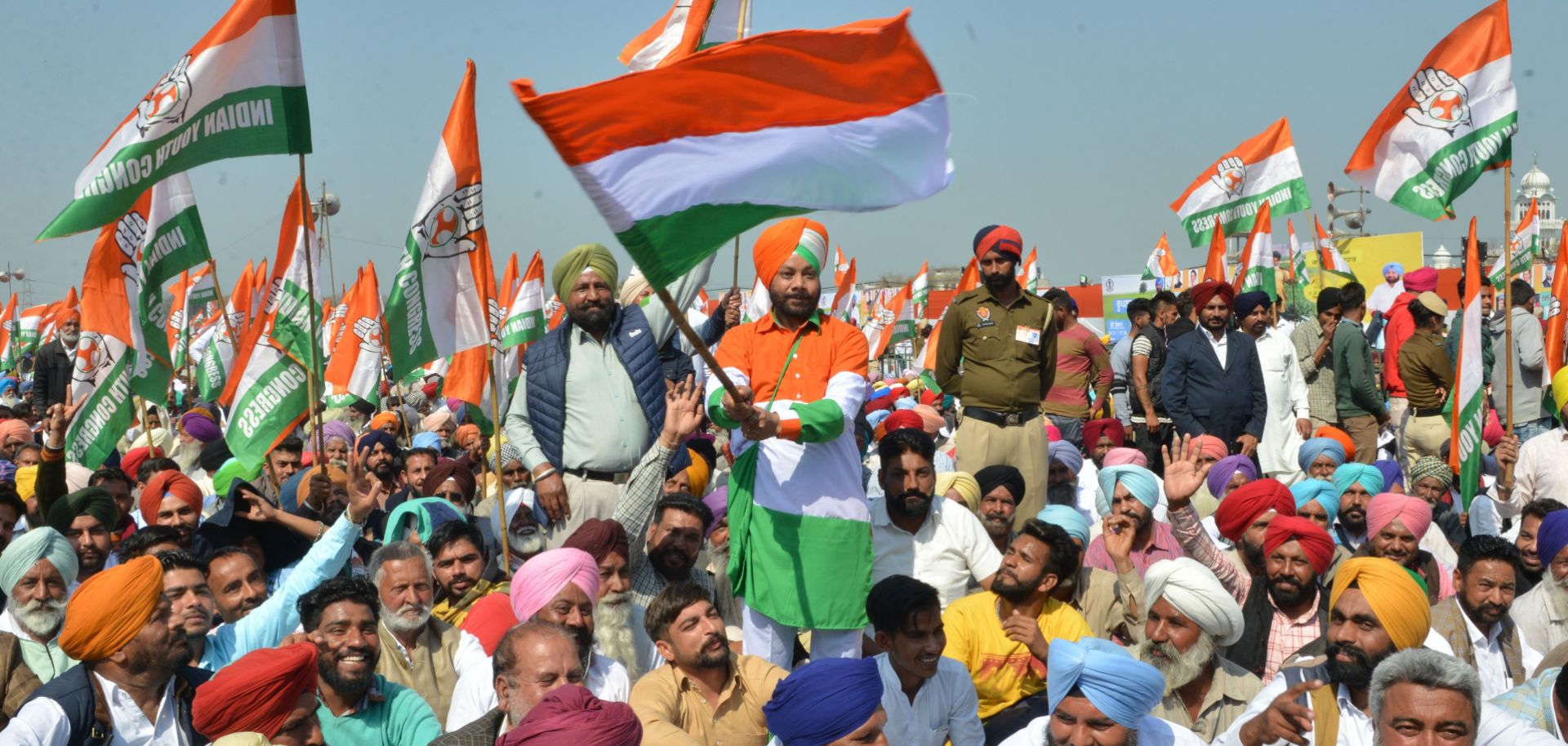
Supporters of the Indian National Congress (INC) party attend a rally in Punjab in March 2019. Narendra Modi, the most powerful Indian prime minister in a generation, is leading his incumbent Bharatiya Janata Party (BJP) against a raft of opposition parties under the Indian National Congress (INC) banner, all unifying in a bid to dislodge him from power.
Editor's Note: This assessment is part of a series of analyses supporting Stratfor's upcoming 2019 Second-Quarter Forecast. These assessments are designed to provide more context and in-depth analysis on key developments over the next quarter . The defining event of the Indian political calendar is just weeks away. By May, over half a billion voters will choose 543 representatives to serve in India's lower house of parliament. The elections, which are the world's largest democratic exercise, will take place over several weeks, and the stakes are high: Narendra Modi, the most powerful Indian prime minister in a generation, is leading his incumbent Bharatiya Janata Party (BJP) against a raft of opposition parties under the Indian National Congress (INC) banner, all unifying in a bid to dislodge him from power. In 2014, the BJP's victory marked the first single-party majority in nearly three decades.
