
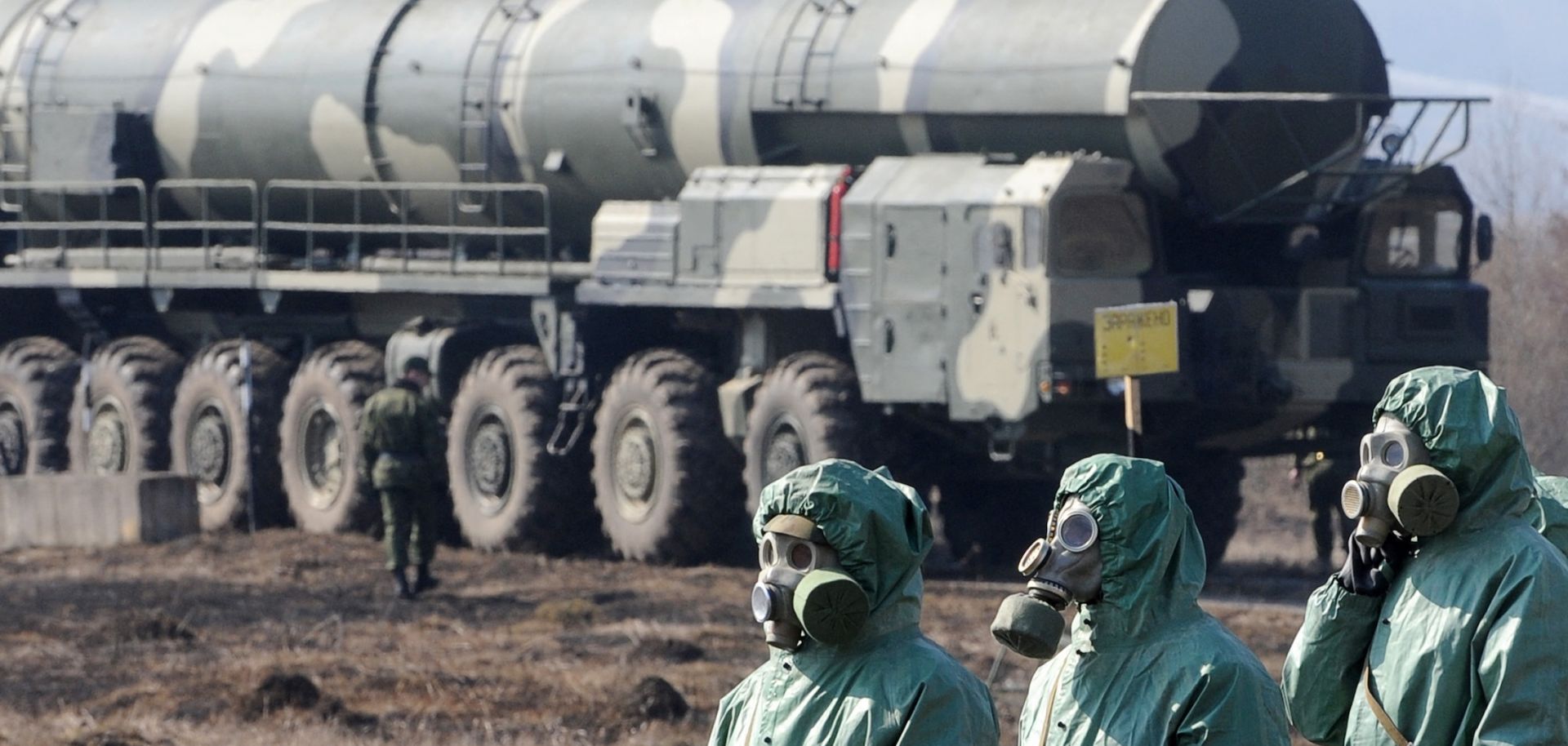
The expiration of the last major U.S.-Russian nuclear arms control agreement will, over time, intensify an ongoing buildup of nuclear capabilities across the globe and, amid a broader weakening of the global nonproliferation regime, make crises involving nuclear powers more unpredictable and prone to miscalculations . On Feb. 5, New START, the only remaining nuclear arms limitation agreement between Russia and the United States, officially lapsed. The 2010 deal, which entered force in 2011 and was extended in 2021, limited both countries to 1,550 deployed strategic nuclear warheads and 700 deployed strategic nuclear delivery systems — comprising intercontinental ballistic missiles, submarine-launched ballistic missiles and heavy bombers capable of carrying nuclear payloads. The treaty also gave both countries the opportunity to conduct 18 on-site inspections each year, though these have not occurred in years due to the COVID-19 pandemic and the Russian invasion of Ukraine.
