
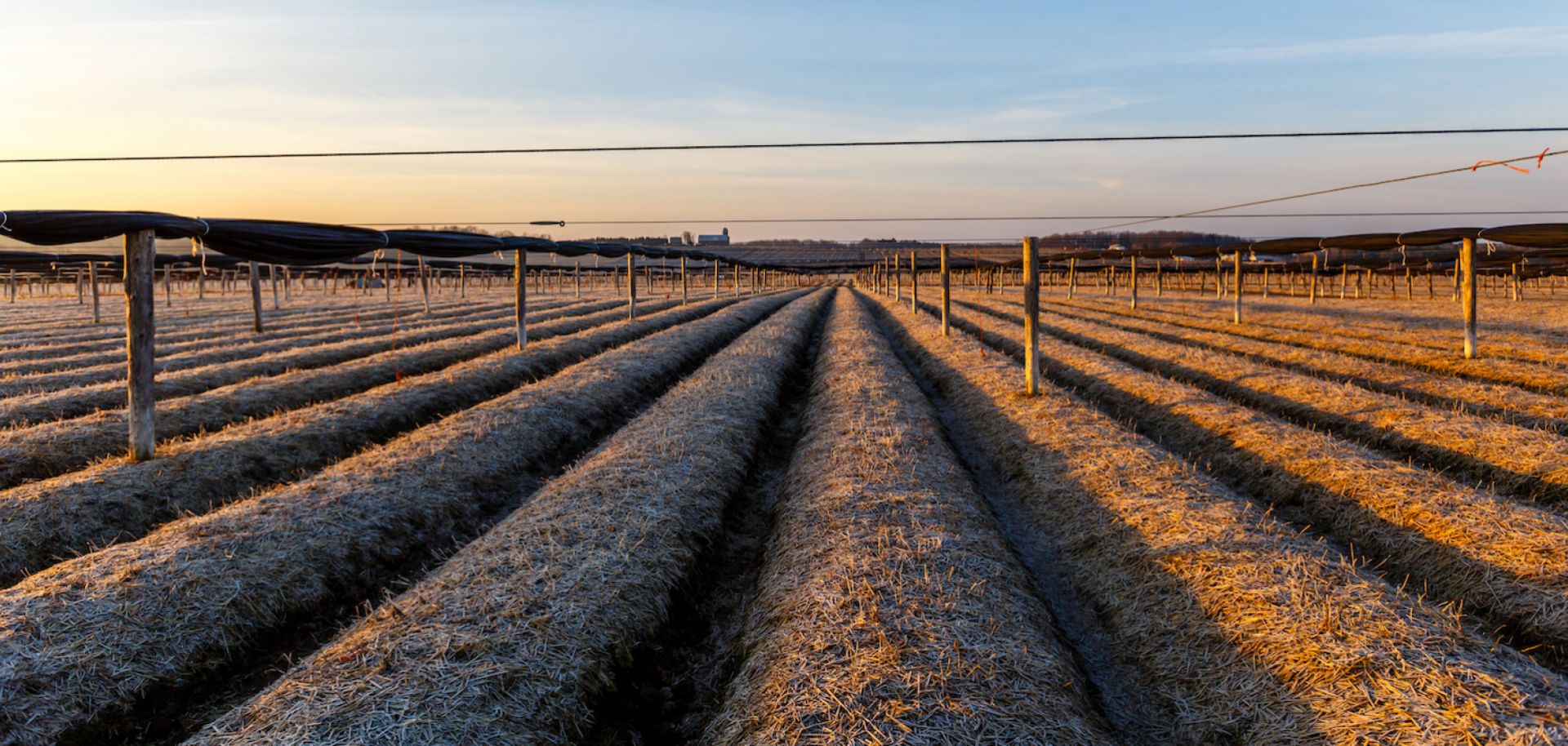
More than 90 percent of U.S. ginseng, which has been hit with a 15 percent tariff by China, is grown in Wisconsin. Most of the U.S. ginseng crop is exported to China or Hong Kong.
Campaigning for November's U.S. midterm election is well underway, and all 435 seats in the House of Representatives and 35 of the 100 Senate seats will be on the ballot. These graphics examine how the retaliatory tariffs implemented by China and other key trading partners — namely, Mexico — are likely to have an impact. While U.S.-China trade negotiations are continuing, and some tariffs may be removed, the continuing uncertainty may influence the vote in regions of the United States with heavy agricultural production. The Chinese tariffs implemented in April and those still pending can be expected to hit a number of niche agricultural markets. And the economic effects could put the Republican incumbents in these districts at risk: Wisconsin's 7th Congressional District (ginseng and cranberries); North Carolina's 7th Congressional District (pork and tobacco); Iowa's 4th Congressional District (pork). In 2016 Donald Trump won Wisconsin by less than 23,000 votes.
