
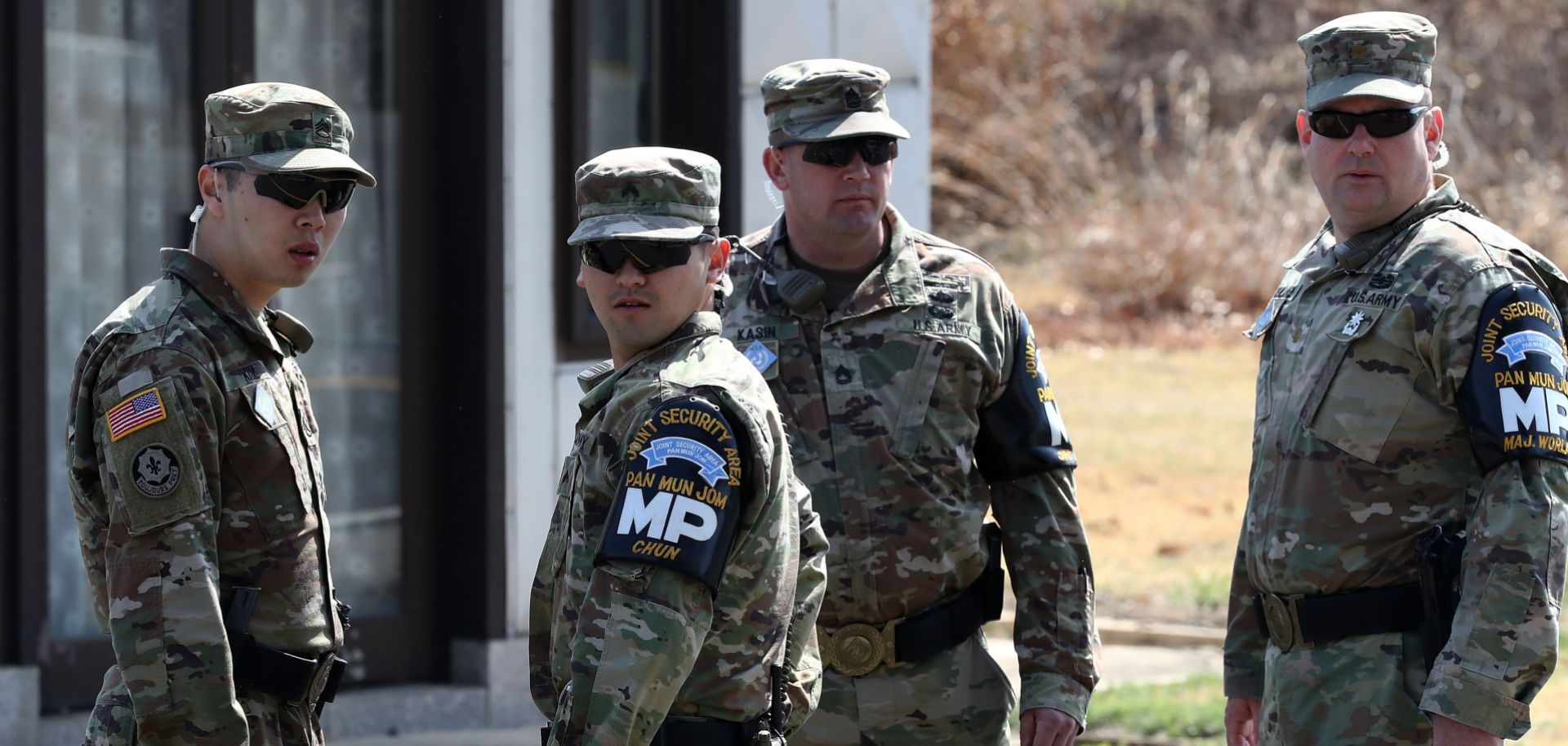
U.S. soldiers stand guard in the Korean border village of Panmunjom, located inside the Demilitarized Zone separating South and North Korea, on April 18, 2018.
U.S. demands for huge payment increases from three of its major allies, South Korea, Japan and Germany, for basing military forces on their territory could cause significant shifts in the global U.S. military footprint. The centrality of the United States and its military to South Korea's and Japan's security strategies means Washington is in a strong position to extract more money. But the effort could push Germany further away from the United States. Reports emerged this month that U.S. President Donald Trump and his administration have demanded that South Korea pay $4.7 billion next year — or 400 percent more than what it currently pays — for continued U.S. military protection . Then a report emerged that in July, the United States had requested that Japan increase its own share of military cost-sharing fourfold to $8 billion after their bilateral Special Measures Agreement expires in March 2021.
