
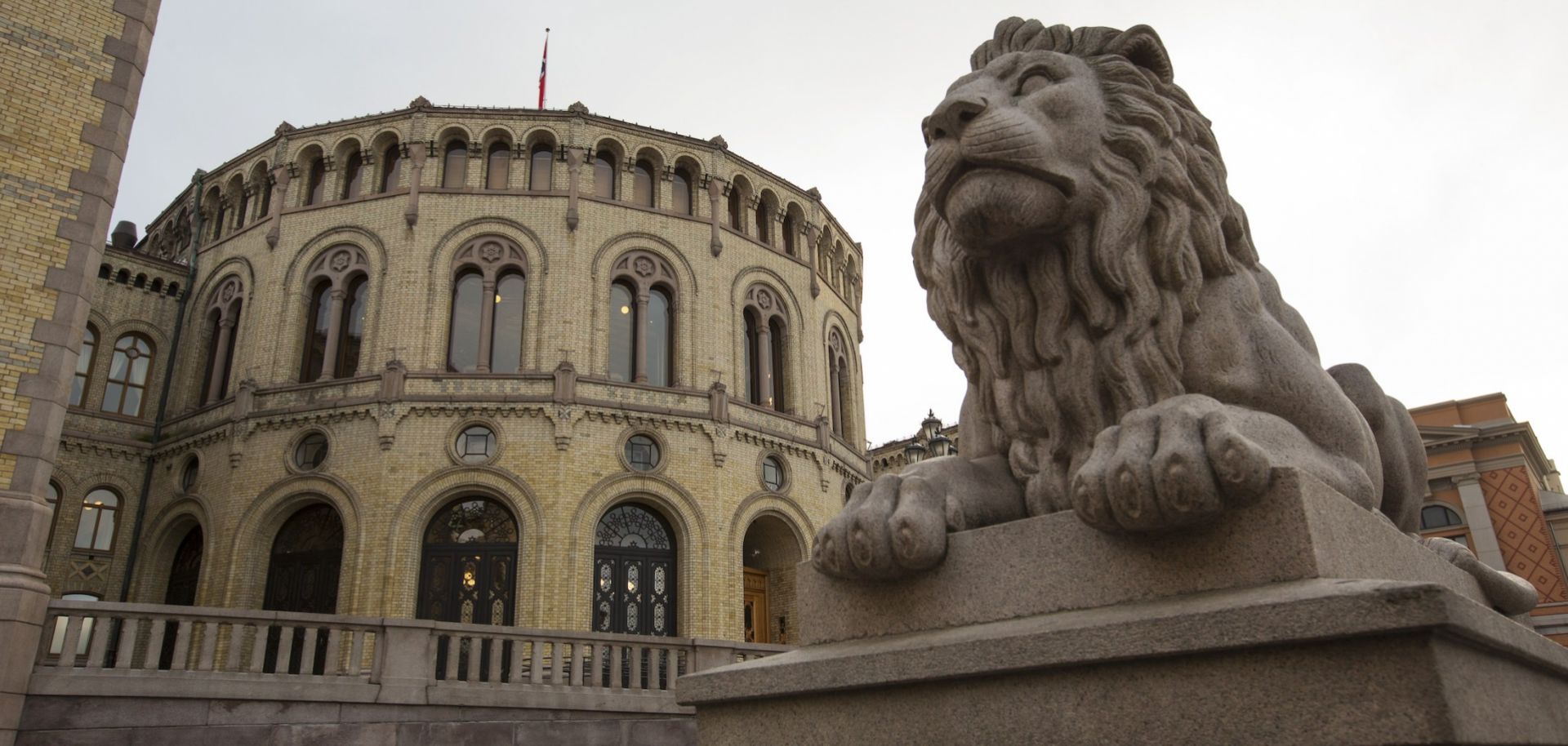
A photo taken in December 2014 shows Norway’s parliament building in Oslo.
The upcoming general election in Norway will increase the influence of small parties that want to ban additional oil exploration and reduce ties with the European Union, which could lead to significant economic changes in Western Europe’s largest energy producer. Norway will hold a general election on Sept. 13 to appoint the 169 lawmakers in its unicameral parliament, the Storting. The country’s multi-party system means that coalitions of several parties are needed to appoint governments, which tend to be center-right or center-left alliances. Erna Solberg, the leader of the Conservative Party, has been Norway’s prime minister since 2013. According to opinion polls, the popularity of Solberg’s government and her center-right allies is in decline and may not remain in power after the upcoming election. Polls suggest that the Labour Party, Norway’s main center-left party, is on the rise and could win the election.
