
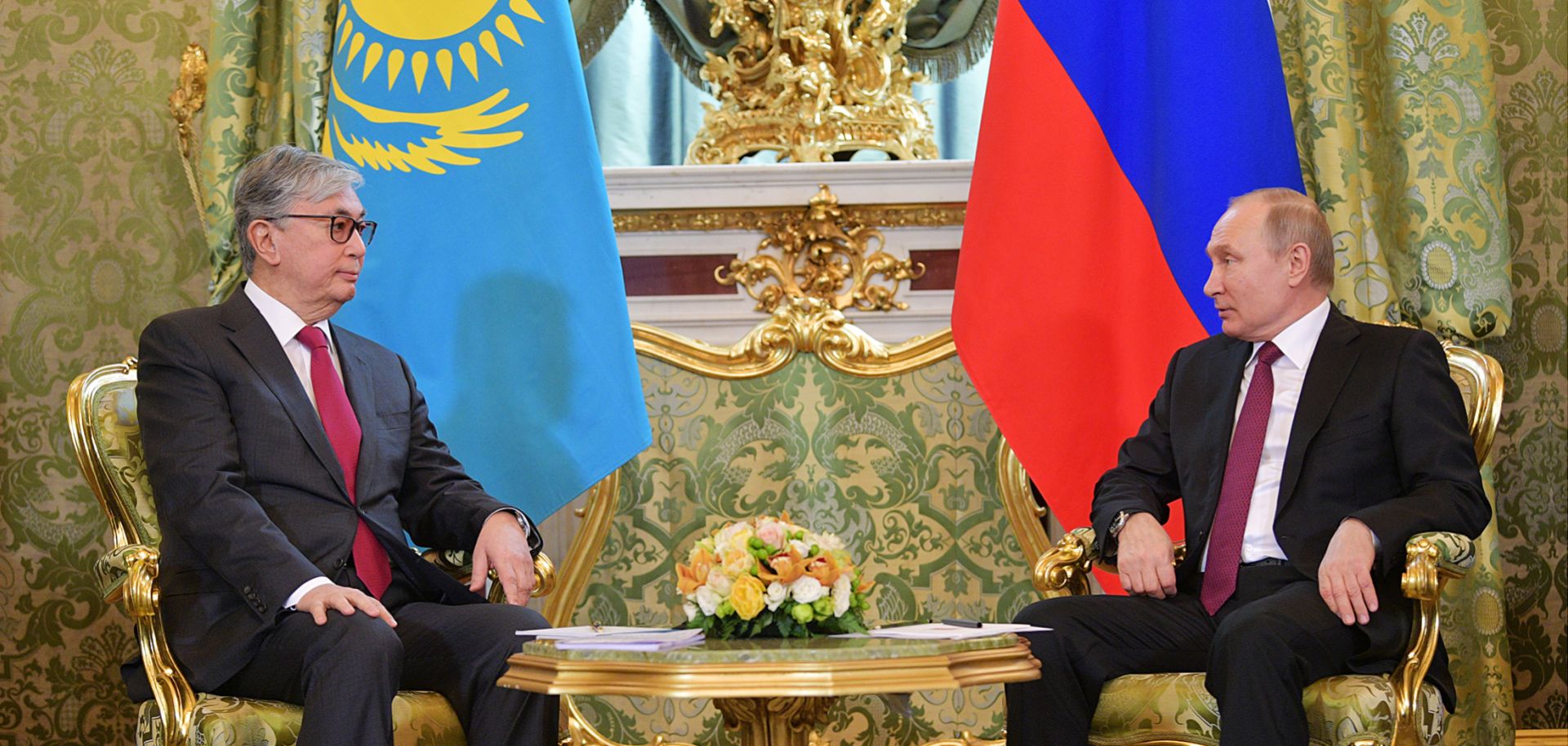
Kazakhstan's acting President Kassym-Jomart Tokayev meets with Russian President Vladimir Putin. Tokayev will be filling the shoes of Nursultan Nazarbayev, who has been not only the sole president of post-Soviet Kazakhstan but also the founder of the modern Kazakh nation.
On June 9, Kazakhstan will officially have its first new leader in three decades. This date marks Kazakhstan's presidential election, which was moved up by more than a year after long-serving President Nursultan Nazarbayev announced his resignation in March . Prior to resigning in March, Nazarbayev had led Kazakhstan since 1989, the entirety of the country's post-Soviet independence. Nazarbayev's replacement is all but guaranteed to be acting President Kassym-Jomart Tokayev, who has already received Nazarbayev's endorsement and that of the ruling Nur Otan party to succeed him. Shifting to a new president will not be a difficult process thanks to Nazarbayev's clear intentions. But once Tokayev takes office, his challenges will really begin, including managing the complex internal balance of power that Nazarbayev has overseen for decades, guiding Kazakhstan through an economic slowdown and navigating the influential external powers of Russia and China.
