
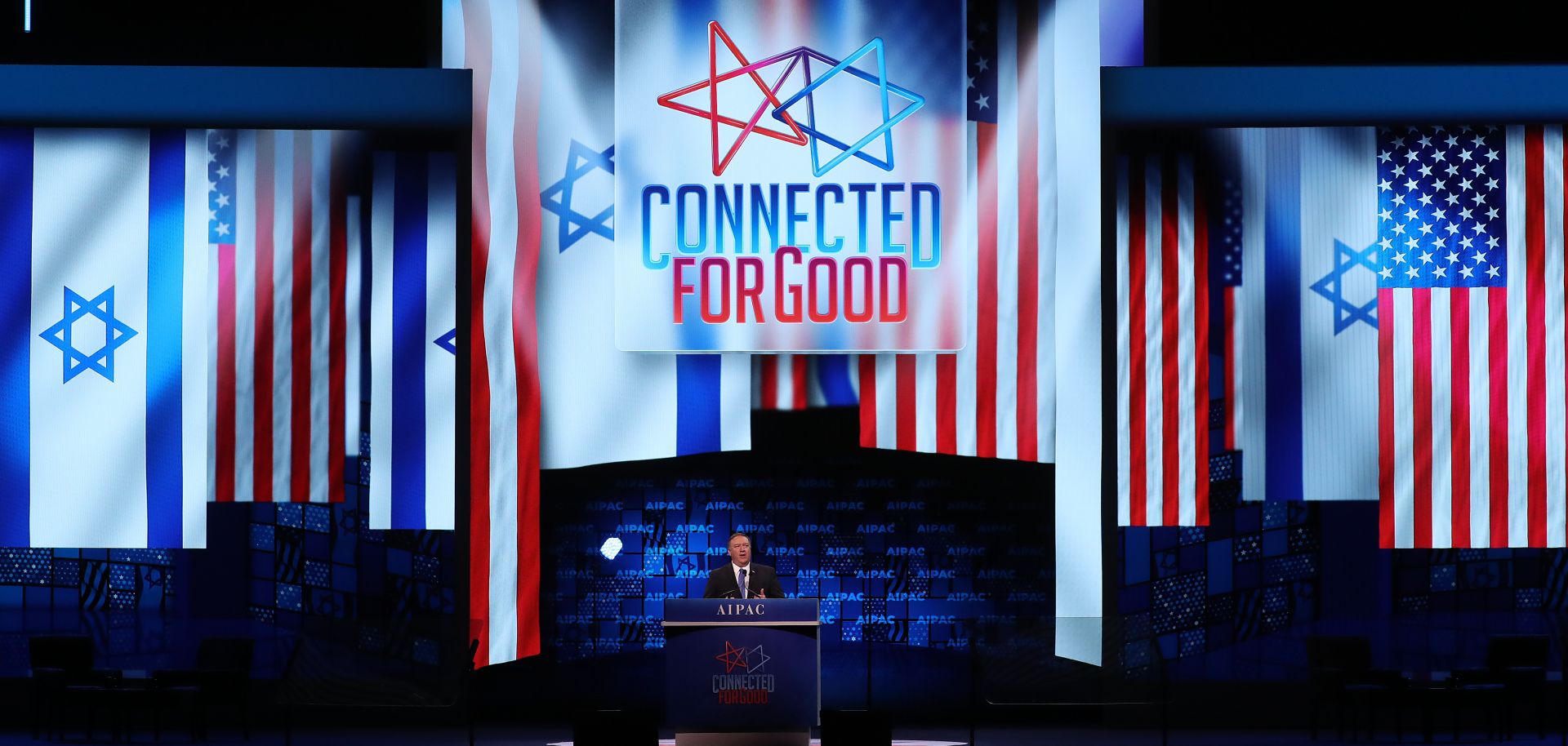
U.S. Secretary of State Mike Pompeo speaks at the annual American Israel Public Affairs Committee (AIPAC) conference on March 25, 2019, in Washington, D.C.
Since the Cold War, bipartisan political support for Israel in the United States has remained strong enough to influence U.S. strategy in the Middle East. Often, U.S. officials who wanted to take action in the region running counter to Israeli interests found themselves having to weigh their decision against the possible electoral penalty. But political and demographic shifts underway in both the United States and Israel are changing the nature of that limitation, potentially injecting a measure of volatility into their relationship that will often be defined by the political party in power in Washington. That's because an increasing share of young American voters with different attitudes toward Israel are steadily showcasing their influence on U.S. politics. If that pattern continues, it would reduce the electoral costs for U.S. officials who seek to pursue policies that do not align with Israeli strategies.
