
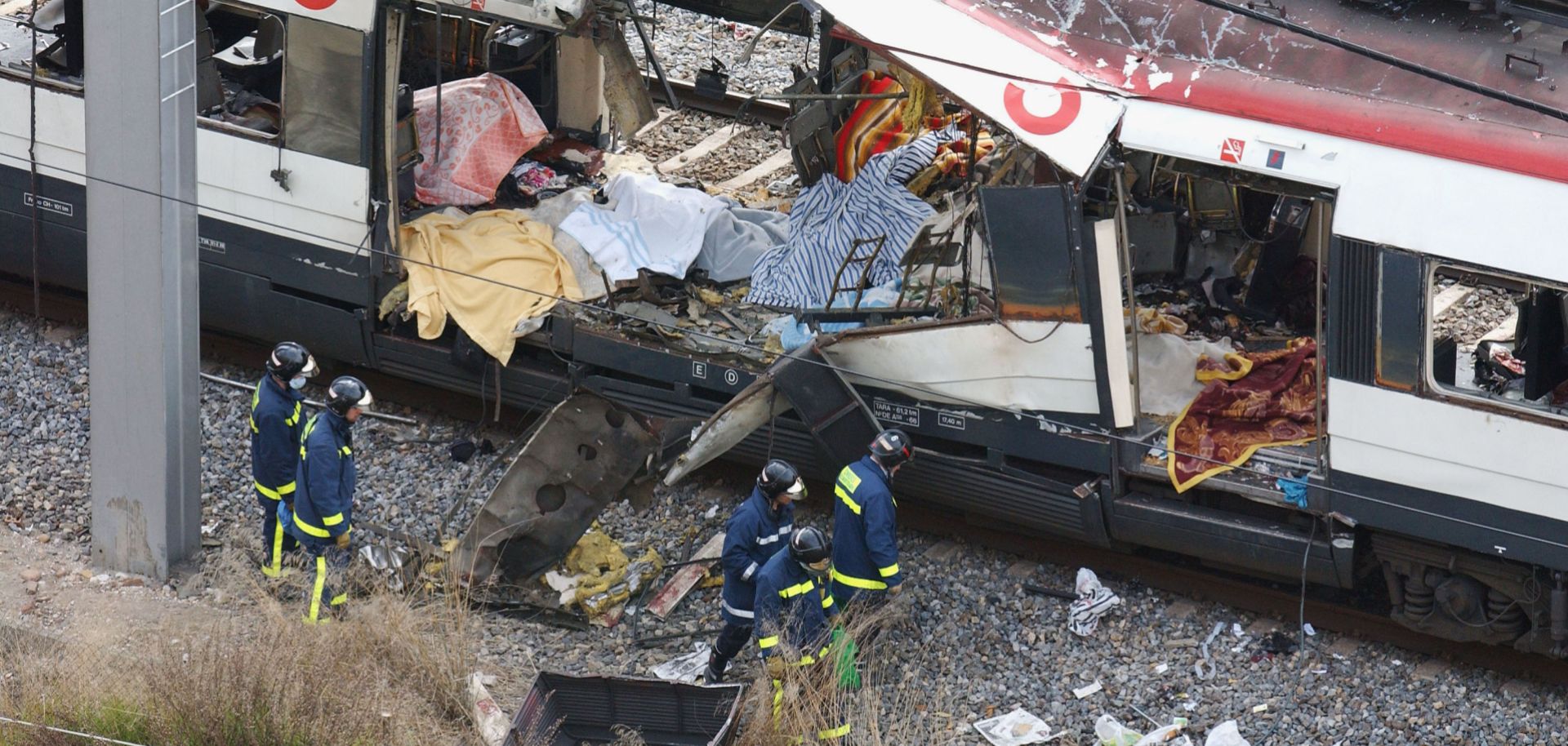
Rescue workers search a commuter train on March 11, 2004, after it was devastated by multiple bomb blasts during the morning rush hour in Madrid, Spain.
Like natural disasters, terrorist attacks have the potential to shape human history — if they happen at the right time and at the right place. But even then, both are more likely to leave their mark by shaping larger trends than by causing radical shifts by themselves. Unlike natural disasters , the humans who orchestrate terrorist attacks have the ability to choose the time and place, and oftentimes to exploit political or societal fault lines that can accelerate trends. Technology , political and economic developments , and ideology and theory come together to create terrorist movements. And the terrorist attack cycle ends with the "escape and exploitation phase," when terrorist groups cash in on their work and collect their political dividends. But what are those dividends, and why do some attacks yield higher returns than others?
