
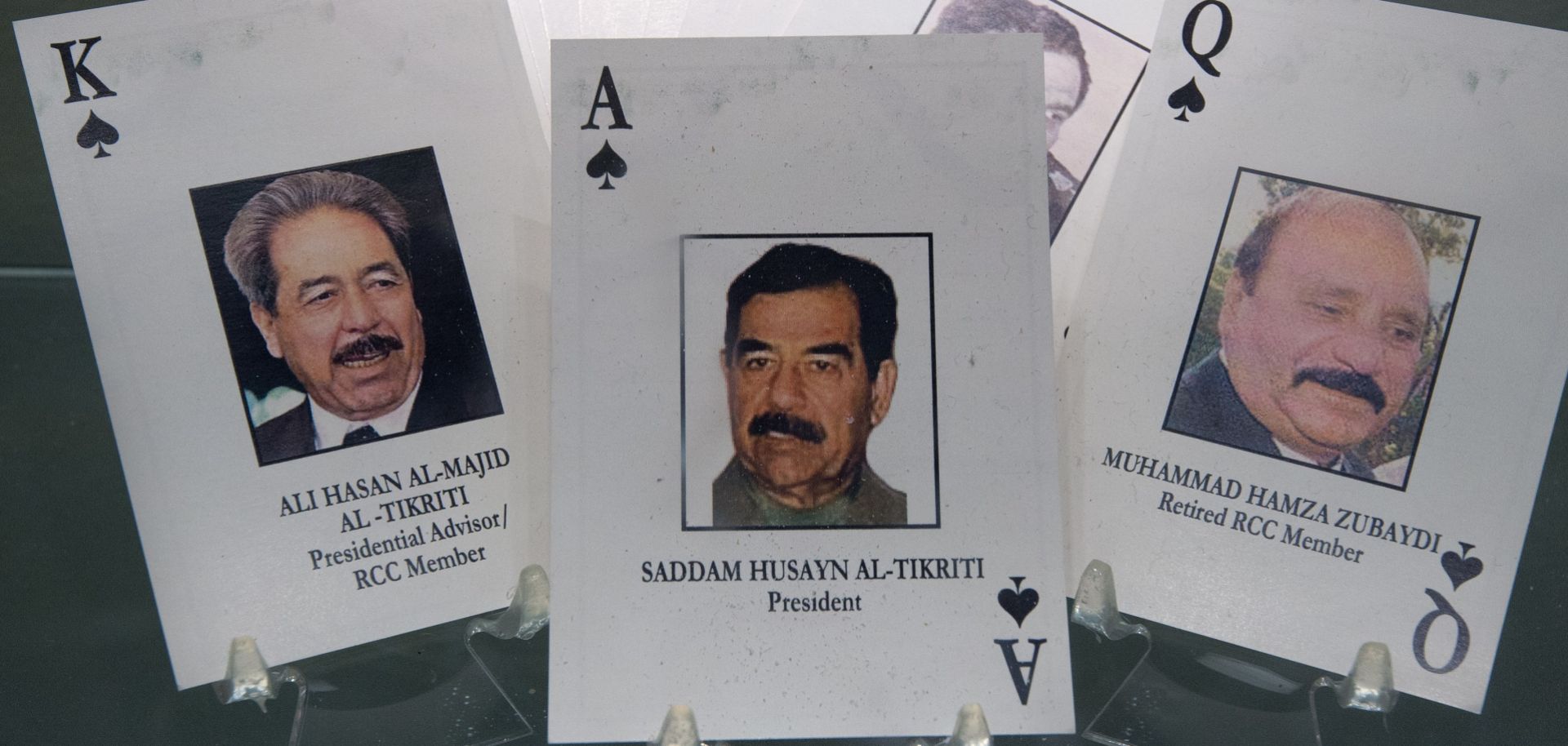
A deck of the "52 most-wanted Iraqi" playing cards from Operation Iraqi Freedom on display in October 2014 at the Pentagon showing high-level members of the Baath Party.
Anyone following terrorism, and the Islamic State in particular, cannot help but notice the recent sharp increase in the amount of discourse regarding the number of former Baathists in the Islamic State leadership and their influence upon the organization. I'm not sure if the growing emphasis on this point is an intentional attempt to undercut the Islamic State's appeal by questioning the group's Islamist credentials and motivation, or if it is simply a reflection of the growing recognition of the role that ex-members of former Iraqi President Saddam Hussein's Baath Party have played in the group's post-2010 resurgence. Certainly, the debaathification program instituted in the wake of the 2003 invasion of Iraq sent many Sunni Baathists into the waiting arms of jihadist groups such as Abu Musab al-Zarqawi's Jamaat al-Tawhid and Jihad.
