
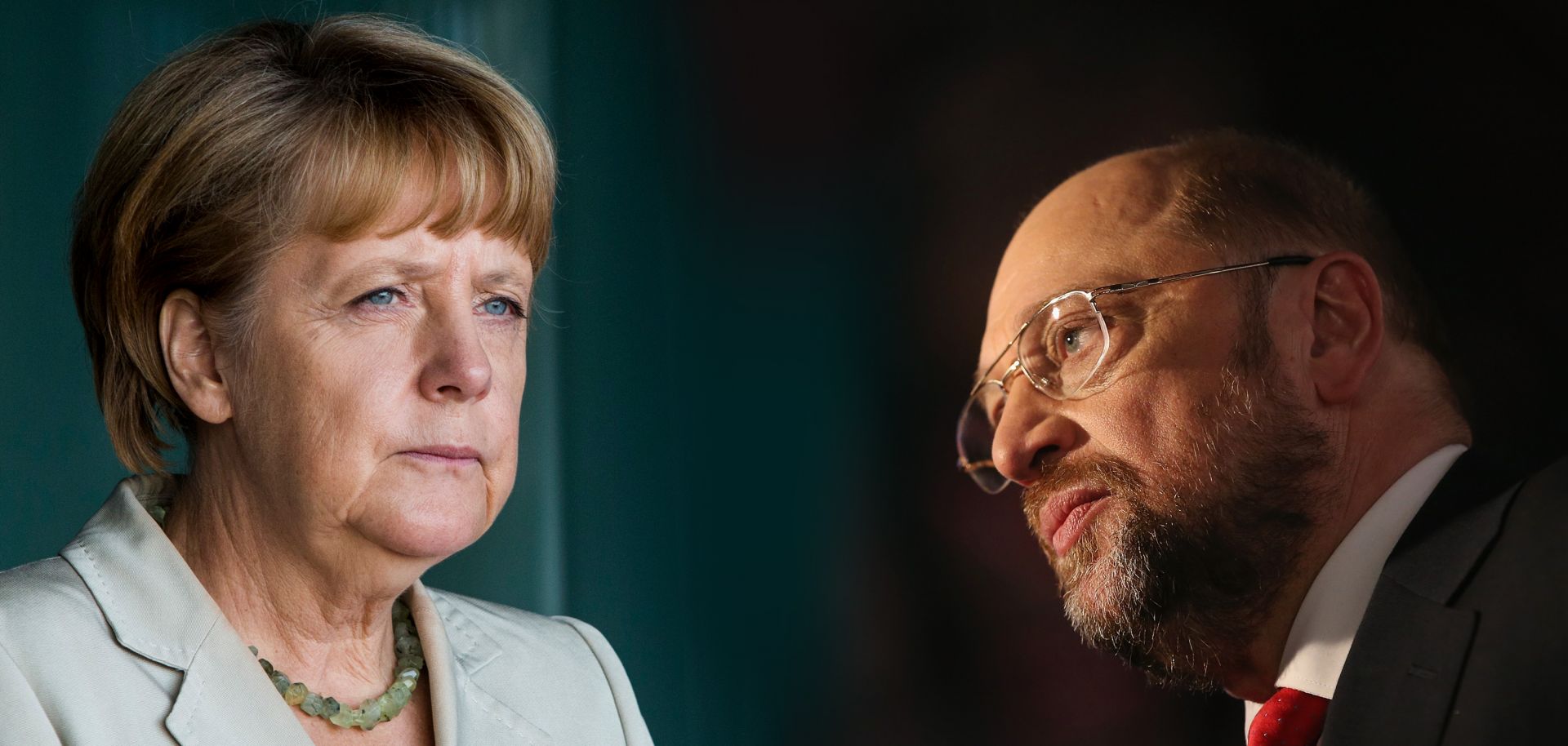
The Christian Democratic Union and the Social Democratic Party have worked together for the past four years, but neither wants to be in the same ruling coalition again.
Germany is heading into the final weeks of a fairly uneventful campaign season. There is little chance of a major nationalist or Euroskeptic victory, and opinion polls have remained steady. Although the runup to the Sept. 24 election has been relatively quiet, major repercussions, both domestic and international, could follow in its wake. The big question — both for Germans and fellow members of the European Union — is what form the final distribution of seats in the Bundestag, Germany's lower house of parliament, will take. The answer will determine not only the possible combination of parties that will form a German government coalition, but also shape the direction that much-needed reforms to the European bloc will take.
