
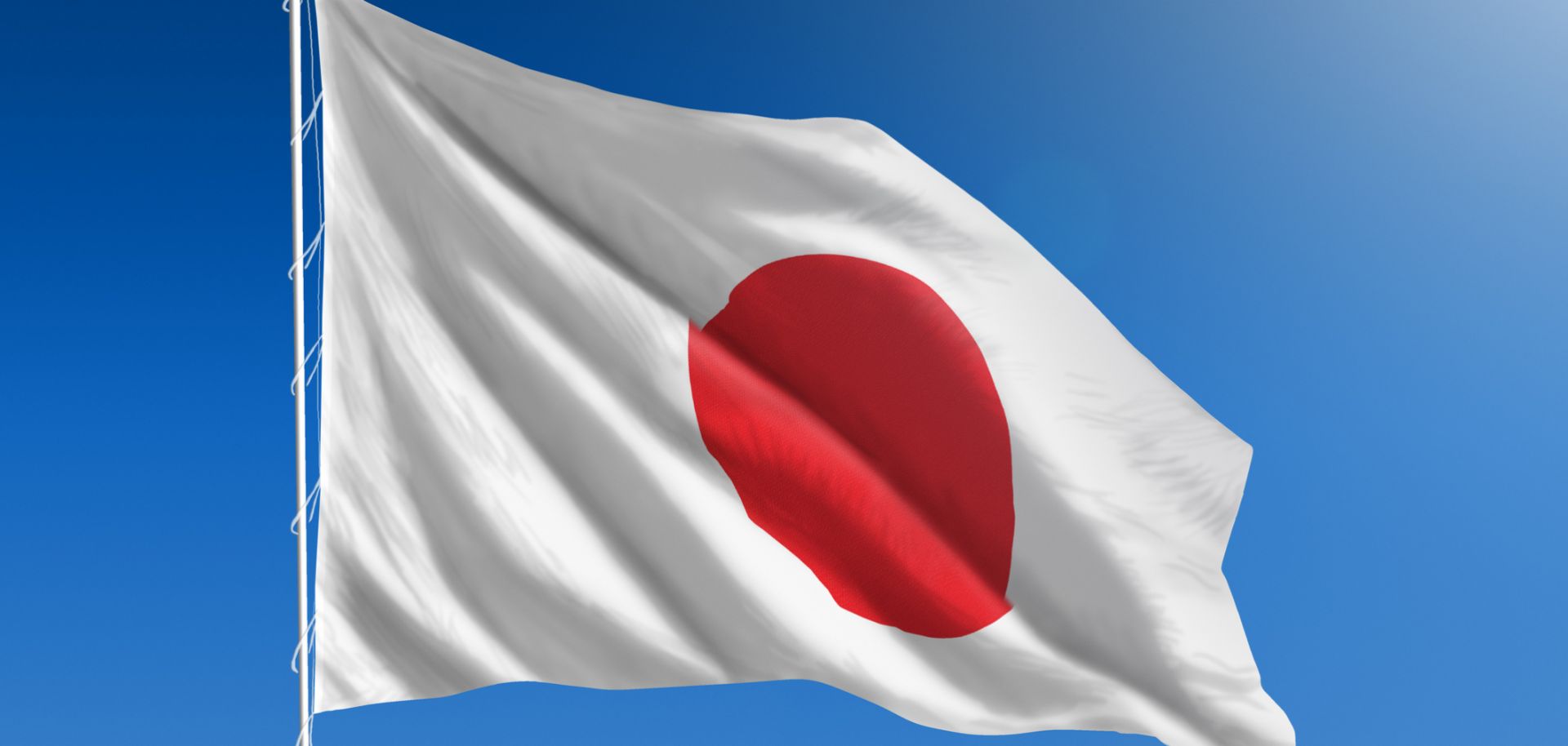
The Japanese flag, a red dot on a white background, celebrates the country's nickname: The Land of the Rising Sun. With little useful land and few natural resources, Japan is an unlikely candidate for one of the world's most powerful nation-states.
Japan is a bow-shaped archipelago that sprawls along the northeast coastline of the Eurasian landmass. Throughout history it has hung on the outskirts of the Asian world, just within contact of the great Han Chinese civilization. To the east lies only the Pacific Ocean, hence the Japanese name for the country, "Nippon," or "Origin of the Sun." Mountainous, remote, frequently beset by typhoons and shaken by earthquakes, possessing little useful land and few natural resources, Japan appears an unlikely place to set about building one of the world's most powerful nation-states. But the Japanese did so — from scratch — in about 150 years. Now Japan is drifting, and, as in previous transitional periods, it will take outside forces — perhaps a tectonic shift — to spur it into action. The Archipelago Japan is an archipelago with four "home islands" and some 6,800 smaller islands.
