
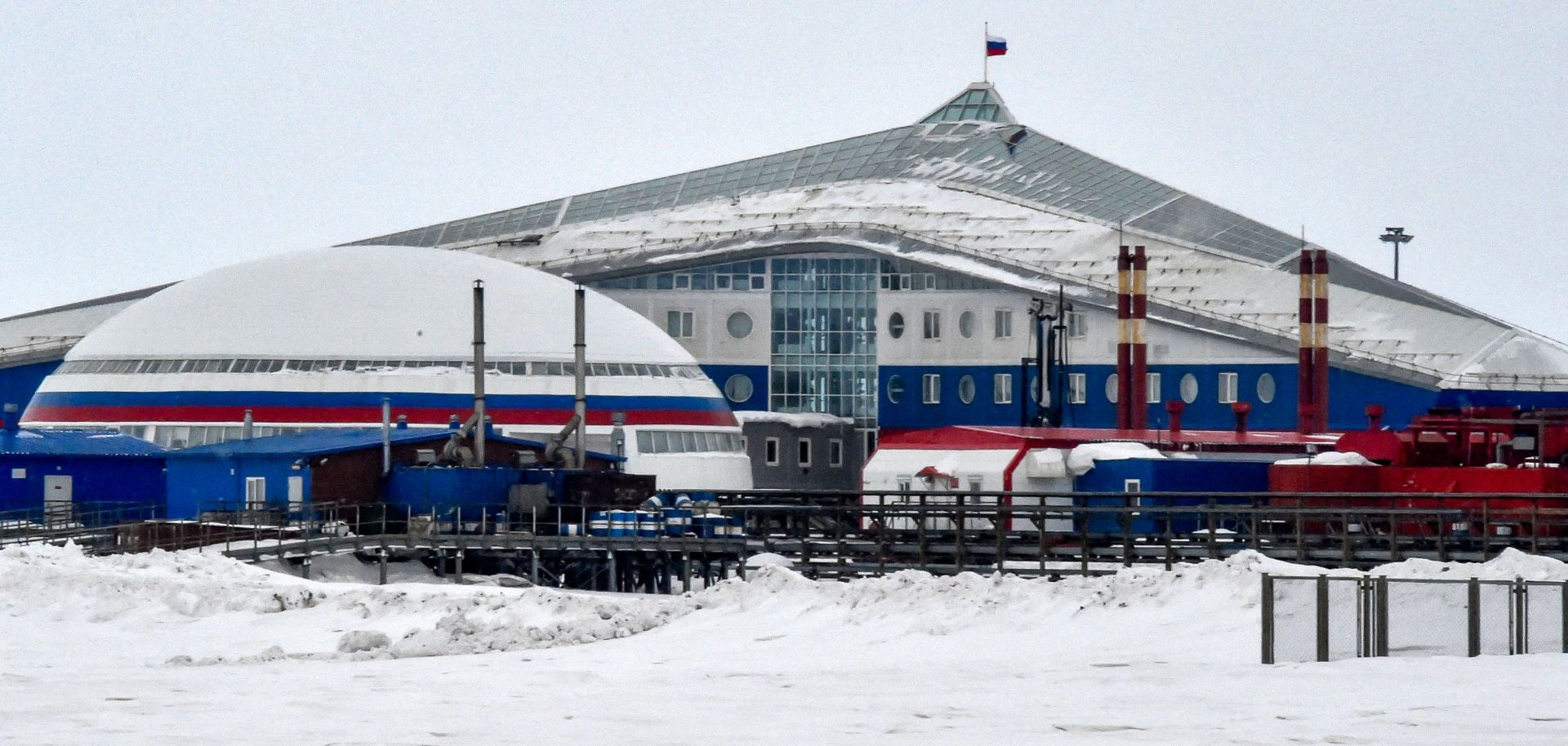
A view of Russia’s northernmost military base on the island of Alexandra Land on May 17, 2021.
Editor’s Note: This is part of an occasional series exploring the geopolitical and strategic implications of climate change. The U.S. Defense Department is increasingly considering climate change in its assessments of future threats and challenges. In numerous reports, climate change implications are often characterized as “threat multipliers” — that is, elements that exacerbate existing trends or instabilities. But there are aspects of climate change that have even deeper implications by changing either the physical geography of particular spaces or their perceived relative significance. These are the geopolitical impacts, ranging from shifts in critical natural resources to the radical transformation of the Arctic. Changes in climate patterns alter humanity’s interaction with geography directly and indirectly. There are immediate physical impacts, like shifts in land use, water availability, coastlines and soil stability.
