
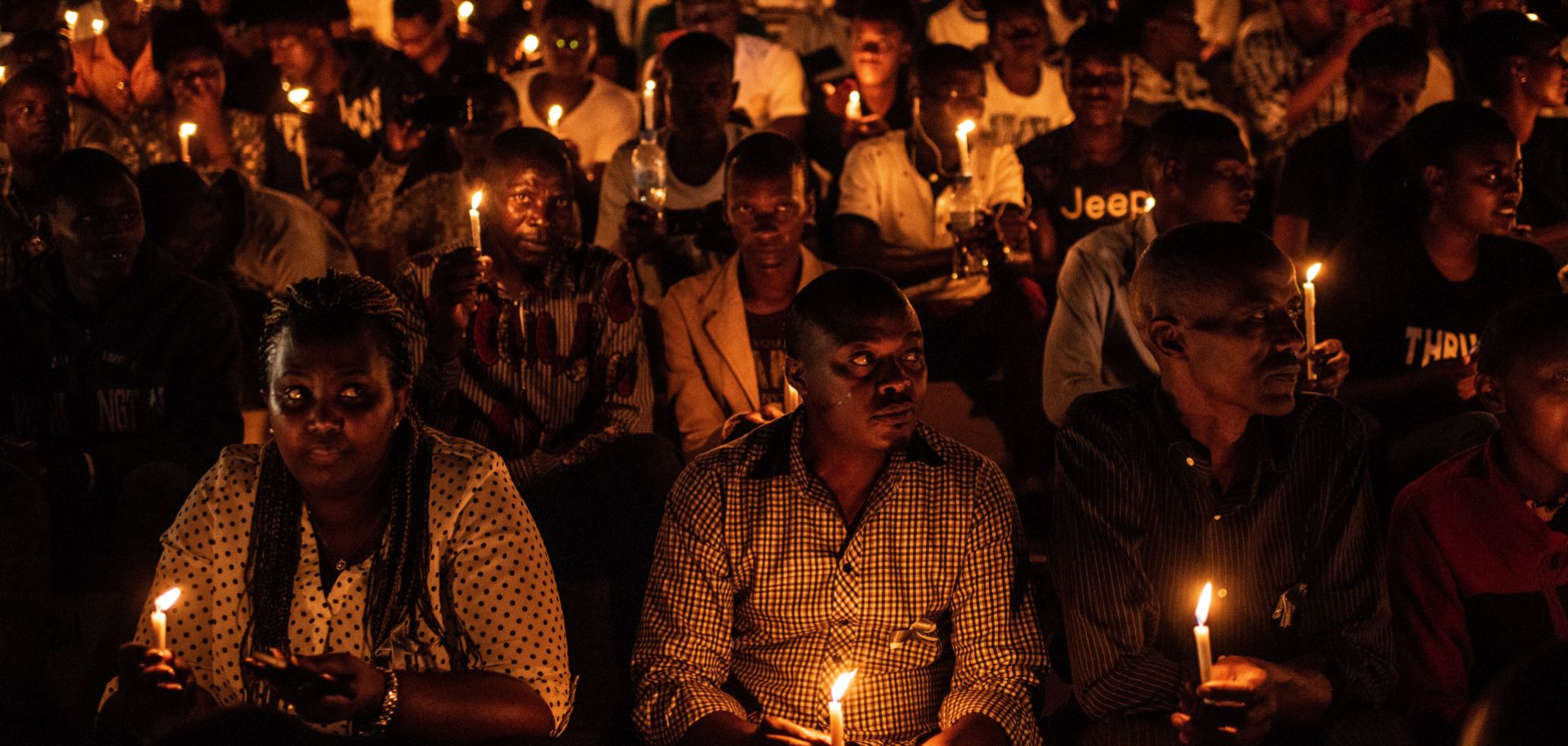
People hold candles during a ceremony commemorating the 25th anniversary of the Rwandan Genocide on April 7, 2019, at the Amahoro Stadium in Kigali. A geopolitical clash between rival movements in Africa helped set the ground for the vicious killing of 1994.
It's been a quarter century since upward of 1 million people died in the Rwandan Genocide. But as Rwanda marks the 25th anniversary of the killings — and the rest of the world is reminded of its inaction — the occasion provides a solemn opportunity to explore the geopolitical context that precipitated the genocide. Geopolitics certainly doesn't absolve the perpetrators of their guilt, but it does provide a deeper understanding of how larger forces spurred hard-liners in Rwanda's government to initiate an unparalleled slaughter of their compatriots. Looking back in hindsight, the genocide was a situation in which — as happens frequently, if rarely to such extreme proportions — the civilian population fell victim to forces driven by much larger geopolitical trends.
