
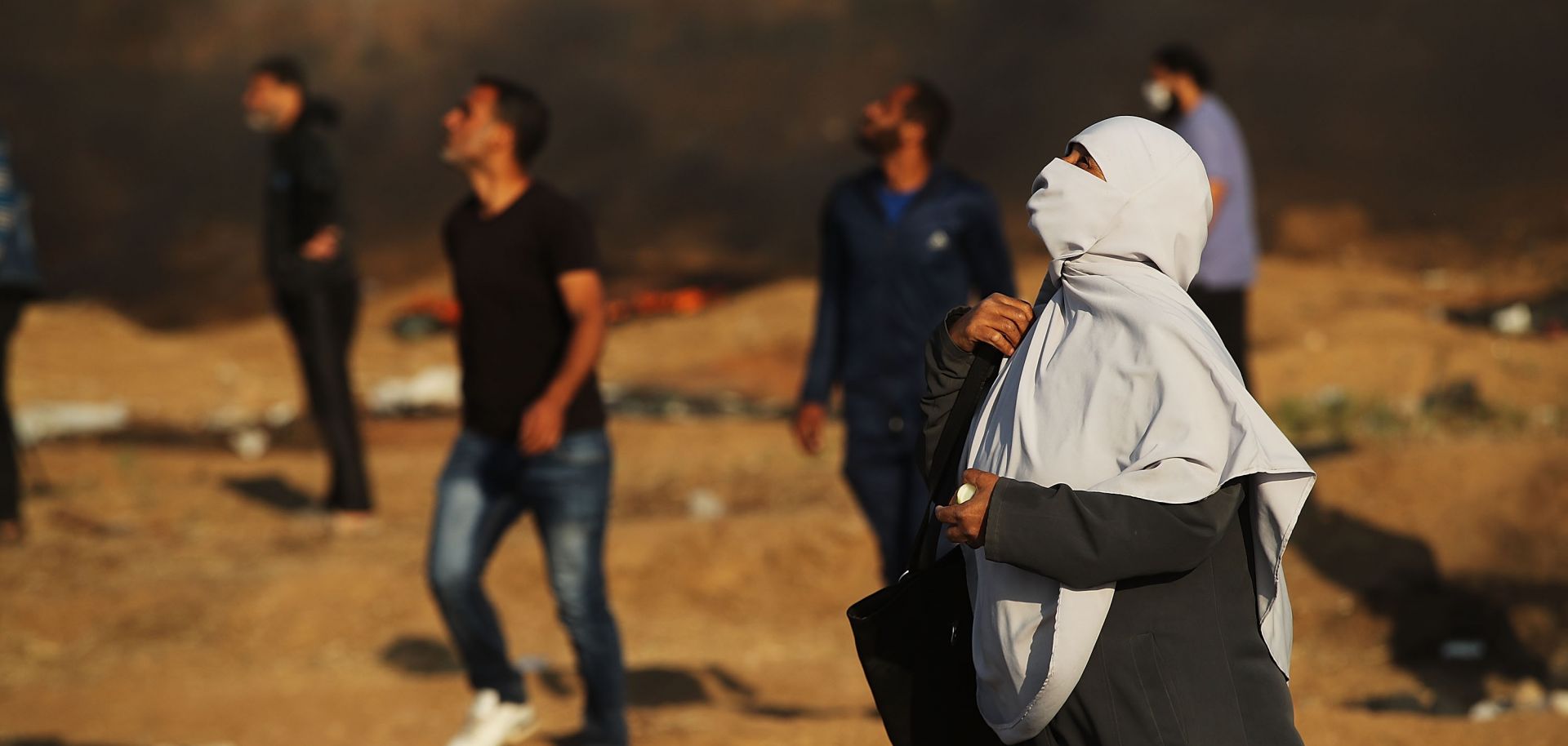
Palestinian protesters in Gaza look skyward as an Israeli drone shoots tear gas canisters toward them on May 15, 2018. Some states in the region, like Iran and Turkey, gain influence with each new Palestinian crisis, while others, like Saudi Arabia, seek to balance condemning Israeli actions against their desire to get closer to Israel to counter Iran.
Another round of protests in Gaza — triggered by the May 14 opening of the U.S. Embassy in Jerusalem and the 70th anniversary of the nakba, or "catastrophe," the Palestinian term for their displacement during the 1948 Arab-Israeli war that followed Israel's creation — highlights how much has changed and how much, in many ways, has not. No one expects borders to change, alliances to shift quickly or the peace process to suddenly gain speed. In the background of this all-too-familiar round of unrest and violence, new opportunities — and new risks — await the old players. On its broadest level, the Palestinian question has long represented a way for regional rulers to win or buttress their legitimacy at home and claim leadership in the Muslim world.
