
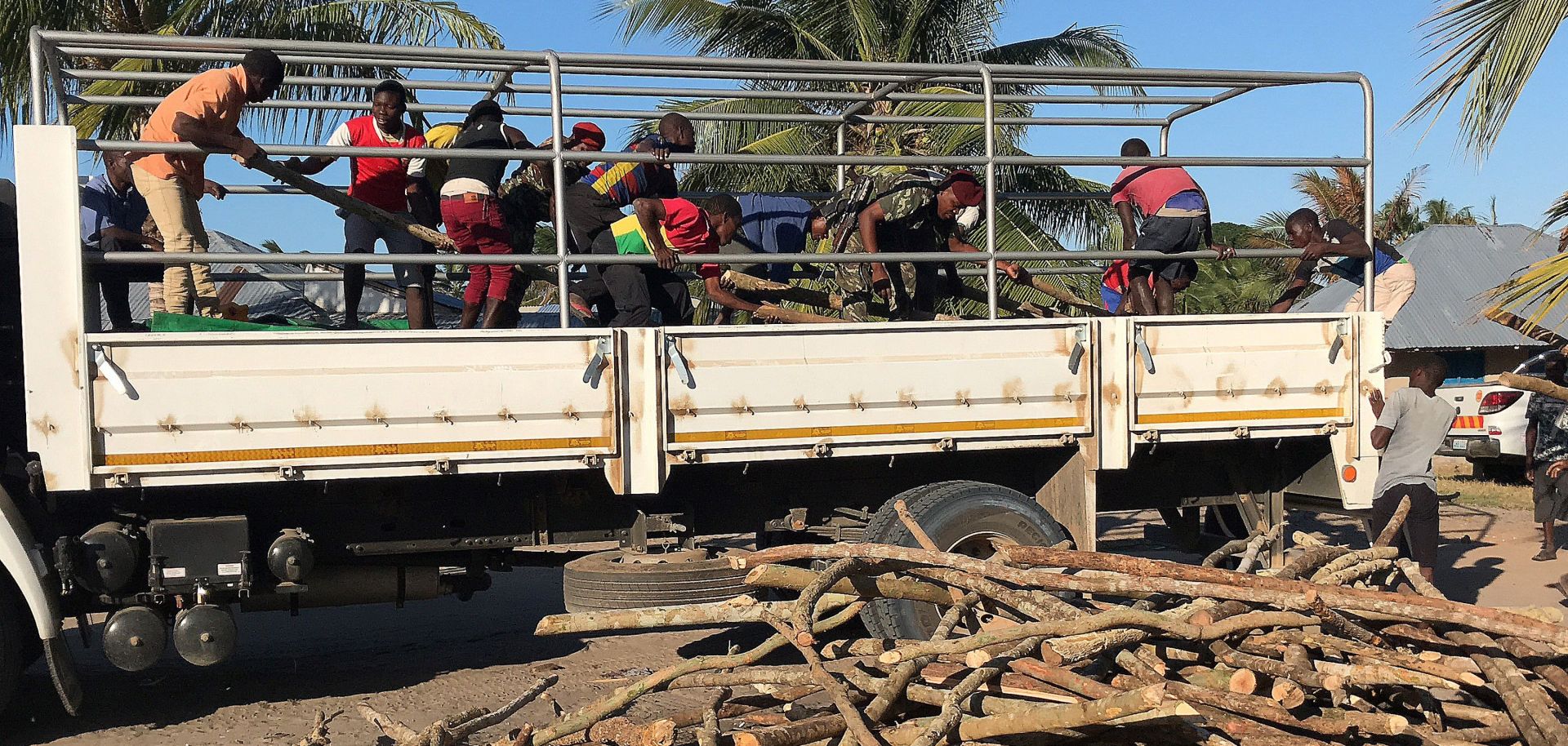
Internally displaced people and residents unload a truck with goods of first necessity, food and blankets in Naunde, northern Mozambique on June 13, after fleeing the recent attacks. Ahlu Sunnah Wa-Hamo has staged a number of recent attacks in northern Mozambique, but its capabilities remain limited.
They've been around for some time, but it was only late last month that they started to grab more of the world's attention. On May 27, the Islamist militant group Ahlu Sunnah Wa-Hamo attacked Monjane, a town in northern Mozambique's Cabo Delgado province, beheading 10 people. But the group, known locally as al Shabaab (even if there are no indications of direct links between it and the more famous Somali jihadist outfit) has been active for months, attacking police stations, silencing opponents, robbing banks, looting weapons and burning villages. And given that the ocean floor off Cabo Delgado just happens to hold vast reserves of natural gas, the emergence of Ahlu Sunnah Wa-Hamo doesn't just affect Mozambique but the global energy industry.
