
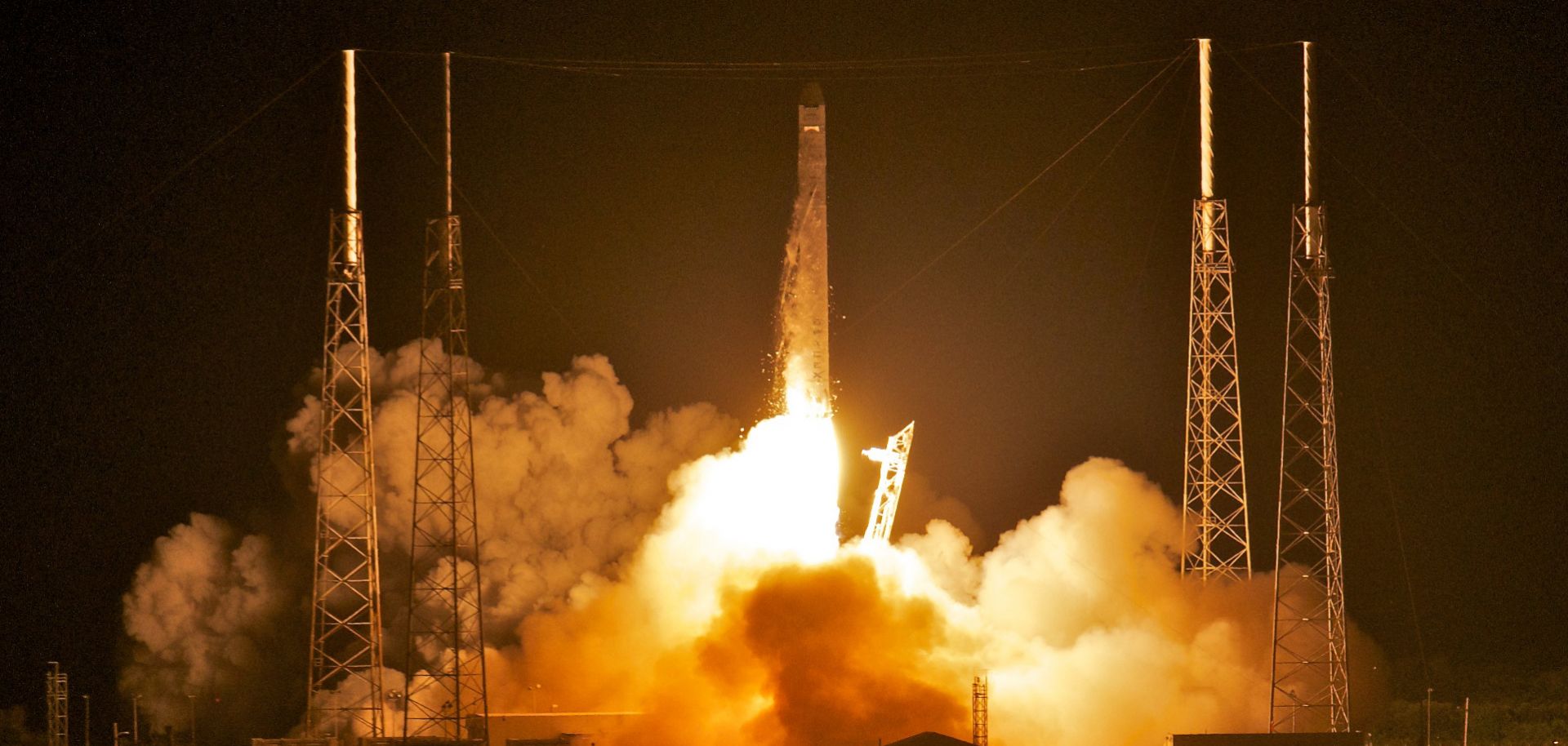
SpaceX's Dragon spacecraft atop rocket Falcon 9 lifts off from Pad 40 of the Cape Canaveral Air Force Station in Florida. The United States has come to rely on Russia's Soyuz capsule for transporting astronauts to the International Space Station. But NASA has plans to supplant it, but must first use private companies to bring down the cost of launching rockets.
For the United States, private space development is key to furthering space exploration and technology over the course of the next century. NASA is incentivizing private space flight development by setting goals for these companies while providing them with some funding and eventually awarding NASA contracts to the most successful ones. The U.S. incentive program is particularly focused on improving the private space industry's more powerful rocket systems, which would enable them to deliver heavier payloads into orbit and also make them safe enough to launch manned spacecraft. Ultimately, the United States hopes competition between these companies will substantially reduce the costs of spaceflight. Several NASA programs are driving the push for private space development. The main initiative is the Commercial Orbital Transport Services program — aimed at providing supplemental financial support to companies, which are competing for NASA contracts, to deliver supplies and crew to the International Space Station.
